

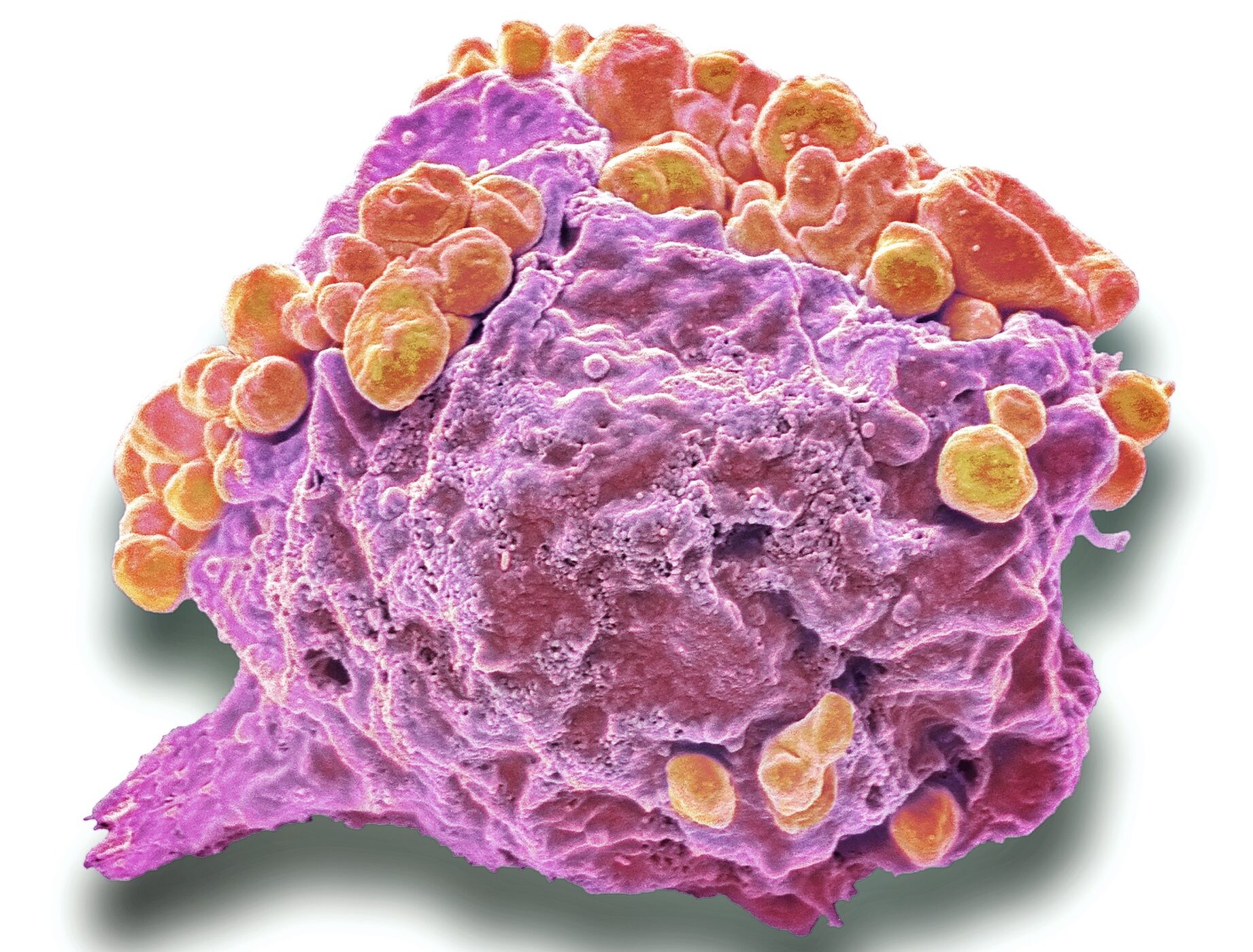
Researchers at The Wistar Institute have developed a two-vaccine immunotherapy strategy designed to treat T-cell lymphomas by targeting both the tumors’ immune-cell receptors and their mutation-derived neoantigens. The approach uses synthetic DNA (synDNA) vaccines to stimulate immune responses against cancer cells that share identical T-cell receptors, a feature created when malignant T cells replicate clonally. In preclinical studies, combining a vaccine directed at the tumor’s T-cell receptor (TCR) with a second vaccine targeting tumor-specific mutations improved tumor control and survival compared with either vaccine alone. The findings are published in Cancer Immunology, Immunotherapy.
T cell lymphomas, which account for roughly 10% of all T cell lymphomas, are difficult using an immunotherapy approach since lymphoma is a cancer of T cells themselves and existing immunotherapies have difficulty distinguishing healthy T cells from cancerous ones.
Describing their approach to this challenge, first author Pratik Bhojnagarwala, PhD, a postdoctoral fellow in the lab of David Weiner, PhD, said: “As a T cell becomes cancerous and transforms into a lymphoma, all those new cancerous cells are going to have the same T cell receptor on their surface.” He added, “That provides an opportunity from a therapy design standpoint: You can design these vaccines very specifically to target just the T cell receptor of that cancerous T cell and leave the healthy T cells alone.”
The challenges of treating T cell lymphomas boil down to a couple factors. First, since current immunotherapies approaches aren’t able to distinguish healthy cells from diseased cells, these therapies risk killing the healthy cells along with the diseased T cells. Second, therapies that target T-cell markers can also suppress the immune system and lead to infections.
For their novel approach, the Wistar research team focused on a defining biological feature of T-cell lymphoma: clonality. When a single T cell becomes malignant, it replicates to produce a population of identical cancer cells, each carrying the same T-cell receptor. That receptor functions as a molecular identifier that distinguishes the malignant clone from the rest of the immune system.
The research team developed a synthetic DNA vaccine, called TCRfullvax, that encodes the three protein chains that form the receptor in a mouse model of T-cell lymphoma designed to stimulate immune responses specifically against those receptor components.
The investigators tested the vaccine using Wistar’s synDNA platform, a technology that delivers plasmid DNA encoding selected antigens. Once administered, host cells produce those antigens and present them to the immune system, triggering T-cell responses. In preclinical models, the TCR-targeted vaccine generated immune responses against all three receptor chains and delayed tumor progression.
“Immunogenicity studies revealed induction of robust T cell responses against all three TCR chains,” the researchers wrote. “Notably, we observed no significant differences in the number of live T cells between TCRfullvax-vaccinated group and control groups, indicating the vaccine’s ability to selectively break tolerance against vaccinated TCR without broadly depleting T cells.”
But the single TCRfullvax approach also showed the approach may not have a lasting effect as the tumors began to reduce their expression of the targeted receptor, which allowed the diseased T cells to evade immune detection. This led to the development of a second vaccine called EL4neovax that targeted mutation-derived neoantigens that had been identified by sequencing the tumor cells.
“Neoantigens, derived from somatic mutations within tumor genome, present another promising target for anticancer vaccine development,” the researchers wrote. This second neoantigen vaccine elicited immune responses against five of the 15 encoded targets and controlled tumor growth in mice. When the two vaccines were administered together, tumor control significantly improved compared with either vaccine alone.
The researchers said their study represents the first time a synDNA vaccine targeting the T-cell receptor has been evaluated as a therapy for T-cell lymphoma. The findings suggest that combining receptor-targeted vaccination with neoantigen-directed immunization may help counter tumor escape mechanisms.
The Wistar synDNA platform has shown its capacity to incorporate numerous targets in a single construct. In a 2021 study published in Molecular Therapy Oncology, the team wrote “Using a synDNA platform for neoantigen targeting, we have previously demonstrated robust CD4+ and CD8+ T cell responses in animals, which led to significant tumor control of murine lung, ovarian and colon tumors in vivo.”
In that effort, the researchers noted that that their synDNA platform “could be used to deliver as many as 40 different neoantigens in a single plasmid without compromising immune responses, a feature that could be a vital component of future vaccines since tumors evolve to evade immune detection by losing targeted antigens.” The new dual-vaccine strategy builds the concept of addressing immune evasion to T-cell lymphoma by pairing neoantigen targeting with vaccination against the tumor’s clonally shared T-cell receptor, potentially broadening the immune response and reducing the likelihood of tumor escape.
The investigators will continue to optimize the vaccine constructs and will evaluate if adding more immune-stimulating constructs can further refine and improve this approach. They also suggest that the dual vaccine could also be combined with existing immunotherapy approach to further improve treatment efficacy.
