

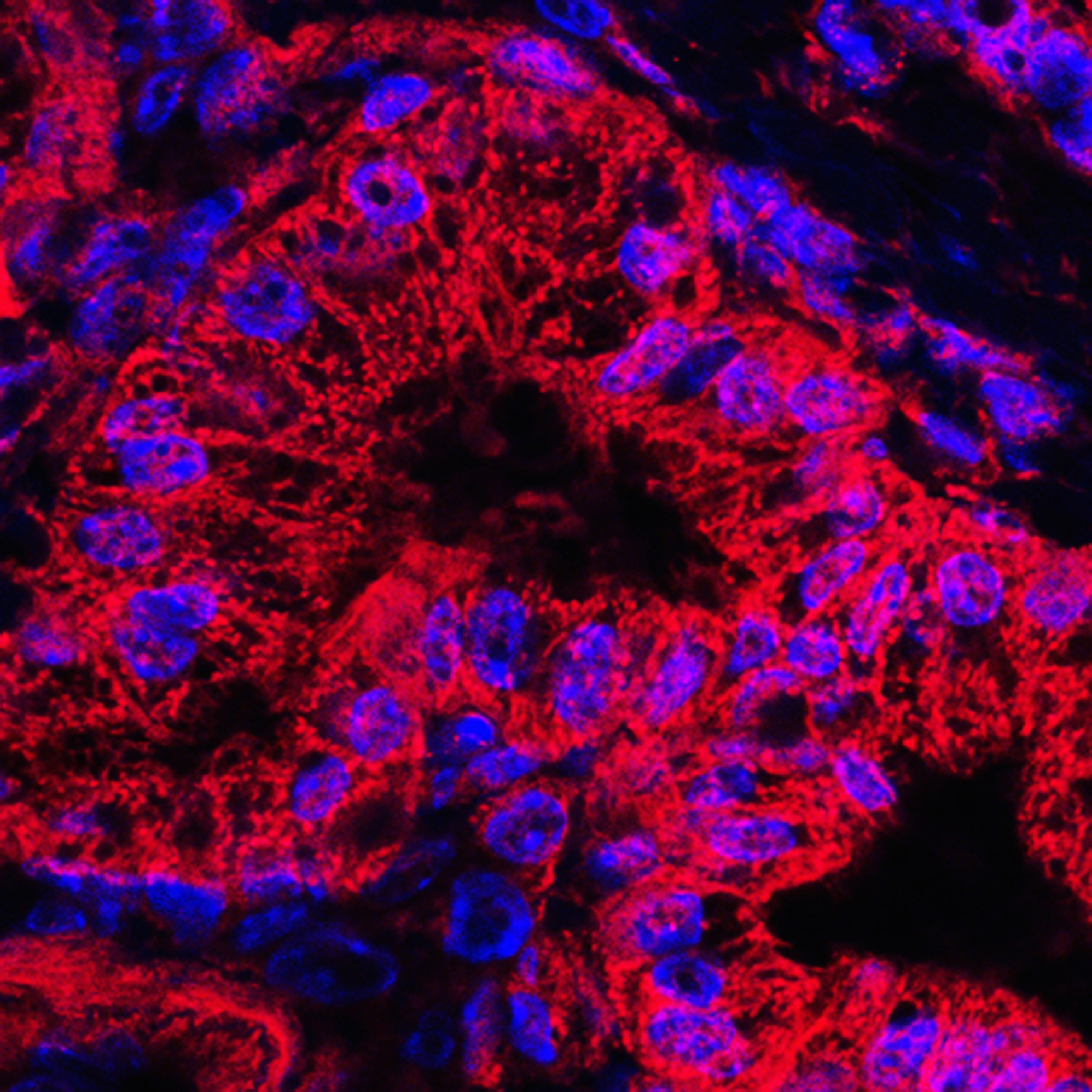
Researchers at the University of Pennsylvania have shown it is possible to eliminate precancerous lesions in the pancreas before they become tumors, tripling survival in mice. A study published today in Science provides the first evidence in pancreatic cancer for a “cancer interception” approach, where the disease is stopped in its tracks before it develops
“I’m convinced that cancer interception will become the next frontier of cancer therapy,” said Robert Vonderheide, MD, PhD, director of the Abramson Cancer Center at the University of Pennsylvania and senior author of the study. “Pancreatic cancer has a stubbornly poor prognosis, limited treatment options and no proven screening or prevention strategies. If we can find a way to intercept it—to identify and neutralize abnormalities on their earliest steps toward malignancy—it would be a game-changer.”
Cancer interception targets the earliest stages of cancer development, halting or reversing the path of precancerous cells before they form tumors and become invasive. This approach is already implemented in colorectal cancer during colonoscopies, where precancerous polyps that could eventually become tumors are eliminated.
In pancreatic cancer, however, most tumors arise from microscopic lesions that are too small to see on scans, making this kind of surgical intervention impractical. Also known as pancreatic intraepithelial neoplasias (PanINs), these lesions are commonly found in adult pancreases, with only a rare minority of them eventually turning into cancer.
The interception approach developed by Vonderheide and colleagues focuses on KRAS mutations, which are found in more than 90% of pancreatic cancers as well as in almost all PanIns. By removing these lesions with KRAS inhibitors, regardless of their malignant potential, the team hypothesized PanINs could be prevented from evolving into pancreatic cancer.
Using a mouse model of pancreatic ductal adenocarcinoma (PDAC), the researchers tested the effects of two experimental KRAS inhibitors currently being developed by Revolution Medicines. Both are designed to inhibit RAS in its active state; one of them targets the most common KRAS mutation while the other targets multiple variants.
Treating mice after PanINs developed but before cancer developed resulted in a pronounced reduction in precancerous lesions after 28 days, with stronger effects reported for the multiselective KRAS inhibitor. Long-term treatment slowed down tumor growth and tripled the median overall survival compared to untreated mice. Survival was nearly doubled when compared to mice that received the same treatment only after cancer had already developed.
“The direct comparison in this study puts PanINs on the map as potential targets for cancer interception and opens the door for exploring KRAS inhibitors in a new setting,” said Ben Stanger, MD, PhD, professor in cancer research and director of the Penn Pancreatic Cancer Research Center. “However, because PanINs cannot be seen on imaging exams, and we are talking about treating individuals who do not have a cancer diagnosis, we have to think carefully about how to apply this preclinical research to the right population for human studies.”
Going forward, the team is planning to translate this research into a first-in-human clinical trial focusing on individuals at high risk of developing pancreatic cancer. Since safety and efficacy of multiselective KRAS inhibitors has already been established in patients with multiple cancer diagnoses, including pancreatic cancers, the team now hopes to bring them to the premalignant setting to further improve outcomes for a patient population that currently has very limited options by the time cancer is diagnosed.
“This study provides a preclinical proof-of-concept that medical cancer interception works better than treatment after a diagnosis,” said Minh Than, MD, PhD, clinical and research fellow at Penn Medicine and lead author of the study. “This study shows us the power of being proactive, rather than reactive, when it comes to cancer. It will be exciting to evaluate this in our patients in the next phase of this work.”
