

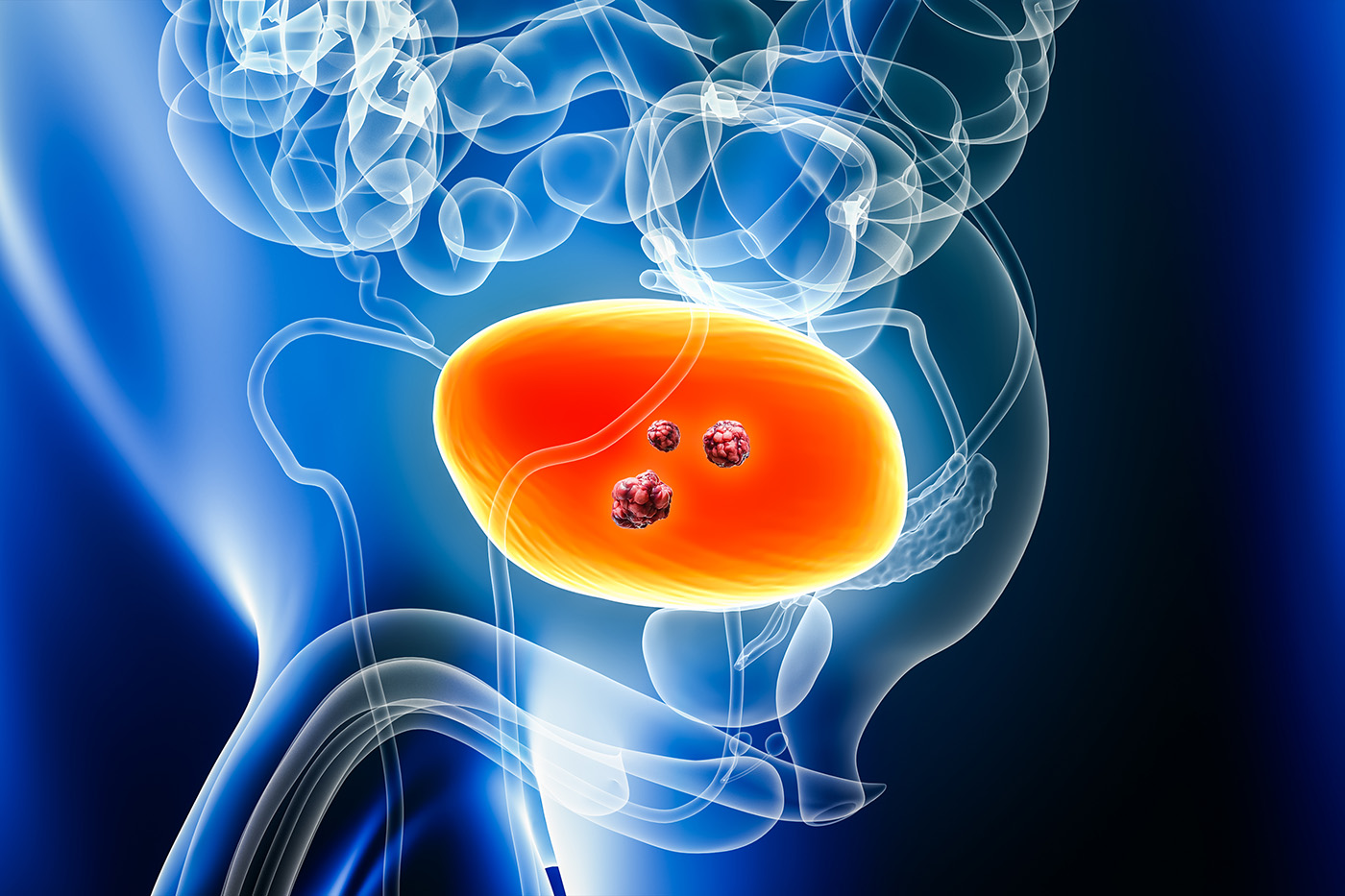
In a potential win for targeted therapy in bladder cancer, Johnson & Johnson announced results from a Phase I study of erdafitinib (Erda-iDRS) in patients with the intermediate-risk non-muscle-invasive form of the disease. The trial used an intravesical drug-releasing system in patients whose tumors harbored select fibroblast growth factor receptor (FGFR) alterations.
Erdafitinib targets FGFR alterations, but studies of systemic administration of the drug have not progressed, mainly because of side effects.
This study met its primary safety endpoint and the treatment showed a high rate of complete and durable responses in patients with recurrent intermediate-risk disease, as well as encouraging recurrence-free outcomes in high-risk disease, according to a J&J press release.
The findings were presented last week during a late-breaking oral session at the European Association of Urology (EAU) 2026 Annual Meeting (Abstract #LB26-0083).
FGFR alterations are common in early-stage bladder cancer, occurring in approximately 70 percent of intermediate-risk and 40 percent of high-risk non–muscle-invasive bladder cancer tumors. Such mutation may drive tumor growth.
Although the impact of FGFR mutations is well studied, care of these patients has not yet been precision-based.
Erda-iDRS is designed to provide prolonged release of erdafitinib, an oral kinase inhibitor, directly into the bladder via intravesical administration over a three-month period. This approach may thus enable localized treatment while minimizing systemic exposure and the risk of adverse events associated with oral administration.
“Intermediate-risk non–muscle-invasive bladder cancer [NMIBC] is defined by recurrences, and many patients undergo repeated procedures as their tumors return,” Antoni Vilaseca Cabo, MD, told Inside Precision Medicine. Cabo is an adjunct physician of the Urology Service at Hospital Clínic de Barcelona in Spain, and was the presenting author of the findings.
He added, “In this study, treatment with Erda-iDRS led most patients with FGFR-altered disease to achieve a complete response by the end of the second treatment cycle, and many of those responses were sustained over time. Achieving and maintaining a complete response is particularly meaningful in this setting, where recurrence is common and requires repeated surgical intervention.”
As of November 2025, 88 patients in this study had received treatment. The primary endpoint was safety, with the secondary endpoints assessing complete response rate and duration of complete response in the intermediate-risk cohort and recurrence-free survival in the high-risk cohort.
In the intermediate-risk cohort, the complete response rate was 89 percent, based on tumor assessments during the initial treatment period. Among responders, the median duration of complete response was 18 months, with a median follow-up of 18 months, indicating prolonged responses over time. Forty-nine percent of patients remain in follow-up.
The treatment was generally well tolerated, as evidenced by the absence of dose-limiting toxicities and a safety profile characterized by predominantly local adverse events.
NMIBC is an early stage of bladder cancer confined to the lining of the bladder, and accounts for approximately 75 percent of newly diagnosed bladder cancer cases. Patients with intermediate-risk NMIBC experience frequent tumor recurrences that often require repeated procedures and ongoing monitoring.
“Targeted therapies against FGFR, including erdafitinib, have been used in more advanced bladder cancer. Oral erdafitinib was evaluated in the THOR-2 study in non–muscle-invasive bladder cancer, although the study ultimately closed early due to challenges with enrollment and treatment discontinuations related to adverse events,” said Cabo.
“What’s new here is the effort to bring a targeted approach earlier in the disease and deliver it directly to the bladder,” he added.
