

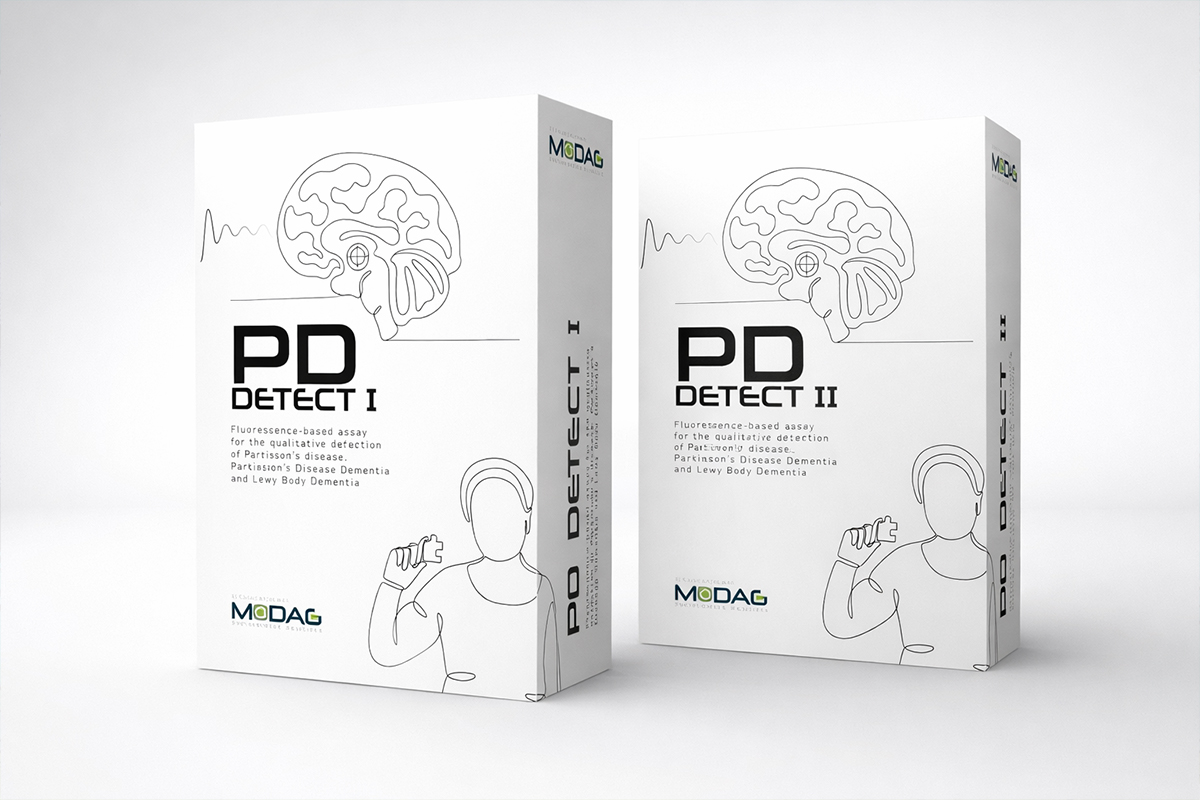
German biotech launches the first CE-certified Parkinson’s disease test kit, aiming to move diagnosis toward earlier, sharper intervention.
Parkinson’s disease has often been diagnosed by waiting. Waiting for tremors to become clearer. Waiting for stiffness to worsen. Waiting for the body to reveal what the brain has been hiding for years. That is the old model MODAG now wants to disrupt.
German biotech company MODAG has launched PD DETE, which it describes as the world’s first CE-certified biochemical standardized test kit for Parkinson’s disease, a milestone that could help shift diagnosis away from clinical guesswork and toward something more objective, earlier and more actionable [1]. At its core, this is a story about moving Parkinson’s diagnosis from observation to evidence.
Parkinson’s is still too often identified through visible symptoms, even though the disease process is already well underway by the time those signs become obvious. In practical terms, clinicians have often had to infer the disease from what patients look like and how they move, rather than directly detecting the underlying biology.
PD DETECT is designed to change that. The test kit enables specialized diagnostic laboratories and hospitals to identify abnormal alpha-synuclein protein aggregates in cerebrospinal fluid, essentially the molecular fingerprints associated with Parkinson’s.
Until now, that kind of testing was largely confined to a small number of specialist research centers. MODAG says its kit packages the process into a validated, standardized format that can be used directly on-site in clinical settings. Instead of waiting for Parkinson’s to become unmistakable, clinicians may be able to detect the disease earlier, based on its biology, with greater confidence.
MODAG says PD DETECT delivers a sensitivity of 97.8% and a specificity of 100%, unusually strong numbers that suggest the test is highly accurate at both catching likely cases and avoiding false positives.
Just as important, the company says the test can help distinguish Parkinson’s from other neurodegenerative conditions that can look similar in the clinic. That distinction matters. Misclassification can delay appropriate care, muddy clinical trials and leave patients navigating uncertainty at exactly the moment they need clarity.
Dr Torsten Matthias, CEO of MODAG GmbH, said that the launch of PD DETECT represented a significant milestone for both the company and patient care. He explained that from the outset, their approach had been to treat diagnostics and therapy as a single, unified entity.
“With this test, we are providing physicians with a tool that decisively improves diagnostic certainty. This is a fundamental requirement for identifying patients earlier and, prospectively, treating them earlier,” he said.
Longevity is often framed as extending lifespan, but in practice, its real promise is to extend the years in which people remain functional, independent and cognitively engaged.
Neurodegenerative disease is one of the greatest threats to that goal. A person can live longer, but if those extra years are shaped by late-stage neurological decline, the longevity dividend shrinks fast. That is why tools like PD DETECT matter. They do not treat Parkinson’s on their own, but they may create the conditions for more meaningful intervention: earlier enrollment into trials, better patient stratification and, eventually, faster adoption of disease-modifying therapies if and when they arrive.
Professor Johannes Levin, the Chief Medical Officer at MODAG, emphasized that the capacity to identify Parkinson’s disease through biological markers instead of purely clinical symptoms represents a significant breakthrough for the field of neurology. He explained that PD DETECT enables the identification of underlying pathology before traditional motor symptoms fully manifest.
PD DETECT is not just another diagnostic product launch; it is part of a larger transition in medicine, from treating diseases once they become undeniable to identifying them when there is still room to act.
There is, of course, a nuance worth keeping in view. PD DETECT is now available to specialized diagnostic laboratories, university clinics and research institutions – not yet as a mass-market screening tool. It also relies on cerebrospinal fluid, which means sample collection is more involved than a standard blood draw. In other words, this is not the final form of Parkinson’s diagnostics, but it may be an important bridge.
If longevity medicine is serious about preventing or delaying age-related decline, it will need better biomarkers, not just better drugs. In that sense, MODAG’s launch is bigger than a product release. It is a signal that neurology may finally be entering its biomarker era, and that healthier, longer lives will depend as much on earlier detection as on the therapies that follow.
