

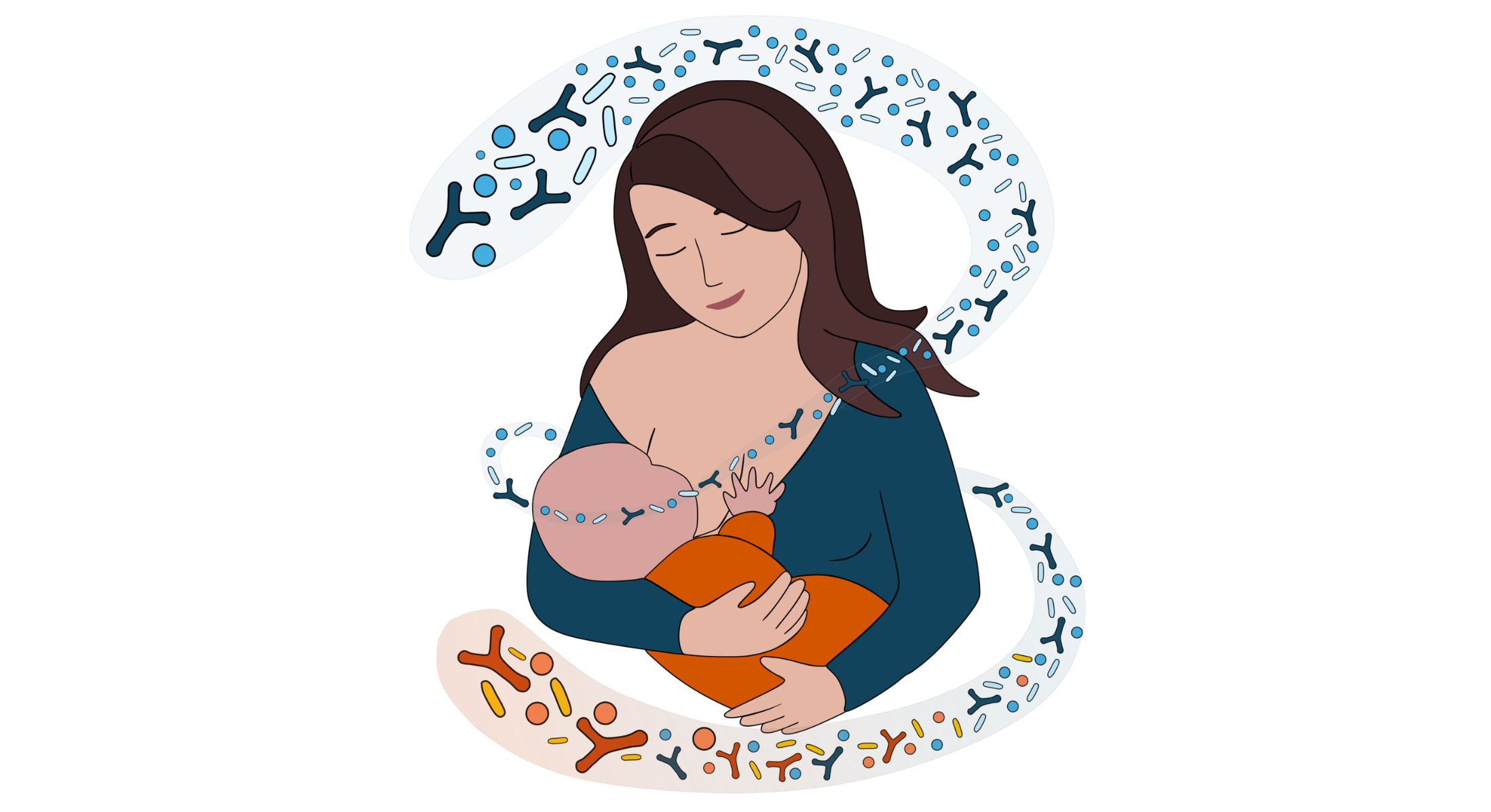
Illustration by Pamela Ferretti
When we see a mother breastfeeding her newborn, we usually think of bonding, nutrition, better immune protection, and even comfort and convenience. But in fact, this common mom–baby situation is much more than that, as human milk contains beneficial microbes that help shape the infant’s gut microbiome during early life. Research has already shown that this community of microorganisms works as a protective shield against chronic conditions such as asthma, allergies, and obesity.
Nevertheless, the biological formula behind the many benefits of human milk has remained elusive — at least until now. A team of scientists from the University of Chicago has provided, in a new study published in Nature Communications, the most detailed portrait yet of how different combinations of bacteria in human milk contribute to the development of the infant gut microbiota.
“Breast milk is the recommended sole source of nutrition for an infant’s first months of life, but important questions about the milk microbiome remained unanswered because the analytical challenges are intimidating,” says first author Pamela Ferretti, PhD, a postdoctoral researcher in the Blekhman Lab at the University of Chicago.
Ferretti has long been interested in studying microbial transmission dynamics between individuals. In her previous research, for instance, she explored how different maternal body sites — such as the mouth, skin, and vaginal cavity — contributed to the infant microbiome, but breast milk had been left out.
“We suspected there were microbes transferred to the infant through breastfeeding, but studying milk is particularly challenging, as it contains a lot of fat and a low percentage of microbial cells. Technically, it is very complicated to extract genomic material to identify strains, which are key to identifying vertical transmission,” Ferretti explained to GMFH.
The most detailed insight
In this new study, researchers followed almost 200 healthy mother–infant pairs during the early months after birth. They collected milk samples at one and three months postpartum, and babies’ stool samples at one and six months.
Using advanced genetic tools — metagenomics — they observed that breast milk contains a distinct mix of bacterial species. The main group was the genus bifidobacteria, including Bifidobacterium longum, B. breve, and B. bifidum, names that may ring a bell as they are among the best-known beneficial bacteria, even present in commercial fermented milks.
“Even though B. longum is well documented as being highly prevalent in the infant gut, it was surprising to find such a strong signature of that species in breast milk samples because previous milk studies mostly reported other bacterial taxa like Staphylococcus and Streptococcus,” Ferretti said. “We think these results will prompt some reevaluation in the field.”
Researchers also identified 12 cases in which the exact same bacterial strain appeared both in a mother’s breast milk and in the infant’s stool sample, providing strong evidence for vertical transmission through breastfeeding. Some of these shared strains belong to species that are commonly used as probiotics, such as B. longum and B. bifidum, which help digest milk sugars and support healthy gut development.
Unexpectedly, although all participants in the study were healthy, Ferretti and colleagues also found bacteria that can be pathogenic, such as E. coli and K. pneumoniae.
“Transmission is kind of a package that includes both good and not-so-good bacteria,” Ferretti summarized, highlighting that those potentially pathogenic species can live harmlessly in healthy individuals and only cause infection under certain conditions.
They also detected oral microbes, such as Streptococcus salivarius from the baby, suggesting that bacteria from the infant’s mouth can enter the breast milk during suckling.
In the near future, Ferretti says they want to expand their research from healthy settings to inflammatory situations, such as subclinical mastitis. Before this painful condition is diagnosed and treated with antibiotics, mothers may pass pro-inflammatory signatures to infants via breastfeeding.
Ferretti also wants to investigate what happens during childhood to assess whether factors in human milk and early life can predict health outcomes later in life.
Reference:
Ferretti, P., Allert, M., Johnson, K.E. et al. Assembly of the infant gut microbiome and resistome are linked to bacterial strains in mother’s milk. Nat Commun 16, 11536 (2025). https://www.nature.com/articles/s41467-025-66497-y
