

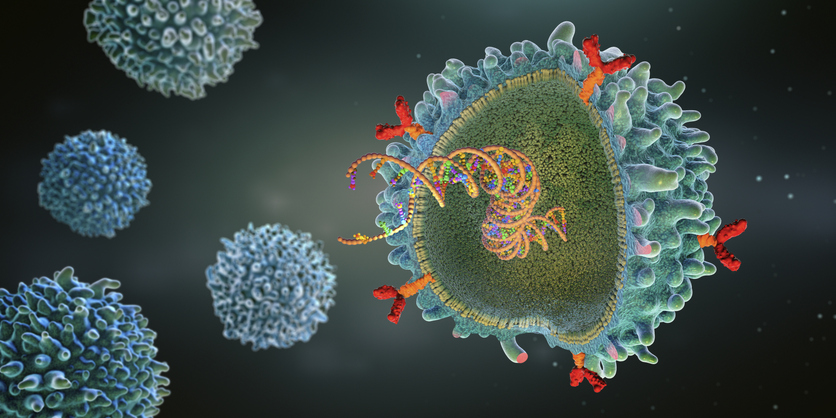
An attempt to simplify CAR T-cell therapy by generating cancer-fighting cells directly inside the body has encountered safety issues in an early clinical trial. The Phase I study, published in Nature Medicine, assessed ESO-T01, an experimental lentivirus encoding a humanized, single-domain anti-BCMA CAR to generate CAR T cells in vivo in patients with relapsed or refractory multiple myeloma. Every patient in the study had grade 3 or higher serious adverse events (SAEs), and one patient passed away, although the authors believe the death was caused by the illness rather than the treatment.
Severe toxicities in all patients
CAR T therapies have revolutionized treatment for certain blood cancers, but their reliance on individualized, lab-based cell engineering limits accessibility. The ESO-T01 approach sought to overcome these limitations by delivering a genetic payload via a lentiviral vector, reprogramming patients’ T cells in vivo.
ESO-T01 was developed by EsoBiotec, which specializes in in vivo engineered immune cell and gene therapies. ESO-T01 is a replication-deficient self-inactivating lentiviral vector that expresses a BCMA-targeted CAR construct under a T cell-specific synthetic promoter. The unique feature of this lentivirus is its immune-shielded, phagocytosis-resistant, and ready-to-use single-dose systemic treatment without lymphodepletion. In theory, the approach would allow treatment to be administered almost immediately after diagnosis or relapse, avoiding weeks-long manufacturing delays.
The trial enrolled just five patients, all of whom experienced SAEs. Notably, 100% of participants developed grade 3 or higher toxicities, underscoring the intensity of the treatment’s side effects. Cytokine release syndrome (CRS)—a potentially life-threatening inflammatory reaction—occurred in four out of five patients. Three cases were severe. Symptoms included high fever, low blood pressure, and hypoxia, requiring aggressive medical intervention.
One patient experienced a dramatic hyperacute reaction within hours of infusion, with dangerously elevated inflammatory markers and cardiovascular instability. This event was so severe that it prompted a mid-trial protocol change to include preemptive steroid treatment for subsequent patients. Although this adjustment reduced the intensity of early reactions, it did not eliminate high-grade CRS. Neurological toxicity was also observed, and all patients developed significant hematologic abnormalities, including severe reductions in white blood cells and platelets.
A treatment-related death raises alarms
Most concerning was the death of one participant during the study. The patient developed rapid neurological deterioration and ultimately died following spinal cord compression caused by an expanding tumor mass.
While investigators attributed the death primarily to disease progression, the timing—coinciding with peak CAR T expansion and immune activation—raises unresolved questions about whether the therapy may have contributed indirectly, for example, through inflammatory swelling or so-called pseudoprogression. This case highlights a key risk of in vivo CAR T approaches: once the therapy is administered, it cannot be easily controlled or withdrawn.
The study was ultimately stopped in 2025, with no further patients enrolled. Although the official reason cited was sponsor restructuring, the combination of severe toxicities, complex immune reactions, and a fatal outcome underscores the challenges facing this therapeutic strategy. With only five patients treated and short follow-up, the trial was insufficient to establish a clear safety profile or determine whether benefits outweigh risks.
Unpredictable immune responses
One of the most striking findings was the unusual pattern of immune activation. Unlike conventional CAR T therapies, which typically trigger immune responses after engineered cells expand, ESO-T01 caused an immediate inflammatory surge within 24 hours—before CAR T cells were even detectable.
This early “innate” immune reaction, the authors suggest, is likely driven by the viral vector itself, introducing a layer of toxicity absent from traditional approaches. A second wave of immune activation happened a few days later. This two-phase response complicates both monitoring and management, as standard CAR T toxicity frameworks may not fully apply.
Although four patients showed tumor responses, including deep remissions in some cases, these results are difficult to interpret given the study’s limitations and safety concerns. The small sample size, early termination, and lack of long-term follow-up mean that any apparent efficacy remains preliminary. Moreover, rapid biomarker changes observed shortly after infusion may reflect transient immune effects rather than durable tumor control.
A cautionary step forward
The research is a blow to AstraZeneca, which acquired all outstanding equity of EsoBiotec for a total consideration of up to $1 billion, on a cash- and debt-free basis, last May. This includes an initial payment of $425 million and up to $575 million in contingent consideration based on development and regulatory milestones.
The ESO-T01 trial illustrates both the promise and the peril of in vivo CAR T therapy. By eliminating manufacturing, the approach could theoretically expand access and speed treatment—but it also introduces new biological risks.
Delivering gene-modifying vectors systemically exposes the entire immune system to activation, potentially triggering severe inflammation before therapeutic benefits emerge. In addition, the inability to fine-tune or halt CAR T production once initiated raises safety concerns, particularly in patients with complex or high-risk disease.
Researchers emphasize that further development will require careful redesign, including strategies to reduce innate immune activation, improve targeting, and enhance safety controls. Larger trials with more rigorous monitoring will be needed to determine whether the approach can be made viable. For now, the study serves as a cautionary example: simplifying CAR T therapy by moving it inside the body may not be as straightforward or safe as hoped.
