

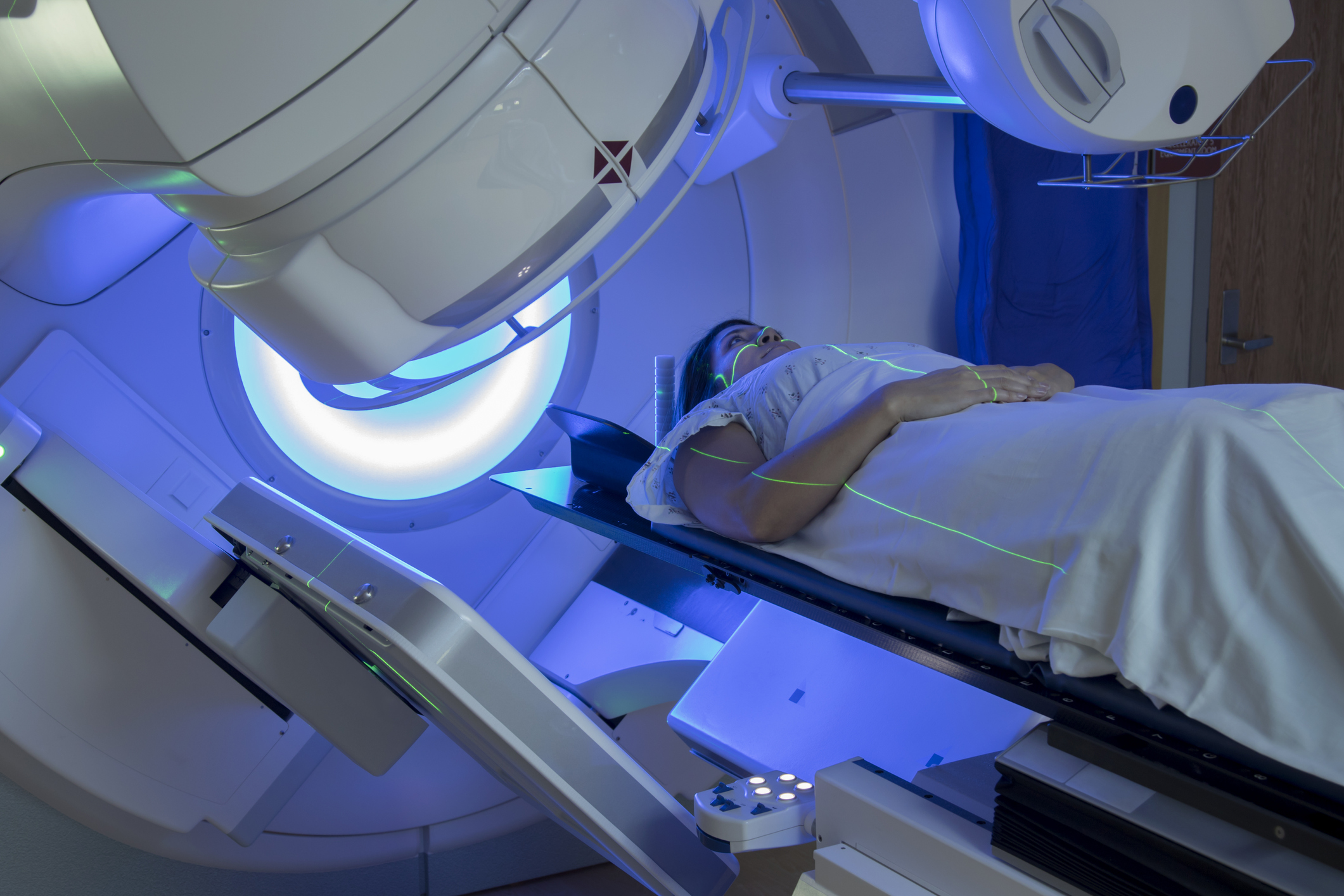
Tailoring the extent of radiation therapy (RT) according to the lymph node response after chemotherapy for breast cancer is associated with very low recurrence rates and will allow some patients to avoid this treatment, shows data reported at the 15th European Breast Cancer Conference in Barcelona.
The research was presented by Fleur Mauritz, MD, a radiation oncologist in training at Maastro, Maastricht Radiation Oncology Institute in the Netherlands. She said: “For many patients with breast cancer, the first treatment is chemotherapy. This can shrink the tumor and kill off any cancer cells that are starting to spread into the body, before surgery.
“We know that radiotherapy reduces the risk of breast cancer recurrence, especially when patients have had surgery to remove a tumor, rather than the whole breast, and when there are signs of cancer in the lymph nodes. This study examined whether it’s possible to scale back radiotherapy in patients whose cancer shows a good response when chemotherapy is given prior to surgery.”
Although early data from the RAPCHEM and NSABP-B51 trials indicated that that locoregional RT can be tailored to pathologic lymph node status in women with clinical stage T1–2, node positive breast cancer who have received primary systemic treatment, long-term data are lacking.
At the conference, Mauritz reported results from long-term follow-up of the RAPCHEM participants. The study included 838 women with clinical stage T1–2 node positive breast cancer who were treated at 17 cancer centers in the Netherlands between 2011 and 2015. At diagnosis, each patient had a breast tumor smaller than five cm, with fewer than four positive lymph nodes.
Following chemotherapy and surgery, the patients were categorized into three risk groups. Patients who no longer had signs of cancer in their lymph nodes were classed as low risk (n=291) and were given radiotherapy to the whole breast if they had undergone lumpectomy, or no radiotherapy if they had mastectomy.
Patients who had one to three positive lymph nodes were categorized as intermediate risk (n=370) and treated with RT to the whole breast, or chest wall in the case of mastectomy, without irradiating the level 1 and 2 axillary lymph nodes (i.e., those below the clavicular bone). For women who did not undergo axillary lymph node dissection (ALND), RT was given at axillary levels 1 and 2.
Patients with four to nine positive lymph nodes were categorized as high risk (n=177) and treated with RT to the whole breast or chest wall and to the level 3 and 4 axillary lymph nodes (i.e., those above the clavicular bone) after ALND. RT was given to level 1 to 4 lymph nodes in high-risk cases where there was no ALND.
Mauritz and colleagues found that, during 10 years of follow-up, 24 (2.9%) patients experienced a recurrence in the breast, chest wall, or lymph nodes (without signs of cancer spread elsewhere in the body).
The rate was 2.4% in the low-risk group, 3.2% in the intermediate-risk group, and 2.8% in the high-risk group, with the small difference among the groups not deemed statistically significant.
The 10-year overall survival rates were 90.7%, 83.0%, and 70.5%, respectively, and did differ significantly among the groups.
Mauritz said: “The results of our study show that tailoring the extent of radiotherapy according to how well the chemotherapy has worked to treat cancer in the lymph nodes, leads to very low and reassuring recurrence rates in the breast and surrounding area. In a selected group of patients, we see very low recurrence rates even when we leave radiotherapy out completely.”
She also pointed out that most patients in the RAPCHEM study underwent ALND, a procedure that was common 10 years ago but is used less often in current practice. The number of patients who did not undergo ALND was too small to draw conclusion about the impact of omitting RT in this group.
However, Mauritz told Inside Precision Medicine that limited data in the literature suggest that patients with no more than three positive lymph nodes prior to chemotherapy who no longer show lymph node metastasis after chemotherapy, based on the pathology results of less invasive axillary surgery, do not need regional RT of the axillary lymph nodes.
“Personalizing radiotherapy remains a key focus in improving breast cancer care,” said Mauritz. “The current data support further individualization of treatment and contribute to more precise, patient-centered care that helps spare patients the potential morbidity associated with irradiation.”
Her team will continue to explore how RT can be better tailored based on tumor characteristics, treatment response, and patient-specific factors.
“By integrating clinical data with emerging insights, we aim to further refine risk stratification and optimize the balance between treatment effectiveness and quality of life for patients,” she said.
