

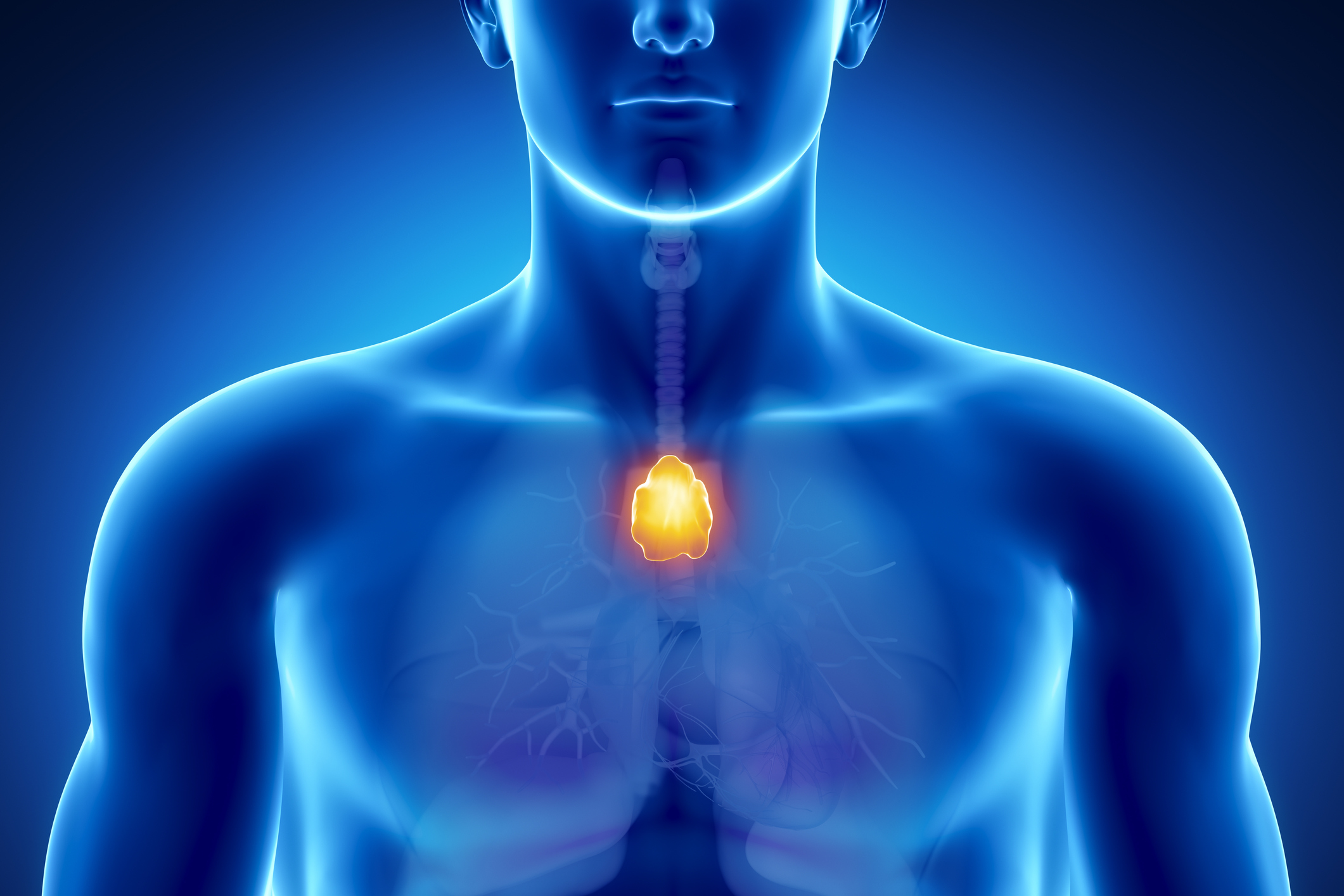
Long overlooked in adult health, the thymus—a small organ in the chest critical for T cell development—may play a decisive role in determining which patients respond to cancer immunotherapy. Now, researchers at Mass General Brigham have applied artificial intelligence to routine CT scans to assess the thymus in more than 3,400 cancer patients and found that higher thymic health was associated with lower risk of cancer progression and death following immunotherapy. The study was published in the journal Nature.
“The thymus has been overlooked for decades and may be a missing piece in explaining why people age differently, and why cancer treatments fail in some patients,” said Hugo Aerts, PhD, director of the Artificial Intelligence in Medicine (AIM) Program at Mass General Brigham, in a press release. “Our findings suggest thymic health deserves much more attention and may open new avenues for understanding how to protect the immune system as we age.”
Until recently, the health of the thymus has been considered largely irrelevant in adults since the gland shrinks and produces significantly fewer T cells after puberty. Because of this, researchers and clinicians have rarely studied the organ’s influence on adult health or how it might affect cancer treatments. The Mass General Brigham team, however, showed that thymic function in adults could be measured noninvasively using CT scans and quantified through a “thymic health” score, incorporating organ size, shape, and composition. This score can help predict a patient’s response to immunotherapy.
To determine thymic health, the investigators employed a deep-learning framework to analyze routine CT scans. Using data from the prospective TRACERx lung cancer cohort, the researchers found that thymic health correlated with T cell receptor diversity and T cell receptor excision circles, which are indicators of thymic activity and adaptive immune competence.
“We developed a deep-learning system that assesses routine CT scans to quantify thymic health by analyzing structural and radiographic features,” Aerts told Inside Precision Medicine. “The model identifies characteristics such as thymic size, tissue composition, and parenchymal integrity, with preserved thymic tissue and less fatty involution emerging as the strongest predictors of robust immune function.”
Analyzing patients with non-small cell lung cancer (NSCLC) treated with immune checkpoint inhibitors, the Mass General team discovered that those with higher thymic health scores, as determined by their approach, had significantly lower risks of disease progression and mortality.
“Thymic health appears to shape the adaptive immune response by determining the output and diversity of naive T cells,” Aerts noted. “Patients with higher thymic health consistently showed improved progression-free survival and overall survival following immunotherapy, indicating that the thymus is an important determinant of host immune competence.”
In individuals with lower thymic health, naive T cell output is reduced, limiting the immune system’s ability to respond to cancer immunotherapy. The researchers observed that even in patients previously treated with chemotherapy, which can impair thymic function, higher thymic health remained prognostic, particularly in first-line immunotherapy settings.
The study builds on prior evidence linking T cell diversity to aging and immune function, but it directly connects this evidence to thymic health as a measure of cancer treatment outcomes. Unlike traditional biomarkers, which focus on tumor characteristics such as PD-L1 expression or tumor mutation burden (TMB), thymic health is host-specific, providing insight into the patient’s immune competence rather than tumor biology alone.
“Given that our method leverages standard-of-care CT scans without additional burden, we envision AI-based thymic health assessment becoming an integral biomarker for patient stratification in immunotherapy,” Aerts said.
Looking into the future, the study noted that while no clinical intervention yet exist for improving thymic health, there is evidence that developing methods to improve or maintain the function of the thymus during treatment. This could help enhance immune competence in adults which could boost the efficacy of immune approaches to treating cancer.
While the current research assessed the potential impact in NSCLC, the findings could have a broader impact.
“These findings identify thymic health as a previously unrecognized, tumor-agnostic determinant of immunotherapy efficacy, with potential implications for patient stratification, treatment timing and the development of immune-rejuvenating strategies in precision immuno-oncology,” said Aerts.
