

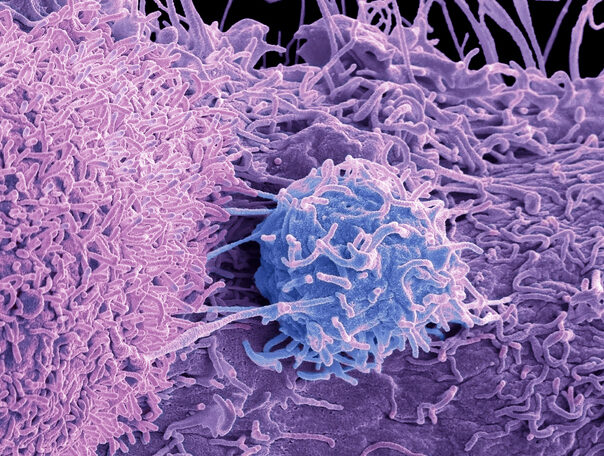
The movement of proteins inside cells has long been explained as a passive process driven by diffusion, with molecules drifting randomly until they reach their destination. While this model has served as a foundation of cell biology, it has never fully explained how cells achieve the speed and coordination required for processes such as migration, wound repair, and immune response.
A new study from Oregon Health & Science University (OHSU), published in Nature Communications, challenges this long-standing view. The researchers show that cells actively generate directed internal fluid flows, described as “trade winds” that push proteins toward the leading edge, where critical functions such as movement and repair take place.
Rethinking intracellular transport
In recent years, the limitations of diffusion-based transport have become increasingly apparent, particularly in highly dynamic cells. Rapidly migrating cells must continuously deliver proteins to specific regions, often within seconds. Diffusion alone is poorly suited for such targeted and efficient delivery.
The new findings suggest that cells solve this problem not by relying solely on biochemical signaling or molecular motors, but by exploiting physical forces. Instead of leaving protein movement to chance, they create internal currents that actively redistribute molecules.
As James Galbraith, PhD, explained, “We realized the cartoon models in textbooks were missing a huge piece. There had to be some kind of flow in the cell pushing things forward. Cells really do ‘go with the flow.’”
An unexpected discovery
The discovery emerged unexpectedly during a teaching experiment. “It actually started out as an unexpected finding,” said Catherine Galbraith, PhD. “We were just conducting an experiment with students in class.”
Using a standard technique to track protein movement, the researchers observed a surprising pattern: proteins were not simply diffusing but appeared to move directionally toward the front of the cell. “We kind of did it for fun and then realized this gave us a way of measuring something that wasn’t able to be measured before,” she said.
This observation led to a series of experiments confirming that cells generate directed flows capable of transporting proteins far more efficiently than diffusion alone.
A coordinated delivery system
Rather than moving individual molecules in isolation, the flow acts as a bulk transport system, carrying multiple proteins simultaneously. This allows cells to rapidly assemble the molecular machinery needed for movement and structural changes at the leading edge.
The researchers also found that this transport is spatially organized. Proteins are funneled into specific regions of the cell where they are most needed, suggesting a level of coordination that goes beyond simple transport.
“We found that the cell can actually squeeze at the back and target where it sends that material,” said James Galbraith. “If you squeeze half a sponge, the water only goes on that half. That’s basically what the cell is doing.”
Implications for cancer and tissue repair
Cell migration is central to many biological processes, from immune surveillance to wound healing. It is also a defining feature of cancer metastasis, where tumor cells spread from their original site to other parts of the body.
The discovery of directed intracellular flow provides a new perspective on how cells achieve this mobility. “We know these highly invasive cells have this really cool mechanism to push proteins really fast, really rapidly where they need them at the front of the cell,” said James Galbraith.
Although all cells share similar molecular components, their behavior depends on how those components are organized and regulated. “All cells have basically the same components inside, much like a Porsche and a Volkswagen have many of the same parts, but when those parts are assembled into the final machine, they behave and function very differently,” he added.
Understanding these differences could help researchers identify new ways to disrupt cancer cell migration without affecting normal cellular function.
A broader shift in cell biology
Beyond its immediate implications, the study reflects a broader shift in how scientists think about cellular organization. Increasingly, cells are being understood not just as biochemical systems, but as physical systems governed by forces such as mechanics and fluid dynamics.
The idea that cells can generate and control internal flows adds a new layer of regulation, one that operates alongside genetic and signaling networks.
As Catherine Galbraith noted, “Just as small shifts in the jet stream can change the weather, small changes in these cellular winds could change how diseases begin or progress.”
The identification of intracellular “trade winds” opens new directions for research in cancer biology, regenerative medicine, and drug delivery. Future studies will likely focus on how these flows are regulated, how they differ between healthy and diseased cells, and whether they can be targeted therapeutically.
The work was made possible by advanced imaging technologies that allow researchers to visualize cellular processes at unprecedented resolution. “iPALM allowed us to physically see the compartments,” said James Galbraith. “There’s no other light-based technique that could do that.”
The findings highlight how much remains to be discovered about even the most fundamental aspects of cell biology. “All you had to do was look,” Catherine Galbraith said. “The flows were there all along. Now we know how cells use them.”
By revealing that cells actively direct the movement of their internal components, the study not only revises a core biological principle but also opens new possibilities for understanding, and potentially controlling, disease.
