
Close Menu
My Blog

    Subscribe to Updates

    Get the latest creative news from FooBar about art, design and business.

    What's Hot

    Nautilus debuts Voyager platform in push toward next-gen proteomics

    March 1, 2026

    First-in-Human Success for Prenatal Stem Cell Therapy in Spina Bifida

    February 28, 2026

    Pressure-Driven Pathway Links Liver Congestion to Fibrosis and Cancer

    February 28, 2026
    Facebook X (Twitter) Instagram
    X (Twitter) YouTube
    My BlogMy Blog
    Sunday, March 1
    • Home
    • About Us
    • Healthy Living
    • DNA & Genetics
    • Podcast
    • Shop
    My Blog
    Home»Probiotics»Walking for Fitness Could Help Older Women Reduce the Risk of Heart Disease and Early Death
    Probiotics

    Walking for Fitness Could Help Older Women Reduce the Risk of Heart Disease and Early Death

    adminBy adminOctober 24, 2025No Comments5 Mins Read
    Facebook Twitter Pinterest LinkedIn Tumblr WhatsApp VKontakte Email
    Walking 4,000 Steps Once or Twice a Week Boosts Heart Hearth and Lifespan
    Share
    Facebook Twitter LinkedIn Pinterest Email

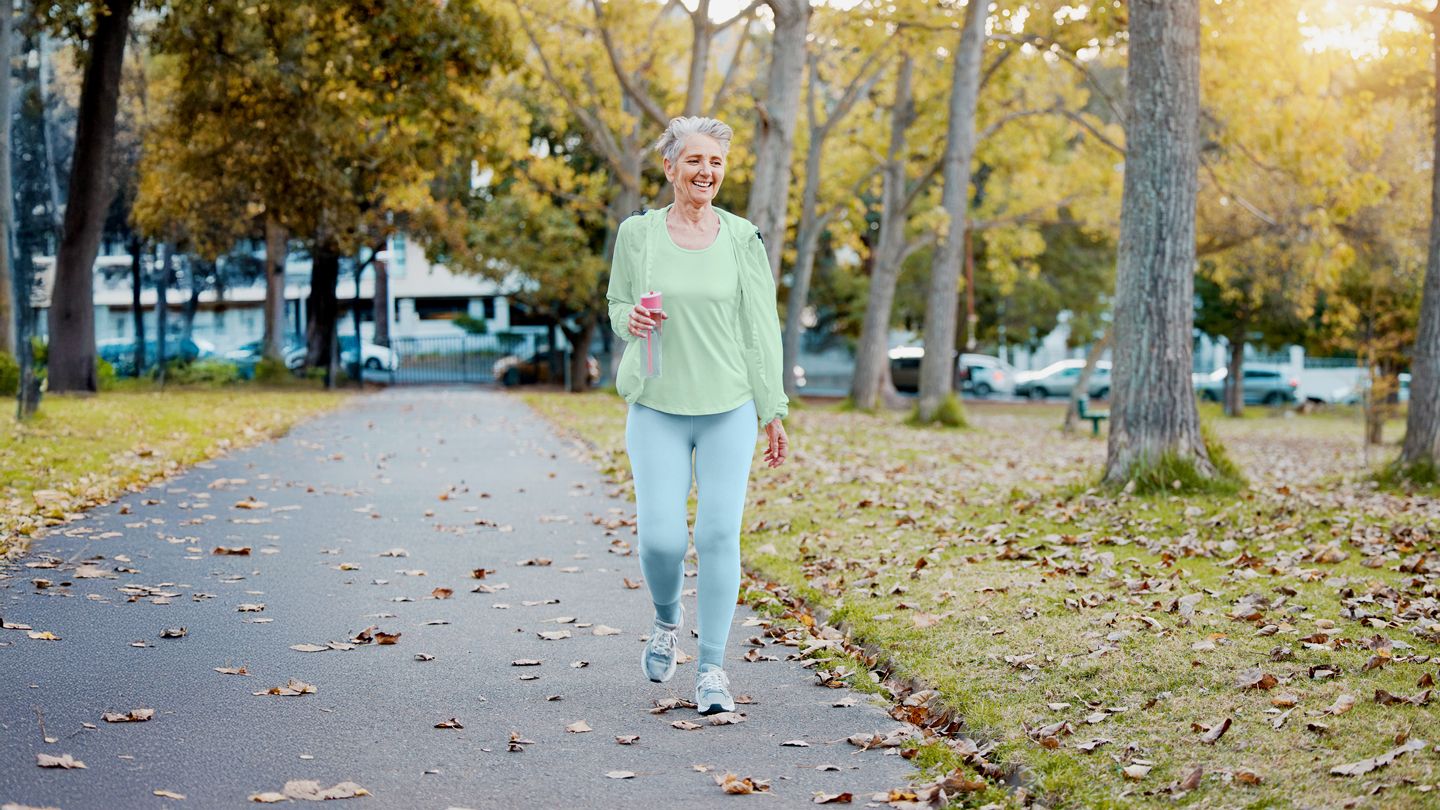
    A new study suggests you don’t need to walk 10,000 or even 7,000 steps a day to see meaningful health benefits. For women in their sixties and beyond, averaging as few as 4,000 steps just one or two days a week was linked to lower risks of dying early and developing heart disease.

    The findings suggest that while the amount of walking or steps are important for health, hitting a certain number of steps every day or even the majority of days isn’t necessary to lower the risk of heart disease or dying early, says lead author Rikuta Hamaya, MD, a professor of medicine at Brigham and Women’s Hospital and the Harvard T.H. Chan School of Public Health in Boston.

    The findings offer a simple, achievable goal, especially for older people who tend to be less active, said the authors.

    What Going for a Walk Once or Twice a Week Could Do for Older Women’ s Health

    The study followed over 13,000 women who were at least 62 (the average age was 72) who were given a tiny device to wear on their hip to track their steps over the course of a week. After collecting the data, participants were placed into groups according to how many days per week they walked at or above 4,000, 5,000, 6,000, or 7,000 steps.

    Then researchers followed the participants for an average of about 11 years to see how many of the women developed heart disease or died. Key findings included:

    • Women who walked 4,000 steps just one or two days per week had a 26 percent lower risk of dying and a 27 percent lower risk of developing heart disease compared with women who never hit 4,000 steps on any day.
    • Walking 4,000 steps three or more days reduced the risk of dying by 40 percent, but the benefits plateaued at that point, even for those who walked more.

    “From a behavioral perspective, it means you don’t have to be active every single day to see meaningful health benefits,” says Deepika Laddu, PhD, associate professor and researcher in lifestyle and behavioral health promotion for chronic disease prevention at Northwestern Medicine in Chicago.

    “Having a daily movement goal can help keep you consistent, though” says Dr. Laddu, who wasn’t involved in the research.

    The results also show that you don’t have to hit high step counts to see health benefits — what matters most is simply moving more, in whatever pattern is sustainable, she says.

    Walking an Extra 15 Minutes a Day May Be Enough to Get a Significant Benefit

    Michael J. LaMonte, PhD, MPH, a research professor in the department of epidemiology and environmental health at the University of Buffalo in New York, agrees that the findings are encouraging from a prevention perspective.

    “You don’t need to reach the popular target of 10,000 steps a day [walking about five miles] to lower your risk of heart disease or dying early,” says Dr. LaMonte, who has published research on steps and health outcomes but was not involved in this study.

    In general, women in this age range average roughly 2,400 steps daily, he says.

    To see benefits similar to the ones in this study, an average woman would need to add about 1,600 more steps a couple days a week — an amount LaMonte says is very doable with just a few tweaks to usual habits.

    That amount would be the equivalent of a few extra five-minute walks, one 15-minute walk at a moderately brisk pace, or just more time puttering around the house or yard.

    “It’s also worth noting that the women who were able to walk more, there appeared to be an even stronger association with lower mortality risk,” says LaMonte.

    Collectively, these study findings reinforce the general consensus within the physical activity and health scientific community: Some activity is better than none, and walking more often is better, up to a point, he says.

    Could It Be That Healthier People Tend to Walk More?

    Because the study tracked how far women walked in a normal week rather than giving them instructions and measuring them against a control group, it’s not possible to know if it was the walking that reduced the risk of heart disease and early death. It could be that women who felt healthier simply walked more, making steps a sign — rather than a cause — of better health.

    Dr. Hamaya acknowledges this is possible. To account for that, researchers did a separate “sensitivity” analysis to confirm the findings where they excluded heart disease and death the first two years, and in people who reported fair or poor health, and that analysis yielded similar findings to the main analysis, Hamaya says.

    Heart Disease Is Common for Women, But Undertreated

    Over 60 million women in the United States are living with some form of heart disease. Although heart disease is the No. 1 killer of women — accounting for about 1 in 5 deaths — it remains underdiagnosed and undertreated, especially in older women, low-income women, and women of color.

    While this gap began because research and public health efforts largely ignored women, the disparities continue for a host of reasons. Beyond potential biological differences between the sexes, women often serve as primary caregivers for their families — which can lead to neglecting their own health.

    Move However You Want — You’ll See Benefits No Matter What

    This study showed that you don’t have to speed walk laps around the track to improve your heart health; any movement will do. The monitoring device used for this study only measured steps, not intensity or how far people walked at one time, says LaMonte.

    “It could be slow or fast walking, continuous or intermittent walking, and walking for transportation, leisure or recreation, or simply moving about your home during the course of a usual day,” he says.

    As long as you don’t have any health or mobility issues that make walking unsafe, it’s a simple and no-cost way to improve your health, says LaMonte.

    Although you don’t need to track your steps, a pedometer or fitness tracker may help motivate you to be more consistent and track your progress, he says.

    Death Disease Early Fitness Heart older Reduce Risk Walking Women
    Share. Facebook Twitter Pinterest LinkedIn Tumblr WhatsApp Email
    Previous ArticleHow Your Bedtime Affects Your Brain, Mood, & Mindfulness
    Next Article China seeks self-reliance in science in next five-year plan
    admin
    • Website

    Related Posts

    CRC Screening by Colonoscopy and FIT Improves Early Detection over Usual Care

    February 26, 2026

    Key Genetic Variants That Influence Disease Risk, Human Health Traits Identified

    February 26, 2026

    Phase III Data Support Single-Tablet HIV-1 Therapy for Older Adults with Resistant Infection

    February 26, 2026

    Brain Blood Flow Markers Detect Early Signs of Alzheimer’s

    February 25, 2026
    Leave A Reply Cancel Reply

    Our Picks

    9 Time-Saving Kitchen Gadgets for Fall at Amazon

    September 5, 2025

    Why Exercise Is So Important For Heart Health, From An MD

    September 5, 2025

    An Engineered Protein Helps Phagocytes Gobble Up Diseased Cells

    September 5, 2025

    How To Get Rid Of Hangnails + Causes From Experts

    September 5, 2025
    • Facebook
    • Twitter
    • Pinterest
    • Instagram
    • YouTube
    • Vimeo
    Don't Miss
    Longevity

    Nautilus debuts Voyager platform in push toward next-gen proteomics

    By adminMarch 1, 20260

    Company’s new benchtop system promises a clearer view of proteins following validation at a leading…

    First-in-Human Success for Prenatal Stem Cell Therapy in Spina Bifida

    February 28, 2026

    Pressure-Driven Pathway Links Liver Congestion to Fibrosis and Cancer

    February 28, 2026

    A cellular atlas of aging comes into focus

    February 28, 2026

    Subscribe to Updates

    Get the latest creative news from SmartMag about art & design.

    About Us

    At FineGut, our mission is simple: to enhance your self-awareness when it comes to your gut health. We believe that a healthy gut is the foundation of overall well-being, and understanding the brain–gut connection can truly transform the way you live.

    Our Picks

    9 Time-Saving Kitchen Gadgets for Fall at Amazon

    September 5, 2025

    Why Exercise Is So Important For Heart Health, From An MD

    September 5, 2025

    An Engineered Protein Helps Phagocytes Gobble Up Diseased Cells

    September 5, 2025
    Gut Health

    Nautilus debuts Voyager platform in push toward next-gen proteomics

    March 1, 2026

    First-in-Human Success for Prenatal Stem Cell Therapy in Spina Bifida

    February 28, 2026

    Pressure-Driven Pathway Links Liver Congestion to Fibrosis and Cancer

    February 28, 2026
    X (Twitter) YouTube
    • Contact us
    • Privacy Policy
    • Disclaimer
    • Terms and Conditions
    © 2026 finegut.com. Designed by Pro.

    Type above and press Enter to search. Press Esc to cancel.