


Biological age test that measures ‘biological noise’ across organs has already been adopted by hundreds of longevity clinics worldwide.
Longevity startup Generation Lab has raised $11 million in seed funding to accelerate the expansion of SystemAge – a diagnostic tool designed to measure biological aging. Co-founded by renowned UC Berkeley aging researcher Dr Irina Conboy, the San Francisco-based company has rapidly built a commercial footprint since it launched last year, boasting more than 275 clinic partners worldwide and a growing dataset encompassing over 300 million human-aging data points.
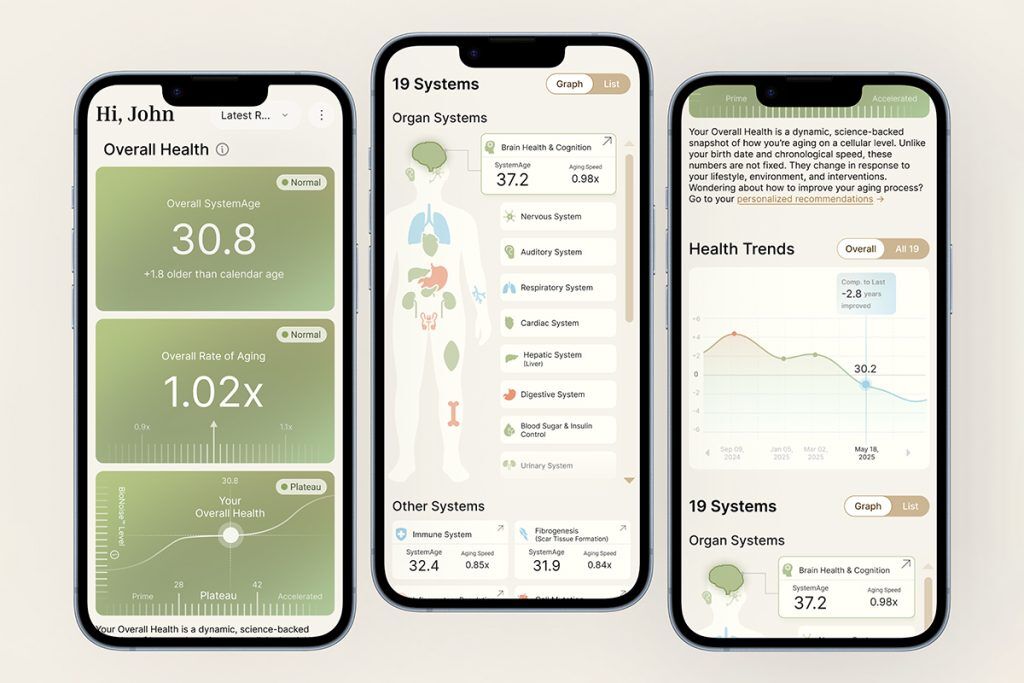
According to Generation Lab, SystemAge quantifies biological age through direct physiological measurement rather than predictive modelling, assessing the health and aging progression of 19 organ systems from an at-home blood test. Each system receives a specific biological age and risk profile, providing clinicians and patients with a map of where physiological aging is occurring most rapidly. Rather than emphasizing an overall biological age number, SystemAge focuses on identifying and addressing accelerated aging in particular systems – such as cardiac, immune, or reproductive health – through targeted interventions.
“We’re witnessing a fundamental shift from reactive to proactive healthcare – led by consumers,” said Generation Lab co-founder and CEO Alina Su. “This funding allows us to accelerate our mission of making longevity diagnostics the standard of care globally. We’re not just measuring aging; we’re creating the roadmap to reverse it.”
The company’s approach is based on discoveries around the non-linear nature of DNA methylation aging, which it claims enables greater diagnostic accuracy and actionable insights compared with biological age clocks that rely on statistical correlations. Building on this, Generation Lab’s approach centers on the concept of “biological noise,” the measurable dysregulation in molecular systems that occurs as organisms age.
“While other platforms offer disease biomarkers, we’ve developed the first preventive health test detecting signals before symptoms appear,” said Conboy. “This is the most comprehensive aging diagnostic, analyzing how multiple organ systems age in concert. Our proprietary algorithms, trained on hundreds of millions of data points, don’t just tell you how old you are – they reveal which specific systems are aging fastest and provide precise interventions to reverse the process.”

SystemAge’s “noise detector” analyzes changes in specific DNA cytosines expected to remain stable throughout life. When these cytosines become dysregulated, the system interprets it as evidence of molecular imbalance – an early indicator of disease risk or systemic decline. Conboy’s laboratory was among the first to quantify this noise, publishing results in Aging that described it as a measurable biomarker of health and disease propensity.
Generation Lab says that initial adoption of SystemAge has come from a range of healthcare providers, including academic medical centers and specialized longevity clinics. The company reports that early clinical applications of its tool have produced interesting results, citing that regenerative therapies such as MUSE Stemcell treatments demonstrated average reversals of 13.6 years in brain age and 4.9 years in reproductive system age. The company also said SystemAge results indicate that lifestyle interventions, including anti-inflammatory diets, structured fasting, and optimized exercise regimens, are associated with significant improvements in biological age across several organ systems.
The funding round, led by Accel, brings the company’s total funding to $15 million and includes participation from Samsung Next, Zone2, Aoki Labs, Build Your Legacy Ventures, and Markham Valley Ventures.
“Generation Lab is shaping the future of the longevity industry,” said Accel partner Kerry Wang. “Alina, Michael, and Irina are building with conviction and credibility in a space that demands both. Their SystemAge platform combines solid science with strong commercial progress, creating a new category in data-driven healthcare. This is only the beginning.”
