

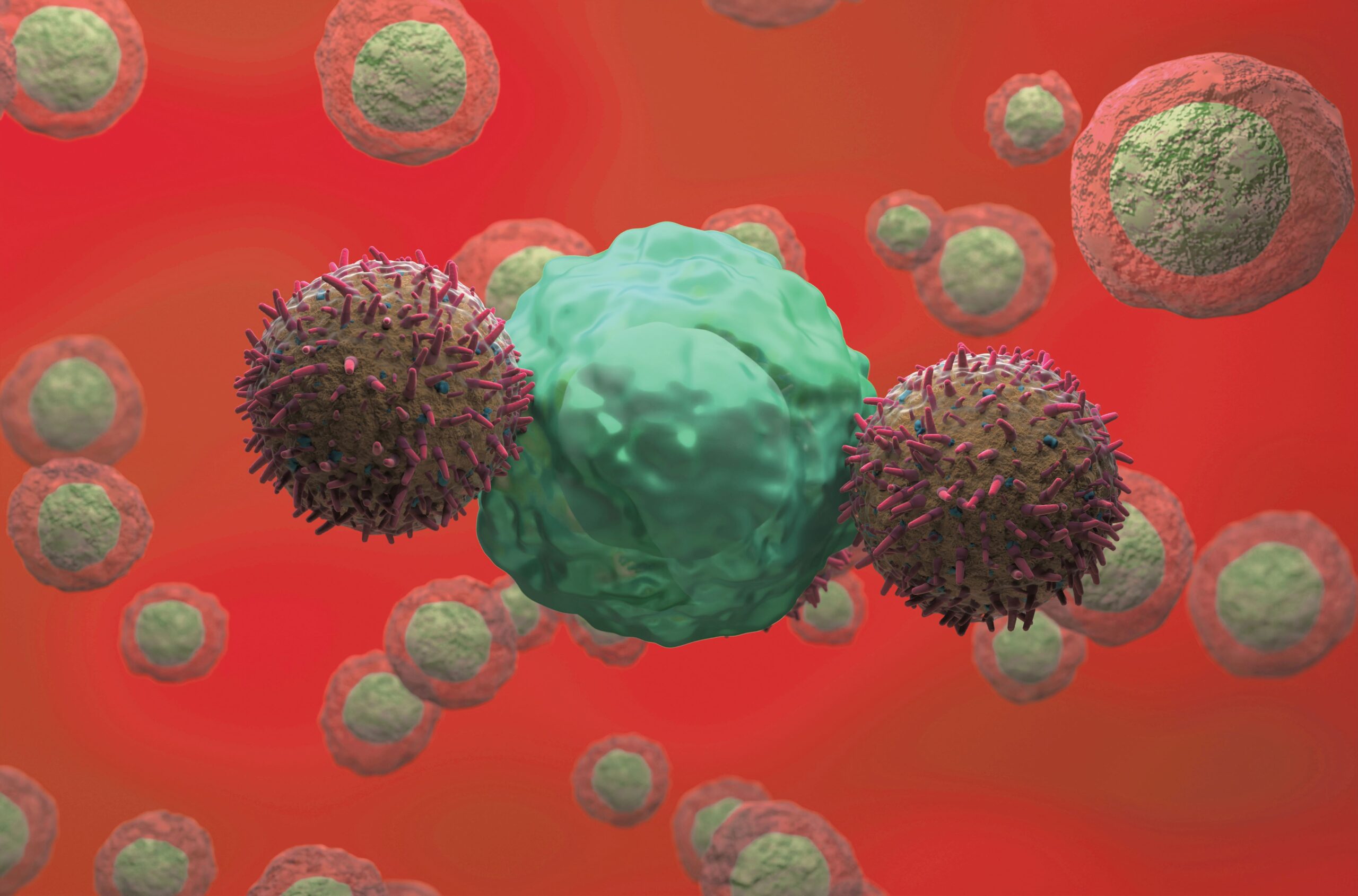
Scientists at École Polytechnique Fédérale Lausanne (EPFL), and at UNIL-CHUV, University Hospital Lausanne (CHUV) and University of Lausanne (UNIL) have developed a computational method to create synthetic receptors that help engineered T cells respond more effectively to tumors. The team, headed by Patrick Barth, PhD, at EPFL and Caroline Arber, PhD, at UNIL-CHUV, developed a computational platform for designing synthetic protein receptors from scratch. These receptors, called T-SenSERs (tumor microenvironment-sensing switch receptors), are engineered to detect soluble signals found in tumors and convert them into co-stimulatory or cytokine-like signals that boost T cell activity.
The team demonstrated that when combined with conventional chimeric antigen receptor (CAR) T cells, the synthetic receptors enhanced anti-tumor effects in models of lung cancer and multiple myeloma. The researchers reported on their studies in Nature Biomedical Engineering, in a paper titled “Computational design of synthetic receptors with programmable signalling activity for enhanced cancer T cell therapy,” in which they concluded “Our study sets the stage for the accelerated development of synthetic biosensors with custom-built sensing and responses for basic and translational cell engineering applications.”
Cancer immunotherapy using engineered T cells is showing a lot of promise in treating blood cancers. Bioengineered T cells, especially those equipped with chimeric antigen receptors, have revolutionized cancer treatment, the authors suggested. “Adoptive T cell therapies for cancer using T cells engineered with chimeric antigen receptors (CAR T cells) are at the forefront of clinically applied synthetic immunology.” But while such treatments delivered impressive results against certain blood cancers, they’ve struggled to make an impact in solid tumors, such as those in the breast, lung, and prostate.
To achieve sustained antitumor responses, engineered CAR- or T-cell receptor (TCR)-transgenic T cells need to be able to recognize and kill tumor cells, but they also need to receive specific co-stimulation and cytokine signals from the environment. A major problem is that the tumor microenvironment (TME), which is a mix of cells and molecules, can dampen immune responses. “The tumor microenvironment (TME) plays a key role in tumor progression, and soluble and cellular TME components can limit CAR T cell function and persistence,” the researchers noted.
In most solid tumors, inhibitory signals dominate while helpful ones that tell T cells to keep going are weak or entirely absent. And since engineered T cells rely on these environmental cues to stay active and functional, they often fall short. This has led scientists to explore ways of building extra receptors into the T cells, so they can pick up tumor-specific signals and respond with added strength. Researchers have tried to create receptors that can sense and react to the TME but designing them has been difficult because building custom signaling proteins is a complex endeavor.
“Meanwhile, most current methods for doing so rely heavily on trial-and-error, which eventually makes it hard to control how these synthetic receptors will eventually behave when deployed against a tumor. “Targeting soluble TME factors to enhance anti-tumor responses of engineered T cells through chimeric receptors is not broadly explored owing to the unpredictable signaling characteristics of synthetic protein receptors,” the authors further pointed out.
Barth, Arber and colleagues have now developed a computational platform that can put together artificial receptors by designing and combining different protein domains, like building with molecular Legos. Each receptor includes an external domain that binds a tumor-associated signal, a middle region that transmits that signal across the cell membrane, and an internal domain that activates useful functions inside the T cell. “… we developed a computational approach for the bottom-up assembly and design of multi-domain receptors with programmable input–output signaling functions,” they stated. “We applied the approach to engineer a class of receptors that we named T-SenSER (TME-sensing switch receptor for enhanced response to tumors).”
Barth further explained, “What sets this approach apart from current protein design approaches is that it doesn’t treat proteins as rigid structures. Instead, it models them as dynamic, shape-shifting machines—allowing researchers to see, for the first time, how signals travel through these synthetic receptors to control cell behavior.”
Using the platform, the team created two families of T-SenSERs: one that responds to VEGF, a protein that promotes blood vessel growth and is common in tumors, and another that responds to CSF1, a protein that negatively influences the behavior of immune cells in tumors. They designed 18 versions and selected the best-performing ones based on simulations and lab tests.
When tested, T cells equipped with both a CAR and a T-SenSER responded more strongly to tumors than CAR T cells alone and showed ligand-specific activities faithfully reflecting the signaling programs encoded by the design method. The VEGF-sensing version (called VMR) only activated the T cell when VEGF was present, while the CSF1-sensing version (CMR) provided a small baseline boost even without CSF1, but ramped up its effect in the presence of the ligand.
In mouse models of lung cancer and myeloma, T cells with these synthetic receptors showed improved tumor control and longer survival. “Combination of CAR and T-SenSER in human T cells enhances anti-tumor responses in models of lung cancer and multiple myeloma, in a VEGF- or CSF1-dependent manner,” they noted.
Importantly, the team found that their design method allowed them to fine-tune the receptors’ behavior, choosing whether it should be always-on, ligand-dependent, or somewhere in between. “On the basis of rational design principles of signal transduction, our technology can engineer synthetic chimeric receptor structures with predictable and desired signaling output and sets the stage for the broader and more efficient development of biosensors with novel input–output functions,” they stated.
Barth commented, “This study represents the first demonstration of the computational design of single-pass, multi-domain receptors with programmable signaling functions and paves the way for the accelerated development of synthetic biosensors with custom-built sensing and response capabilities for basic and translational cell engineering applications.”
In their discussion the authors further noted the larger potential for their T-SenSER technology. “… we envision future applications of VMR or CMR in other therapeutic T cell products, such as CAR T cells with other endo-domains, TCR-T cells, tumor-infiltrating lymphocytes or virus-specific T cells, where significant room for improvement exists, and TME-specific enhancements of the anti-tumor response could be beneficial.”
