
Close Menu
My Blog

    Subscribe to Updates

    Get the latest creative news from FooBar about art, design and business.

    What's Hot

    Nautilus debuts Voyager platform in push toward next-gen proteomics

    March 1, 2026

    First-in-Human Success for Prenatal Stem Cell Therapy in Spina Bifida

    February 28, 2026

    Pressure-Driven Pathway Links Liver Congestion to Fibrosis and Cancer

    February 28, 2026
    Facebook X (Twitter) Instagram
    X (Twitter) YouTube
    My BlogMy Blog
    Sunday, March 1
    • Home
    • About Us
    • Healthy Living
    • DNA & Genetics
    • Podcast
    • Shop
    My Blog
    Home»Microbiome»Compact 3D Printer Repairs Vocal Cords During Surgery
    Microbiome

    Compact 3D Printer Repairs Vocal Cords During Surgery

    adminBy adminOctober 29, 2025No Comments3 Mins Read
    Facebook Twitter Pinterest LinkedIn Tumblr WhatsApp VKontakte Email
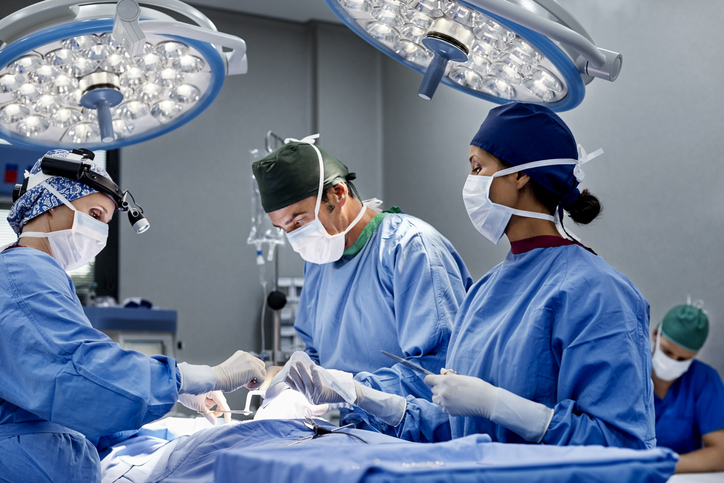
    Female surgeon operating patient at emergency room
    Share
    Facebook Twitter LinkedIn Pinterest Email

    Credit: Morsa Images/ DigitalVision/ Getty Images

    Researchers at McGill University, Canada, have built the smallest 3D bioprinter to date. With a nozzle just 2.7 mm in diameter, the device is designed to help surgeons reconstruct tissues removed from the vocal cords in real time during surgery. A study published today in the journal Device reports that the 3D printer was able to accurately repair lesions in surgical models of vocal cords used to train surgeons. 

    “Our device is designed not only for accuracy and printing quality but also for surgeon usability,” says Swen Groen, PhD student at McGill University and first author of the study. “Its compact and flexible design integrates with standard surgical workflows and provides real-time manual control in a restricted work environment.”  

    About 18% of people who undergo surgery to remove growths on their vocal cords develop post-surgical fibrosis, which results in stiff vocal cords that can significantly affect the quality of their voice and their ability to speak. Current treatment to prevent these complications consists of injecting soft hydrogels into the vocal cords after surgery to promote healing. These materials are designed to protect new tissue as it grows within the vocal folds, a very delicate organ that is under constant strain due to sound vibrations. 

    However, injections are not precise enough to ensure that the hydrogels are placed in the right location. The 3D printer could overcome this major limitation by delivering the hydrogel during the procedure with a resolution of 1.22 mm, reconstructing the natural shape and structure of the vocal cords. 

    While similar devices exist to deliver hydrogels to other organs, such as the colon or the liver, they are too large to be used in vocal cord surgery, where the vocal cords are accessed through the mouth using a laryngoscope. The 3D bioprinter needed to be small enough to fit through the opening without blocking the surgeon’s view of the vocal cords.  

    “I thought this would not be feasible at first—it seemed like an impossible challenge to make a flexible robot less than three mm in size,” says Luc Mongeau, PhD, professor of mechanical engineering at McGill University and senior author of the study. 

    The device was inspired by elephant trunks, with the tiny nozzle placed at the end of a flexible “trunk” whose movements are directed through a controller that can be mounted on a standard surgical microscope. This allows the surgeon to control the 3D printing process manually during the procedure.

    As a demonstration, the 3D printer was first used to make a variety of shapes on flat surfaces. Then, the team tested it in surgical models used for surgery training, where the printer showed high accuracy repairing small lesions as well as fully reconstructing the vocal folds. 

    Future work will involve combining manual control of the device with autonomous movement to optimize the deposition process and the accuracy of the hydrogel placement. Going forward, the researchers see potential beyond just vocal cord surgery, as the device could be useful for any other surgeries requiring accurate and minimally invasive hydrogel deposition.

    “We’re trying to translate this into the clinic,” says Mongeau. “The next step is testing these hydrogels in animals, and hopefully that will lead us to clinical trials in humans to test the accuracy, usability, and clinical outcomes of the bioprinter and hydrogel.” 

    Compact Cords Printer Repairs Surgery Vocal
    Share. Facebook Twitter Pinterest LinkedIn Tumblr WhatsApp Email
    Previous ArticleThe Top Foods to Avoid
    Next Article 25+ Best Recipes That Use Frozen Vegetables
    admin
    • Website

    Related Posts

    First-in-Human Success for Prenatal Stem Cell Therapy in Spina Bifida

    February 28, 2026

    Pressure-Driven Pathway Links Liver Congestion to Fibrosis and Cancer

    February 28, 2026

    Genetic Biomarkers to Predict Efficacy of GLP-1 Therapies Uncovered

    February 28, 2026

    Mapping the Cellular Architecture of Aging Across 21 Organs

    February 28, 2026
    Leave A Reply Cancel Reply

    Our Picks

    9 Time-Saving Kitchen Gadgets for Fall at Amazon

    September 5, 2025

    Why Exercise Is So Important For Heart Health, From An MD

    September 5, 2025

    An Engineered Protein Helps Phagocytes Gobble Up Diseased Cells

    September 5, 2025

    How To Get Rid Of Hangnails + Causes From Experts

    September 5, 2025
    • Facebook
    • Twitter
    • Pinterest
    • Instagram
    • YouTube
    • Vimeo
    Don't Miss
    Longevity

    Nautilus debuts Voyager platform in push toward next-gen proteomics

    By adminMarch 1, 20260

    Company’s new benchtop system promises a clearer view of proteins following validation at a leading…

    First-in-Human Success for Prenatal Stem Cell Therapy in Spina Bifida

    February 28, 2026

    Pressure-Driven Pathway Links Liver Congestion to Fibrosis and Cancer

    February 28, 2026

    A cellular atlas of aging comes into focus

    February 28, 2026

    Subscribe to Updates

    Get the latest creative news from SmartMag about art & design.

    About Us

    At FineGut, our mission is simple: to enhance your self-awareness when it comes to your gut health. We believe that a healthy gut is the foundation of overall well-being, and understanding the brain–gut connection can truly transform the way you live.

    Our Picks

    9 Time-Saving Kitchen Gadgets for Fall at Amazon

    September 5, 2025

    Why Exercise Is So Important For Heart Health, From An MD

    September 5, 2025

    An Engineered Protein Helps Phagocytes Gobble Up Diseased Cells

    September 5, 2025
    Gut Health

    Nautilus debuts Voyager platform in push toward next-gen proteomics

    March 1, 2026

    First-in-Human Success for Prenatal Stem Cell Therapy in Spina Bifida

    February 28, 2026

    Pressure-Driven Pathway Links Liver Congestion to Fibrosis and Cancer

    February 28, 2026
    X (Twitter) YouTube
    • Contact us
    • Privacy Policy
    • Disclaimer
    • Terms and Conditions
    © 2026 finegut.com. Designed by Pro.

    Type above and press Enter to search. Press Esc to cancel.