

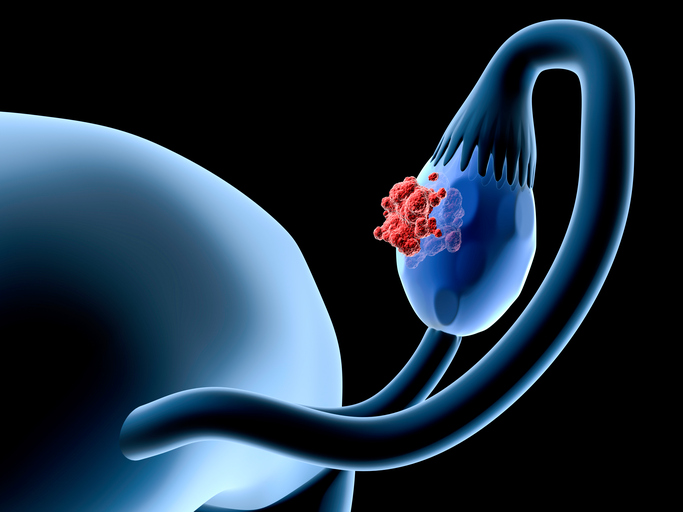
Australian researchers have identified the coagulation factor II receptor (F2R) as a promising new prognostic biomarker and treatment target for ovarian cancer that may allow physicians to more accurately predict treatment responses and personalize therapies to improve outcomes.
Lead researcher Hugo Albrecht, PhD, from the Centre of Pharmaceutical Innovation at the University of South Australia in Adelaide, said the finding marks “a significant step forward” in the study of ovarian cancer, for which there is an urgent clinical need for effective treatment options and improved diagnostic and prognostic technologies.
“Current biomarkers lack sensitivity and accuracy, leaving clinicians with few tools for early detection or to reliably predict treatment outcomes,” he remarked. “However, we believe that F2R could be a powerful candidate for both improving diagnosis and developing new personalized treatments that could target aggressive or drug-resistant cancers.”
F2R is already known to drive tumor metastasis and invasion in triple-negative breast cancer, has been associated with angiogenesis in gastric cancer, and is linked to enhanced cell motility and metastasis in melanoma.
Albrecht and colleagues had previously observed increased F2R expression in ovarian cancer but were unsure of its clinical significance.
To investigate, they used publicly available data to analyze F2R gene expression in ovarian cancers, then carried out flow cytometry, immunofluorescence, and immunohistochemistry (IHC) on ovarian cancer tumor samples to confirm the presence of the F2R protein.
The researchers report in the International Journal of Molecular Sciences that F2R gene expression was significantly increased in tissue from all five ovarian cancer subtypes, including the most prevalent subtype—high-grade serous ovarian cancer (HGSOC), compared with normal tissues.
Furthermore, the IHC experiments revealed significantly elevated F2R protein levels in HGSOC tissues compared with normal ovaries, fallopian tube, and benign ovarian tissue, with the highest levels observed in tissues from patients with metastatic and chemotherapy-resistant disease.
Survival analyses showed that patients in the lowest quartile of F2R protein expression had significantly better progression-free survival than those in higher quartiles, suggesting that high F2R expression could be linked to worse patient outcome and highlighting a possible role as a prognostic marker.
Overall survival (OS) also appeared to be reduced among patients with high F2R expression but only up to approximately three years, which the researchers say “may be due to the additional clinical variables, such as tumor heterogeneity, post-progression therapies, and limited follow-up duration, which can obscure OS differences.”
When Albrecht and team blocked the F2R gene in ovarian cancer cell lines, they found that key oncogenic processes, including cellular invasion, motility, and spheroid formation, were significantly impaired and the cells became sensitized to carboplatin chemotherapy treatment.
In addition, public data showed significantly elevated F2R expression in paclitaxel-resistant ovarian cancer cells, which the authors say further supports “the role of F2R in sensitizing cancer cells to chemotherapy treatment” and suggests that “F2R expression could be utilized to stratify patients based on their risk of recurrence and to guide treatment decisions.”
However, at present there are no F2R-specific inhibitors that have been approved for cancer therapy.
“While small molecule inhibition of F2R remains a potential strategy, our focus is on selectively targeting ovarian cancer cells using F2R-specific antibody-drug conjugates or F2R ligand-decorated nanoparticles,” Albrecht told Inside Precision Medicine. “These nanoparticles can be loaded with conventional chemotherapeutic agents and are designed to deliver their payload directly into cancer cells expressing F2R, thereby minimizing off-target effects on healthy cells that lack F2R expression.”
His team is now planning to evaluate these newly engineered drug delivery systems in animal models of ovarian cancer to support translational research and advance their potential clinical application.
Albrecht concluded: “Ovarian cancer is a highly heterogeneous disease, driven by a complex landscape of genetic mutations. Realistically, only a subset of patients—those exhibiting sufficient F2R expression—are likely to benefit from novel F2R-targeted therapies. Identifying and stratifying these patients will be critical to maximizing therapeutic efficacy and minimizing unnecessary interventions.”
