
Close Menu
My Blog

    Subscribe to Updates

    Get the latest creative news from FooBar about art, design and business.

    What's Hot

    Nautilus debuts Voyager platform in push toward next-gen proteomics

    March 1, 2026

    First-in-Human Success for Prenatal Stem Cell Therapy in Spina Bifida

    February 28, 2026

    Pressure-Driven Pathway Links Liver Congestion to Fibrosis and Cancer

    February 28, 2026
    Facebook X (Twitter) Instagram
    X (Twitter) YouTube
    My BlogMy Blog
    Sunday, March 1
    • Home
    • About Us
    • Healthy Living
    • DNA & Genetics
    • Podcast
    • Shop
    My Blog
    Home»DNA & Genetics»Powerful new antibiotic that can kill superbugs discovered in soil bacteria
    DNA & Genetics

    Powerful new antibiotic that can kill superbugs discovered in soil bacteria

    adminBy adminOctober 31, 2025No Comments3 Mins Read
    Facebook Twitter Pinterest LinkedIn Tumblr WhatsApp VKontakte Email
    Powerful new antibiotic that can kill superbugs discovered in soil bacteria
    Share
    Facebook Twitter LinkedIn Pinterest Email

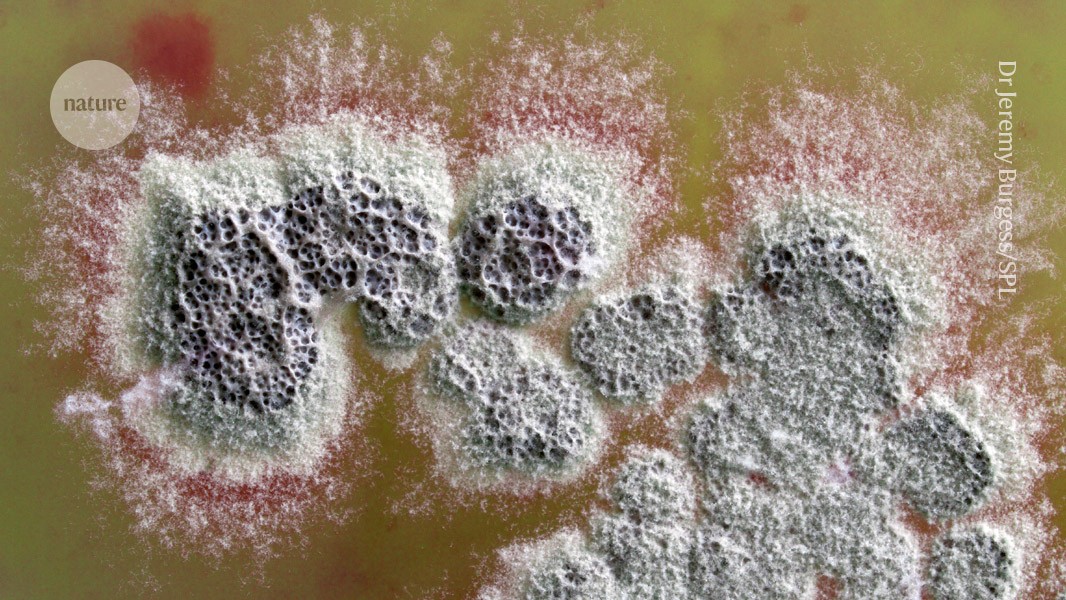
    A colony of Streptomyces coelicolor bacteria secretes an antibiotic compound (red) into the surrounding medium.Credit: Dr Jeremy Burgess/Science Photo Library

    By studying the process through which a soil bacterium naturally produces a well-known drug, scientists have discovered a powerful antibiotic that could help to fight drug-resistant infections.

    In experiments described in the Journal of the American Chemical Society on Monday1, the team studied the multi-step pathway that the bacterium Streptomyces coelicolor uses to make the antibiotic methylenomycin A, which was first identified in 19652,3. They discovered an intermediate compound — called premethylenomycin C lactone — whose antimicrobial activity was 100 times stronger than that of the final product. Tiny doses of it killed strains of bacteria known to cause hard-to-treat infections.
    Five ways science is tackling the antibiotic resistance crisis

    The discovery was a ‘surprise’, says study co-author Gregory Challis, a chemical biologist at the University of Warwick in Coventry, UK. “As humans, we anticipate that evolution perfects the end product, and so you’d expect the final molecule to be the best antibiotic, and the intermediates to be less potent,” he says. But the finding “is a great example of what a ‘blind watchmaker’ evolution is. And it’s a good way of exemplifying it in a very molecular way,” adds Challis.

    Antimicrobial resistance is a growing threat, projected to cause 39 million deaths worldwide over the next 25 years. Researchers say that the discovery of a potent antimicrobial compound might lead to fresh drugs to tackle resistance.

    The work underscores “the potential of such studies to identify new bioactive chemical scaffolds from ‘old’ pathways”, says Gerard Wright, a biochemist at McMaster University in Hamilton, Canada.

    Accidental discovery

    In 2006, Challis and his colleagues began studying the molecular pathway through which Streptomyces coelicolor produces methylenomycin A. To do this, they deleted the genes encoding enzymes involved in each step, one by one. Their work built on earlier efforts in 2002 to sequence the bacterium’s genome4.

    New antibiotic that kills drug-resistant bacteria discovered in technician’s garden

    By 2010, the team had mapped the mechanism that the bacterium used to make methylenomycin A and identified several intermediate molecules that it produced along the way.

    “We were just doing very fundamental blue-sky research,” says Challis. “We discovered these intermediates, and we left them for a while because we didn’t quite know what to do with them.”

    It was several years later — around 2017 — that a PhD student at Challis’s laboratory tested these intermediate molecules for antimicrobial activity.

    These tests revealed that two molecules, including premethylenomycin C lactone, were much more effective than methylenomycin A at targeting seven strains of Gram-positive bacteria, including Staphylococcus aureus, which infects skin, blood and internal organs, and Enterococcus faecium, which can cause deadly bloodstream and urinary infections.

    The lowest concentration of premethylenomycin C lactone needed to kill drug-resistant strains of Staphylococcus aureus was just 1 microgram per millilitre, compared with 256 micrograms per millilitre of methylenomycin A. The compound could also kill bacteria at much smaller doses than those needed for vancomycin, a ‘last line’ antibiotic used to treat infections caused by two Enterococcus faecium strains, to be effective.

    Antibiotic Bacteria Discovered Kill Powerful soil superbugs
    Share. Facebook Twitter Pinterest LinkedIn Tumblr WhatsApp Email
    Previous ArticleLongevity medicine enters med school
    Next Article How Alcohol Causes Body Odor
    admin
    • Website

    Related Posts

    A Video Report from AGBT

    February 27, 2026

    Novo Nordisk, Vivtex Ink Up to $2.1B Deal to Develop Oral Biologics for Metabolic Conditions

    February 27, 2026

    Increasing Rice Yields with Gene-Informed Selective Breeding

    February 27, 2026

    Mutant p53 Selective Reactivation Demonstrated in Advanced Solid Tumors

    February 27, 2026
    Leave A Reply Cancel Reply

    Our Picks

    9 Time-Saving Kitchen Gadgets for Fall at Amazon

    September 5, 2025

    Why Exercise Is So Important For Heart Health, From An MD

    September 5, 2025

    An Engineered Protein Helps Phagocytes Gobble Up Diseased Cells

    September 5, 2025

    How To Get Rid Of Hangnails + Causes From Experts

    September 5, 2025
    • Facebook
    • Twitter
    • Pinterest
    • Instagram
    • YouTube
    • Vimeo
    Don't Miss
    Longevity

    Nautilus debuts Voyager platform in push toward next-gen proteomics

    By adminMarch 1, 20260

    Company’s new benchtop system promises a clearer view of proteins following validation at a leading…

    First-in-Human Success for Prenatal Stem Cell Therapy in Spina Bifida

    February 28, 2026

    Pressure-Driven Pathway Links Liver Congestion to Fibrosis and Cancer

    February 28, 2026

    A cellular atlas of aging comes into focus

    February 28, 2026

    Subscribe to Updates

    Get the latest creative news from SmartMag about art & design.

    About Us

    At FineGut, our mission is simple: to enhance your self-awareness when it comes to your gut health. We believe that a healthy gut is the foundation of overall well-being, and understanding the brain–gut connection can truly transform the way you live.

    Our Picks

    9 Time-Saving Kitchen Gadgets for Fall at Amazon

    September 5, 2025

    Why Exercise Is So Important For Heart Health, From An MD

    September 5, 2025

    An Engineered Protein Helps Phagocytes Gobble Up Diseased Cells

    September 5, 2025
    Gut Health

    Nautilus debuts Voyager platform in push toward next-gen proteomics

    March 1, 2026

    First-in-Human Success for Prenatal Stem Cell Therapy in Spina Bifida

    February 28, 2026

    Pressure-Driven Pathway Links Liver Congestion to Fibrosis and Cancer

    February 28, 2026
    X (Twitter) YouTube
    • Contact us
    • Privacy Policy
    • Disclaimer
    • Terms and Conditions
    © 2026 finegut.com. Designed by Pro.

    Type above and press Enter to search. Press Esc to cancel.