
Close Menu
My Blog

    Subscribe to Updates

    Get the latest creative news from FooBar about art, design and business.

    What's Hot

    Nautilus debuts Voyager platform in push toward next-gen proteomics

    March 1, 2026

    First-in-Human Success for Prenatal Stem Cell Therapy in Spina Bifida

    February 28, 2026

    Pressure-Driven Pathway Links Liver Congestion to Fibrosis and Cancer

    February 28, 2026
    Facebook X (Twitter) Instagram
    X (Twitter) YouTube
    My BlogMy Blog
    Sunday, March 1
    • Home
    • About Us
    • Healthy Living
    • DNA & Genetics
    • Podcast
    • Shop
    My Blog
    Home»DNA & Genetics»In a First, Scalable Production of Human Kidney Organoids Using Perfused Pig Kidneys
    DNA & Genetics

    In a First, Scalable Production of Human Kidney Organoids Using Perfused Pig Kidneys

    adminBy adminOctober 31, 2025No Comments4 Mins Read
    Facebook Twitter Pinterest LinkedIn Tumblr WhatsApp VKontakte Email
    In a First, Scalable Production of Human Kidney Organoids Using Perfused Pig Kidneys
    Share
    Facebook Twitter LinkedIn Pinterest Email

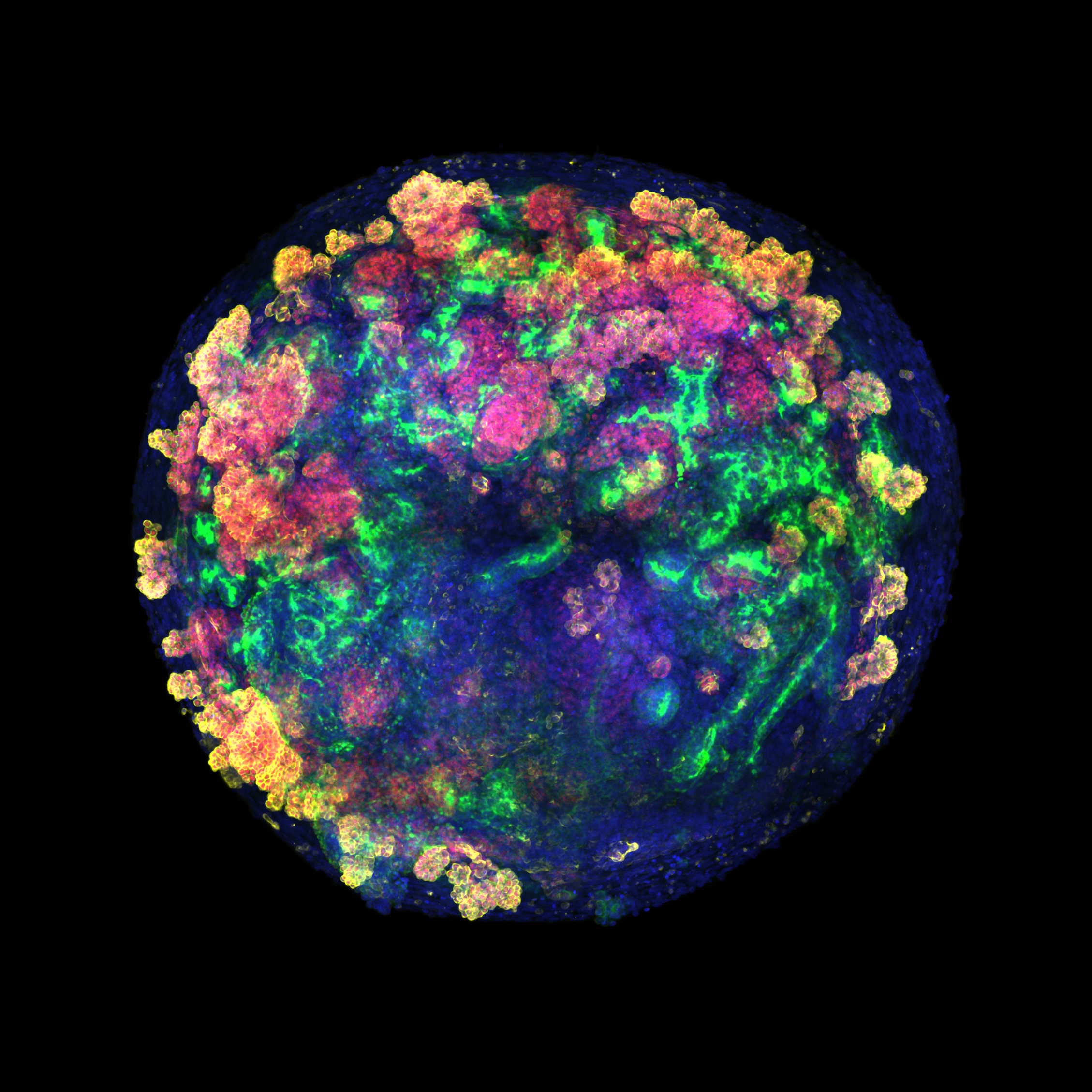
    Credit: Institute for Bioengineering of Catalonia

    A pioneering technology has been developed that enables human kidney organoids to be produced in a scalable manner by allowing the organoids to be combined with ex vivo pig kidneys and then transplanted back into the same animal to evaluate their viability.

    The work is published in Nature Biomedical Engineering, in the paper, “Systematic production of human kidney organoids for transplantation in porcine kidneys during ex vivo machine perfusion.” The findings are a significant milestone in regenerative and personalized medicine, paving the way for the use of kidney organoids derived from human stem cells in cell therapy clinical trials.

    “Despite the great clinical potential of organoids, one of the major challenges in applying this technology to real medical treatments has been to produce these organoids in a scalable, uniform and affordable way,” says Elena Garreta, PhD, a senior researcher in the IBEC’s Puripotency for Organ Regeneration group. “Now, with our new method, we can generate thousands of kidney organoids under controlled conditions in a short time with great precision, without the need for complex components. This opens the door to applications such as drug screening and disease research.”

    The systematic and scalable method for producing thousands of human kidney organoids details a procedure “sustaining the derivation of kidney organoids from hPS cells (hPSC-kidney organoids) using a scalable, reproducible and affordable approach that allows hPSC-kidney organoid differentiation into different renal cell types.”

    pig organs
    Porcine kidney connected to the normothermic perfusion machine. This device allows the kidney to be preserved alive and oxygenated ex vivo (outside the body). The image shows the moment of infusion of human renal organoids into the porcine kidney. [Institute for Bioengineering of Catalonia]

    The team combined human kidney organoids with live pig kidneys connected to normothermic perfusion machines for the first time. These devices are commonly used in operating rooms to keep organs alive and oxygenated outside the body prior to transplantation. They enabled the research team to insert human organoids into pig kidneys and monitor their integration and function in real time.

    Using single-cell RNA sequencing, confocal image analysis, metabolic assays, and CRISPR–Cas9 engineering for generation of fluorescent reporters, they show that hPSC-kidney organoids “exhibit transcriptional variety and cellular composition following cell-to-cell contact.”

    “Our research shows that combining organoid and ex vivo perfusion technologies can enable cellular interventions under fully controlled conditions,” explains Núria Montserrat, PhD, a principal investigator at Institute for Bioengineering of Catalonia (IBEC) at the time of the study and now Minister of Research and Universities of the Government of Catalonia. “The long-term goal is to be able to regenerate or repair an organ before transplantation. This could reduce waiting times for chronic patients and increase the number of viable organs for transplantation.”

    Perfusing the organoids within the kidneys using the aforementioned machines offers a key advantage: it allows the physiological parameters of the organ to be measured in real time, enabling any signs of damage or rejection to be detected immediately.

    In addition to performing ex vivo experiments, the team also used a porcine transplant model that is highly similar to the human kidney for in vivo experiments. They observed that, 24 and 48 hours after transplantation, the human organoids remained integrated into the porcine renal tissue. More specifically, they further evaluated the immune response, “confirming the feasibility and viability of the procedure. We identify cells of human origin after normothermic machine perfusion and in vivo transplantation.”

    The transplanted kidney continued to function normally and there were no signs of damage or toxicity. According to the authors, this methodology enables us to envisage a clinical scenario in which organs intended for transplantation can be treated and prepared prior to implantation.

    Human Kidney Kidneys Organoids Perfused Pig Production scalable
    Share. Facebook Twitter Pinterest LinkedIn Tumblr WhatsApp Email
    Previous ArticleA 10-Minute Walk May Have Major Benefits
    Next Article Nutriearth opens first EU manufacturing site for sustainable mealworm-based vitamin D3
    admin
    • Website

    Related Posts

    A Video Report from AGBT

    February 27, 2026

    Novo Nordisk, Vivtex Ink Up to $2.1B Deal to Develop Oral Biologics for Metabolic Conditions

    February 27, 2026

    Increasing Rice Yields with Gene-Informed Selective Breeding

    February 27, 2026

    Mutant p53 Selective Reactivation Demonstrated in Advanced Solid Tumors

    February 27, 2026
    Leave A Reply Cancel Reply

    Our Picks

    9 Time-Saving Kitchen Gadgets for Fall at Amazon

    September 5, 2025

    Why Exercise Is So Important For Heart Health, From An MD

    September 5, 2025

    An Engineered Protein Helps Phagocytes Gobble Up Diseased Cells

    September 5, 2025

    How To Get Rid Of Hangnails + Causes From Experts

    September 5, 2025
    • Facebook
    • Twitter
    • Pinterest
    • Instagram
    • YouTube
    • Vimeo
    Don't Miss
    Longevity

    Nautilus debuts Voyager platform in push toward next-gen proteomics

    By adminMarch 1, 20260

    Company’s new benchtop system promises a clearer view of proteins following validation at a leading…

    First-in-Human Success for Prenatal Stem Cell Therapy in Spina Bifida

    February 28, 2026

    Pressure-Driven Pathway Links Liver Congestion to Fibrosis and Cancer

    February 28, 2026

    A cellular atlas of aging comes into focus

    February 28, 2026

    Subscribe to Updates

    Get the latest creative news from SmartMag about art & design.

    About Us

    At FineGut, our mission is simple: to enhance your self-awareness when it comes to your gut health. We believe that a healthy gut is the foundation of overall well-being, and understanding the brain–gut connection can truly transform the way you live.

    Our Picks

    9 Time-Saving Kitchen Gadgets for Fall at Amazon

    September 5, 2025

    Why Exercise Is So Important For Heart Health, From An MD

    September 5, 2025

    An Engineered Protein Helps Phagocytes Gobble Up Diseased Cells

    September 5, 2025
    Gut Health

    Nautilus debuts Voyager platform in push toward next-gen proteomics

    March 1, 2026

    First-in-Human Success for Prenatal Stem Cell Therapy in Spina Bifida

    February 28, 2026

    Pressure-Driven Pathway Links Liver Congestion to Fibrosis and Cancer

    February 28, 2026
    X (Twitter) YouTube
    • Contact us
    • Privacy Policy
    • Disclaimer
    • Terms and Conditions
    © 2026 finegut.com. Designed by Pro.

    Type above and press Enter to search. Press Esc to cancel.