
Close Menu
My Blog

    Subscribe to Updates

    Get the latest creative news from FooBar about art, design and business.

    What's Hot

    Nautilus debuts Voyager platform in push toward next-gen proteomics

    March 1, 2026

    First-in-Human Success for Prenatal Stem Cell Therapy in Spina Bifida

    February 28, 2026

    Pressure-Driven Pathway Links Liver Congestion to Fibrosis and Cancer

    February 28, 2026
    Facebook X (Twitter) Instagram
    X (Twitter) YouTube
    My BlogMy Blog
    Sunday, March 1
    • Home
    • About Us
    • Healthy Living
    • DNA & Genetics
    • Podcast
    • Shop
    My Blog
    Home»DNA & Genetics»Antimicrobial Peptides Stave Off Salmonella in Chickens
    DNA & Genetics

    Antimicrobial Peptides Stave Off Salmonella in Chickens

    adminBy adminNovember 4, 2025No Comments3 Mins Read
    Facebook Twitter Pinterest LinkedIn Tumblr WhatsApp VKontakte Email
    The Scientist Logo
    Share
    Facebook Twitter LinkedIn Pinterest Email

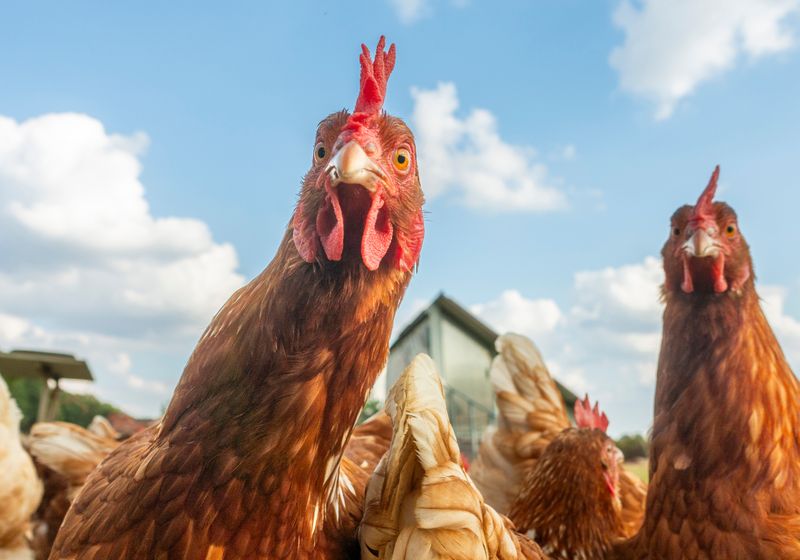
    Antimicrobial peptides could address antibiotic resistance in poultry farms while preventing Salmonella infections.

    Image credit:©iStock.com, deepblue4you

    Salmonella bacteria pose serious public health threats as a common cause of foodborne illness in the United States, most often from consumption or handling of poultry products.1 Because chickens and turkeys can carry the bacteria without showing any signs of infection, farmers often used to treat these animals with antibiotics. However, this practice negatively impacts gut health in poultry and greatly contributes to antimicrobial resistance, leading to antibiotic use being phased out.2,3 Yet the need to control Salmonella to prevent foodborne illness remains a challenge.

    One potential alternative to antibiotics is antimicrobial peptides (AMPs), short strings of amino acids that can inhibit bacterial growth, often by disrupting bacterial membranes. A team of researchers at the University of Illinois Urbana-Champaign and The Ohio State University tested the ability of AMPs made by one bacterial species against Salmonella enterica subsp. enterica serovar Typhimurium LT2 (ST) in vitro and in chickens. In a study published in Microbiology Spectrum, they identified two AMPs that reduced ST levels in the animals, offering a promising proof of concept for the future of AMP-based treatment for public health.4

    Continue reading below…

    The team first evaluated six AMPs produced by the bacterial species Lactobacillus rhamnosus GG for their ability to inhibit the growth of ST in vitro. From these, they identified four candidates. All of these AMPs also reduced growth of other Salmonella variants, called serovars, that cause foodborne illness, supporting broadly anti-Salmonella activity. The researchers also showed that these AMPs retained their antimicrobial effects at high temperature and after treatment with protease, which are industry requirements.

    To evaluate the candidate peptides anti-Salmonella effects in vivo, they treated chickens with each AMP for one week. Three days into the trial, the researchers infected the animals with ST and determined how much of the bacteria remained seven days later. Two of the AMPs significantly reduced the amount of ST in the cecum, part of the intestine. The researchers also showed that the AMPs did not affect microbial diversity in the chickens’ intestines.

    Finally, to explore how the AMPs impeded bacterial growth, the team studied how the two most successful AMPs affected ST’s membrane by confocal microscopy and transmission electron microscopy. Unlike the defined, intact membrane in untreated controls, bacteria treated with either AMP had evidence of membrane disruption.

    “This study could provide a framework for developing and using antimicrobial peptides to control Salmonella in chickens, thereby promoting food safety and public health. Our future work is to test these peptides in chickens on a large scale, optimize their delivery in water and/or feed, understand better how they kill Salmonella, and explore more peptides like these for their anti-Salmonella activity,” said study author and University of Illinois Urbana-Champaign microbiologist Gireesh Rajashekara in a press statement.

    antimicrobial Chickens peptides Salmonella Stave
    Share. Facebook Twitter Pinterest LinkedIn Tumblr WhatsApp Email
    Previous ArticleA Top Derm Urges You To Consider This Before Getting Work
    Next Article 10+ Heart-Healthy Casserole Recipes
    admin
    • Website

    Related Posts

    A Video Report from AGBT

    February 27, 2026

    Novo Nordisk, Vivtex Ink Up to $2.1B Deal to Develop Oral Biologics for Metabolic Conditions

    February 27, 2026

    Increasing Rice Yields with Gene-Informed Selective Breeding

    February 27, 2026

    Mutant p53 Selective Reactivation Demonstrated in Advanced Solid Tumors

    February 27, 2026
    Leave A Reply Cancel Reply

    Our Picks

    9 Time-Saving Kitchen Gadgets for Fall at Amazon

    September 5, 2025

    Why Exercise Is So Important For Heart Health, From An MD

    September 5, 2025

    An Engineered Protein Helps Phagocytes Gobble Up Diseased Cells

    September 5, 2025

    How To Get Rid Of Hangnails + Causes From Experts

    September 5, 2025
    • Facebook
    • Twitter
    • Pinterest
    • Instagram
    • YouTube
    • Vimeo
    Don't Miss
    Longevity

    Nautilus debuts Voyager platform in push toward next-gen proteomics

    By adminMarch 1, 20260

    Company’s new benchtop system promises a clearer view of proteins following validation at a leading…

    First-in-Human Success for Prenatal Stem Cell Therapy in Spina Bifida

    February 28, 2026

    Pressure-Driven Pathway Links Liver Congestion to Fibrosis and Cancer

    February 28, 2026

    A cellular atlas of aging comes into focus

    February 28, 2026

    Subscribe to Updates

    Get the latest creative news from SmartMag about art & design.

    About Us

    At FineGut, our mission is simple: to enhance your self-awareness when it comes to your gut health. We believe that a healthy gut is the foundation of overall well-being, and understanding the brain–gut connection can truly transform the way you live.

    Our Picks

    9 Time-Saving Kitchen Gadgets for Fall at Amazon

    September 5, 2025

    Why Exercise Is So Important For Heart Health, From An MD

    September 5, 2025

    An Engineered Protein Helps Phagocytes Gobble Up Diseased Cells

    September 5, 2025
    Gut Health

    Nautilus debuts Voyager platform in push toward next-gen proteomics

    March 1, 2026

    First-in-Human Success for Prenatal Stem Cell Therapy in Spina Bifida

    February 28, 2026

    Pressure-Driven Pathway Links Liver Congestion to Fibrosis and Cancer

    February 28, 2026
    X (Twitter) YouTube
    • Contact us
    • Privacy Policy
    • Disclaimer
    • Terms and Conditions
    © 2026 finegut.com. Designed by Pro.

    Type above and press Enter to search. Press Esc to cancel.