
Close Menu
My Blog

    Subscribe to Updates

    Get the latest creative news from FooBar about art, design and business.

    What's Hot

    Nautilus debuts Voyager platform in push toward next-gen proteomics

    March 1, 2026

    First-in-Human Success for Prenatal Stem Cell Therapy in Spina Bifida

    February 28, 2026

    Pressure-Driven Pathway Links Liver Congestion to Fibrosis and Cancer

    February 28, 2026
    Facebook X (Twitter) Instagram
    X (Twitter) YouTube
    My BlogMy Blog
    Sunday, March 1
    • Home
    • About Us
    • Healthy Living
    • DNA & Genetics
    • Podcast
    • Shop
    My Blog
    Home»Gut Health»Chinese scientists increasingly lead joint projects with the UK, US and Europe
    Gut Health

    Chinese scientists increasingly lead joint projects with the UK, US and Europe

    adminBy adminNovember 5, 2025No Comments4 Mins Read
    Facebook Twitter Pinterest LinkedIn Tumblr WhatsApp VKontakte Email
    Chinese scientists increasingly lead joint projects with the UK, US and Europe
    Share
    Facebook Twitter LinkedIn Pinterest Email

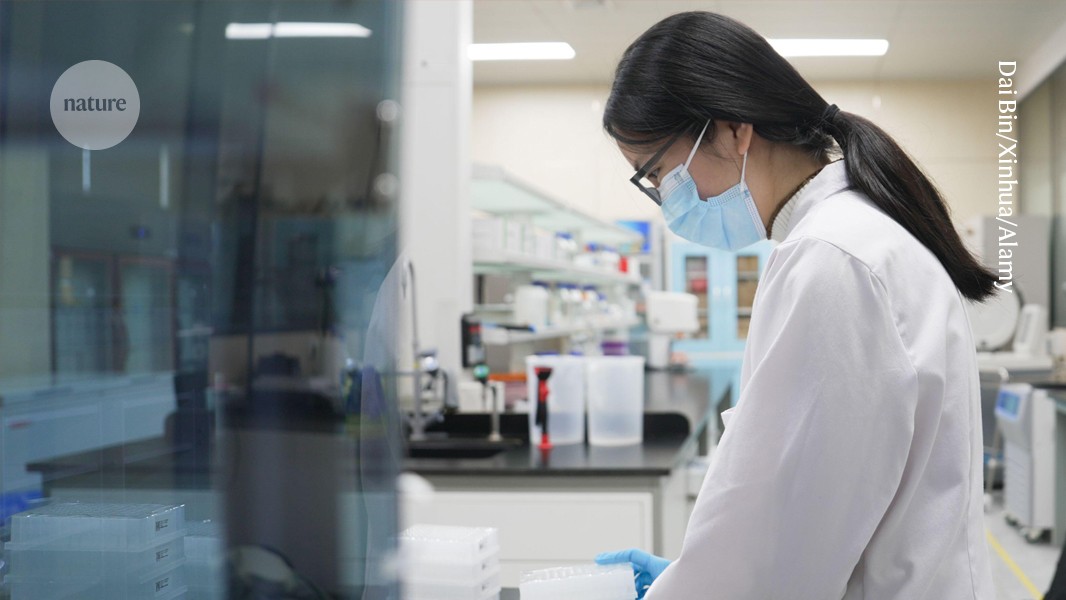
    Chinese researchers are more likely to lead projects with the UK and Europe than the US. Credit: Dai Bin/Xinhua/Alamy

    The number of Chinese scientists taking on leadership roles in international science projects is growing rapidly. They now lead more than half of all research projects with the United Kingdom, and are expected to lead an equal number of projects with Europe and with the United States in the next couple of years, according to a study1 published in the Proceedings of the National Academy of Sciences last week.

    Hongjun Xiang, a physicist at Fudan University in Shanghai, China, says the projections are consistent with what he has observed in the country, particularly in fields such as physics and engineering. But China needs to strengthen its leadership capabilities in disruptive basic research, “as Nobel-level original breakthroughs remain rare”, he adds.

    To understand how scientific leadership is changing, researchers analysed authorship data from nearly six million scientific publications. The team analysed ‘author contribution’ statements on journal manuscripts, in which each author’s role is described. When such statements weren’t available, the team developed a model that could predict leadership roles based on author experience, citation histories and the ideas researchers brought from their previous work, says James Evans, a co-author and computational sociologist at the University of Chicago in Illinois.

    Researchers who conceived, designed and guided the project or offered mentorship were classified as leaders; first-year students, people providing tech support and those performing experiments under direction were considered followers.

    From there, Evans and his colleagues devised two parameters to assess the changes in scientific leadership in bilateral partnerships. Lead share describes the number of people in leadership roles from a given country. Lead premium is the ratio of leaders to followers on the paper.

    Rising leaders

    The team found that China’s lead share in US–China collaborations rose from 30% in 2010 to 45% in 2023. China’s lead premium, however, is progressing more slowly. Chinese scientists still occupy supporting roles in many of these projects, says Evans. They are more likely to lead projects when they work with groups in the United Kingdom and Europe, he adds.

    According to the research, in 2019, China’s lead share reached parity with the United Kingdom’s; it is likely to be on par with Europe lead share by 2025–27 and the US lead share by 2027–28. In some crucial technology areas, such as artificial intelligence, semiconductors and energy, Chinese leadership is further behind and is expected to catch up to the United States by 2030.

    Xiang says that, in the development of core technologies, such as semiconductors, the country faces significant ‘chokehold’ challenges, including the US government’s ban ban on NVIDIA AI chips sales to China since 2022. China’s dependency on US tech can not be easily overcome, as it is rooted in decades of deep scientific research, says Xiang. “Addressing these structural imbalances is the key to our journey from being a big science country to a truly strong one, and continued international collaboration remains vital for this endeavour,” Xiang adds.

    But Evans says the findings upend the assumption that the United States can shut China out of global scientific opportunities by not collaborating with its researchers. Some US lawmakers want restrictions on research collaborations with Chinese institutions that work with the country’s military. Simulations show that “if the US were to stop collaborating with China on projects related to critical technologies — such as space, artificial intelligence or quantum computing — it would prove to be very costly for the US”, he says.

    Evans says that US–China collaborations, particularly in fields such as artificial intelligence, are more likely to be successful than work done separately.

    Cultural differences

    Chinese Europe increasingly joint Lead projects Scientists
    Share. Facebook Twitter Pinterest LinkedIn Tumblr WhatsApp Email
    Previous ArticleWhich Is Healthier? Myths and Facts Explained
    Next Article Recognising the health needs of young carers: schools as first line support
    admin
    • Website

    Related Posts

    The ins and outs of the new Dietary Guidelines for Americans in light of the gut microbiome

    February 25, 2026

    Manchester Calling: The Families and Scientists Refusing to Let Hunter Syndrome Go Unfunded

    February 19, 2026

    Patrick Veiga – Gut Microbiota for Health

    February 17, 2026

    The gut microbiome puzzle and probiotics in primary care patients with IBS

    February 16, 2026
    Leave A Reply Cancel Reply

    Our Picks

    9 Time-Saving Kitchen Gadgets for Fall at Amazon

    September 5, 2025

    Why Exercise Is So Important For Heart Health, From An MD

    September 5, 2025

    An Engineered Protein Helps Phagocytes Gobble Up Diseased Cells

    September 5, 2025

    How To Get Rid Of Hangnails + Causes From Experts

    September 5, 2025
    • Facebook
    • Twitter
    • Pinterest
    • Instagram
    • YouTube
    • Vimeo
    Don't Miss
    Longevity

    Nautilus debuts Voyager platform in push toward next-gen proteomics

    By adminMarch 1, 20260

    Company’s new benchtop system promises a clearer view of proteins following validation at a leading…

    First-in-Human Success for Prenatal Stem Cell Therapy in Spina Bifida

    February 28, 2026

    Pressure-Driven Pathway Links Liver Congestion to Fibrosis and Cancer

    February 28, 2026

    A cellular atlas of aging comes into focus

    February 28, 2026

    Subscribe to Updates

    Get the latest creative news from SmartMag about art & design.

    About Us

    At FineGut, our mission is simple: to enhance your self-awareness when it comes to your gut health. We believe that a healthy gut is the foundation of overall well-being, and understanding the brain–gut connection can truly transform the way you live.

    Our Picks

    9 Time-Saving Kitchen Gadgets for Fall at Amazon

    September 5, 2025

    Why Exercise Is So Important For Heart Health, From An MD

    September 5, 2025

    An Engineered Protein Helps Phagocytes Gobble Up Diseased Cells

    September 5, 2025
    Gut Health

    Nautilus debuts Voyager platform in push toward next-gen proteomics

    March 1, 2026

    First-in-Human Success for Prenatal Stem Cell Therapy in Spina Bifida

    February 28, 2026

    Pressure-Driven Pathway Links Liver Congestion to Fibrosis and Cancer

    February 28, 2026
    X (Twitter) YouTube
    • Contact us
    • Privacy Policy
    • Disclaimer
    • Terms and Conditions
    © 2026 finegut.com. Designed by Pro.

    Type above and press Enter to search. Press Esc to cancel.