

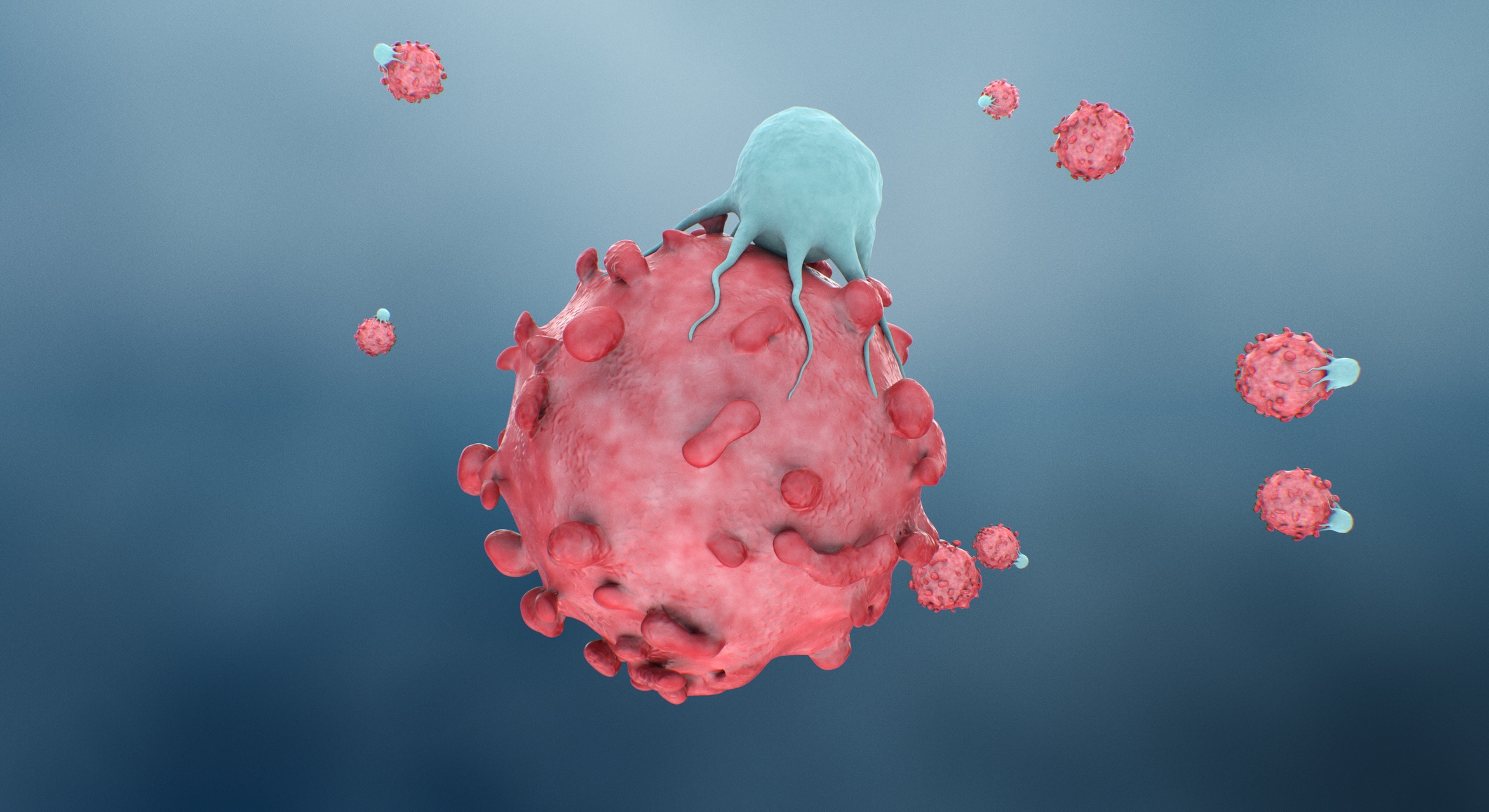
Not all mutations in the tumor suppressor gene TP53 are created equal. That is the finding of researchers at Baylor College of Medicine who have discovered that while mutations in p53 are known to promote cancer, some, such as the p53 R273H mutation, can overstimulate DNA replication in cancer cells, creating genomic instability that activates an immune attack against tumors. Results of the research are published in Communications Biology.
“We studied two common p53 mutants, R273H and R175H, in their ability to affect the growth of cancer cell lines in the lab,” said corresponding author Weei-Chin Lin, PhD, professor of molecular and cellular biology and of medicine–hematology and oncology at Baylor’s Dan L Duncan Comprehensive Cancer Center. “We took a closer look at how each of these mutants affected different steps of the complex mechanism of DNA replication, a first stage in cell proliferation.”
The research showed that the R273H contact mutant of p53 hijacks the DNA replication machinery, allowing replication to occur excessively and out of sequence. This unchecked replication destabilizes the genome, leading to tumor development. “However, we were surprised to see that at the same time, excessive DNA proliferation triggered a strong immune response toward the cancer cells,” Lin said. “This response was driven by activation of the cGAS-STING pathway, a key part of the body’s innate immune response.”
By comparison, the R175H conformational mutant also studied by the Baylor team was found to promote tumor growth but didn’t induce immune activation. This difference, Lin said, “highlights the importance of understanding the specific type of p53 mutation in each patient’s tumor, as it may influence both disease behavior and therapeutic strategies.”
Previous research has illustrated the protective capacity of wild-type p53 in preventing damaged cells from proliferating by halting the cell cycle or triggering apoptosis. Mutations in p53 are found in about half of all human cancers, including breast, lung, colorectal, and ovarian cancers, where they typically stabilize a defective protein that drives uncontrolled cell growth and resistance to cell death. The Baylor researchers built on earlier evidence that certain contact-type p53 mutations interfere with the regulation of DNA replication.
“Contact, but not conformational, mutant p53 can override [the] switch by binding to both TopBP1 and Treslin, thereby facilitating persistent TopBP1/Treslin interaction in late S and G2 phases, which ultimately leads to over-firing of replication initiation,” the researchers wrote. This over-firing results in micronuclei formation, small fragments of DNA that leak into the cell cytoplasm. These DNA fragments are recognized as foreign by the cGAS-STING pathway, which triggering inflammation and immune signaling.
Using mouse models of breast cancer, the team showed that tumors carrying the R273H mutation responded better to immune checkpoint inhibitors (ICIs). Tumors treated with an ICI showed higher levels of CD8+ T cells, and indicator that the immune system was triggered and actively killing cancer cells. “Although more studies are needed before these findings could be implemented in the clinic, they offer the possibility that doctors might be able to predict which patients will respond better to immunotherapy by identifying tumors with mutant p53 variants like R273H,” Lin said.
The work also identified how this mutation exerts its dual effect. “Contact mutp53 promotes micronuclei formation, leading to the activation of the cGAS-STING pathway. Consequently, tumors harboring contact mutp53 show a greater response to immune checkpoint inhibition,” the researchers wrote. They further noted that contact mutant p53 upregulates MRE11, a protein that releases cGAS from micronuclei, amplifying immune signaling.
The findings suggest that p53’s oncogenic mutations could, in some contexts, create a vulnerability that clinicians might exploit. “Our study also suggests that combining immunotherapy with drugs that target DNA replication could further enhance the immune response in these patients,” Lin said. “The findings open up new avenues for future personalized cancer treatment.”
Prior research had provided glimpses that certain p53 mutants could either suppress or activate cGAS-STING signaling. The Baylor team’s results clearly identify that the contact-type mutations such as R273H, not conformational mutations such as those in R175H, can trigger replication stress that leads to immune system activation. As the researchers wrote, “While both R175H and R273H mutp53 increased the growth of 4T1 allografts, only R273H enhanced the response to anti-PD-1 immunotherapy.”
This new insight into p53 mutations could change how oncologists interpret p53 mutation profiles in tumors. Instead of viewing all p53 mutations as uniformly harmful, soon they might be able to distinguish between those that purely promote cancer and those that can be therapeutically targeted. The next steps for the Baylor team include testing additional p53 variants and exploring combination therapies that pair immunotherapy with inhibitors targeting TopBP1, PARP, or ATR.
