

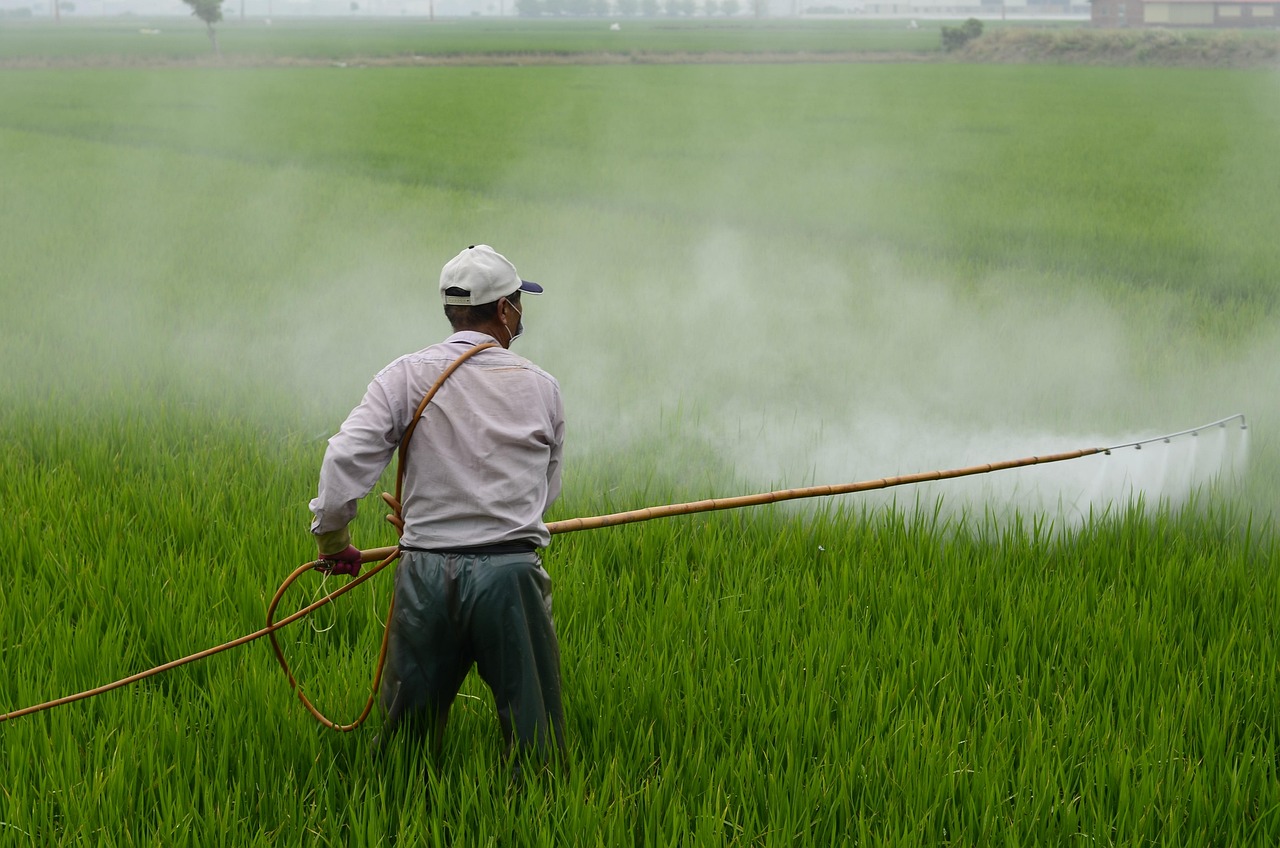
As the global population grows and food demand surges, farmers rely heavily on pesticides to boost crop yields and safeguard food quality—practices that have delivered undeniable economic benefits. But these chemicals don’t remain on the farm—they travel through soil, water, and air, reaching humans and other non-target organisms. These widespread exposures raise important questions about how pesticides affect the biological systems that keep us healthy.
Increasingly, scientists are uncovering a key player in this story—the gut microbiota, the complex microbial ecosystem that helps regulate metabolism and immunity. Evidence suggests it may be a critical pathway through which pesticide exposure harms human health. This blog explores how pesticides can disrupt gut microbes and highlights emerging research on probiotics and prebiotics as potential tools to lessen these effects.
Pesticides, in brief
Pesticides are chemical agents designed to kill or control pests that threaten crops, stored food, and therefore, public health. Major categories include:
- Herbicides – destroy weeds and other unwanted vegetation
- Insecticides – control a wide variety of insects
- Fungicides – prevent the growth of molds and mildew
- Disinfectants – reduce the number of microorganisms
- Rodenticides – control mice and rats
Although essential for improving crop yields and food quality, pesticides often drift beyond their intended targets, contaminating soil, water, and air.
Humans are frequently exposed to a variety of pesticides, whether through the foods they consume, the water they drink, the pets they have, or their work environments where such chemicals are regularly used. The World Health Organization reports that millions of people suffer pesticide poisoning each year, with some exposures proving fatal.
Even at lower exposures, mounting studies link pesticides to immune dysregulation, neurotoxicity, hormonal and reproductive disturbances, metabolic disorders such as obesity and type 2 diabetes, and certain cancers. Their persistence in the environment and ability to accumulate in living tissue make them a significant public health concern—one now increasingly viewed through the lens of gut microbiota disruption.
Pesticides and the gut microbiota
Growing evidence suggests that the gut microbiome may be an important pathway for many of these effects, prompting a closer study of how pesticides reshape intestinal communities and their downstream impacts on health.
Because the gut microbiome is central to digestion, immunity, metabolism, and gut-brain communication, even small shifts may amplify pesticide-related health risks. The following section summarizes key evidence on how major pesticide classes interact with gut microbes and function, drawing on animal and emerging human studies.
Insecticides
Organophosphates— chlorpyrifos & diazinon
Chlorpyrifos (CPF)—a pesticide widely used on fruits and vegetables—has been linked in mouse studies to gut barrier damage, inflammation, and metabolic disturbances.
A 2025 study in mice found that even CPF doses comparable to human maximum daily intake disrupted gut microbial communities—depleting beneficial taxa such as Lactobacillus, Akkermansia, and Bifidobacterium while enriching pathobionts like Helicobacter and Alistipes—and induced non-obese diabetes. In another mouse study, CPF compromised the gut barrier, allowing lipopolysaccharide entry and triggering low-grade inflammation, which in turn promoted fat gain and reduced insulin sensitivity, largely independent of genetic background or diet.
Male mice given diazinon in drinking water—the main exposure route in humans— showed gut microbial shifts, impaired energy metabolism, and activation of stress pathways.
Organochlorines and pyrethroids — DDT & permethrin
Although banned decades ago, organochlorine pesticides such as DDT persist in the environment and accumulate in the body, where they are linked to obesity and metabolic disturbances. Animal studies show that exposure to their breakdown products alters gut microbiota composition.
Permethrin, an insecticide commonly used in agriculture and households, can disrupt gut microbiota by reducing beneficial species and altering microbial balance, with an animal study linking even low-dose exposure to long-term dysbiosis.
Herbicides
Glyphosate & pentachlorophenol
Glyphosate (GLY) is the world’s most widely used chemical in agriculture and gardening. A key study using human microbiome data found that 55% of common gut bacterial species have enzyme types that are intrinsically sensitive to GLY, meaning this herbicide could potentially suppress many beneficial commensals. A study in rodents found that even low-dose exposure to GLY led to altered composition of gut microbiota and increased biomarkers of cardiovascular risk.
In addition, one study reported that elevated environmental GLY may disrupt the gut–brain axis by fostering Clostridium overgrowth, which is hypothesized to contribute to autism risk in young children.
Note that GLY has been restricted or banned in many countries as well as individual cities or counties in the United States. It is authorized in the European Union until 2033, with some EU countries applying partial bans.
Another herbicide, pentachlorophenol—once commonly used in rice farming but now largely phased out and primarily used for wood preservation—was shown in a goldfish study to disrupt the Firmicutes/Bacteroidetes ratio, induce oxidative stress, and damage the gut. These findings highlight potential food-chain implications despite limited human data.
Fungicides
Carbendazim & imazalil
Widely used to prevent crop rot, fungicides leave residues that contaminate food and the environment. Recent studies show they can disrupt mammalian and fish gut microbiota, leading to host physiological issues.
In one mouse experiment, 14 weeks of carbendazim exposure disrupted the gut microbiota and altered lipid metabolism, leading to increased intestinal triglyceride absorption and widespread tissue inflammation.
In a study with adult zebrafish, the fungicide imazalil disrupted gut microbiota diversity and composition, altered 101 metabolites linked to glycolysis, amino acid, and lipid metabolism, and suppressed liver genes involved in energy and lipid pathways, indicating dysbiosis and metabolic disturbances.
Disinfectants & rodenticides
Disinfectants and rodenticides are less studied but may similarly disturb microbial balance or indirectly affect gut communities through environmental contamination.
Thus, animal studies suggest that many types of pesticides can disrupt gut microbiota balance, weaken the gut barrier, trigger low-grade inflammation, and alter metabolites such as short-chain fatty acids (SCFAs), bile acids, and amino acids—disruptions that influence overall metabolism, immunity, and the nervous system. Early-life exposure appears especially impactful, reshaping microbial colonization with lasting effects.
Limited human studies suggest similar risks. A few human dietary‐exposure studies suggest that people with higher pesticide residue loads have altered gut microbiome profiles, but most are cross-sectional (so causality is uncertain).
In a twin study of 65 pairs, urinary pesticide residues (pyrethroids, organophosphates, GLY) were linked to altered fecal metabolites and gut microbiome composition.
A smaller study of 38 older adults found that higher urinary organophosphate pesticide biomarkers were significantly associated with lower fecal acetate and lactate levels, suggesting pesticide exposure may reduce SCFA production in the gut.
Probiotics and prebiotics
Numerous studies have explored the role of probiotics and prebiotics in mitigating the adverse effects of pesticides and restoring the gut microbiota. This is an active area of research, with studies showing promising results in animal models and, to a much lesser extent, human populations.
Research has uncovered several mechanisms by which probiotics and prebiotics can counteract the negative effects of pesticides:
1. Binding and detoxification
The cell walls of some probiotic bacteria, such as certain lactobacilli strains, have the ability to degrade pesticides. This action prevents the host from absorbing the contaminants, which then pass harmlessly through the digestive tract.
For example, a strain of Lacticaseibacillus rhamnosus reduced organophosphate pesticide absorption and toxicity in the common fruit fly.
A study in pesticide-exposed humans found that a strain of Lactiplantibacillus plantarum promoted pesticide residue excretion.
2. Enzymatic degradation
Certain bacteria possess specific enzymes, such as phosphohydrolase, that can break down organophosphate pesticides into less toxic compounds. These pesticide-degrading capabilities have been observed in several lactobacilli species found in fermented foods.
3. Intestinal barrier protection
Pesticides can damage the lining of the intestine, increasing its permeability and allowing harmful substances to leak into the bloodstream. Probiotics may enhance the expression of tight junction proteins, which improves the integrity of the gut barrier with the potential to reduce the absorption of pesticides.
4. Anti-inflammatory effects
Chronic, low-grade inflammation is a known effect of pesticide exposure. Probiotics have been shown to reduce this inflammation. One 2025 study in mice showed that specific gut bacteria species helped limit pesticide-induced inflammation.
A study in pesticide-exposed humans found that a strain of Lactiplantibacillus plantarum reduced inflammation.
5. Microbial balance and metabolite shifts
Exposure to pesticides can cause dysbiosis, an imbalance in the gut microbial community. Probiotics and prebiotics may rebalance communities and alter metabolites such as SCFAs, bile acids, and amino acids disrupted by pesticides.
Prebiotics
A study in mice observed that supplementation with pectin, a prebiotic fiber, reversed DDT metabolite-induced obesity in mice by reducing pollutant accumulation, improving lipid and glucose metabolism, and restoring gut microbiota balance and SCFA-related signaling.
In a study in mice, supplementation with the prebiotic inulin prevented gut microbiota and blood–brain barrier changes in pesticide-exposed dams and offspring.
Probiotics
The previously mentioned study in pesticide-exposed humans found that a strain of Lactiplantibacillus plantarum maintained microbiota stability and modulated host metabolites under high pesticide exposure.
Overall, the body of research suggests that probiotic and prebiotic interventions hold significant potential for protecting against the harmful effects of pesticide exposure. However, more targeted studies are still needed, especially in human populations, to fully understand the mechanisms and optimize therapeutic strategies.
Takeaway
Pesticides are used widely—in agriculture, homes, public health, and industry—and their residues can move through air, water, and soil, persisting in the environment long after use or even after certain chemicals are banned.
Increasing evidence points to the gut microbiota—the microbial community vital for digestion, immunity, and metabolism—as a key pathway for pesticide-related harm. Animal studies show that multiple pesticide classes disrupt microbial balance, weaken gut barriers, trigger inflammation, and alter metabolites such as short-chain fatty acids, with early-life exposures posing lasting risks.
Although human studies are limited, higher levels of pesticide residues have been linked to shifts in gut microbiome composition. Probiotics and prebiotics show promise in mitigating these effects by degrading pesticides, strengthening gut integrity, reducing inflammation, and restoring microbial balance.
Key references
“Glyphosate – Status of glyphosate in the EU.” European Commission – Food Safety, Directorate-General for Health and Food Safety, 2023.
Abou Diwan, Maria et al. “Maternal exposure to pesticides induces perturbations in the gut microbiota and blood-brain barrier of dams and the progeny, prevented by a prebiotic.” Environmental science and pollution research international vol. 31,49 (2024): 58957-58972. doi:10.1007/s11356-024-34969-1
Ali, Asghar, and Khalid I AlHussaini. “Pesticides: Unintended Impact on the Hidden World of Gut Microbiota.” Metabolites vol. 14,3 155. 7 Mar. 2024, doi:10.3390/metabo14030155
Argou-Cardozo, Isadora, and Fares Zeidán-Chuliá. “Clostridium Bacteria and Autism Spectrum Conditions: A Systematic Review and Hypothetical Contribution of Environmental Glyphosate Levels.” Medical sciences (Basel, Switzerland) vol. 6,2 29. 4 Apr. 2018, doi:10.3390/medsci6020029
Baralić, Katarina et al. “Probiotic cultures as a potential protective strategy against the toxicity of environmentally relevant chemicals: State-of-the-art knowledge.” Food and chemical toxicology : an international journal published for the British Industrial Biological Research Association vol. 172 (2023): 113582. doi:10.1016/j.fct.2022.113582
Bhatia, Ashna, Chandra Shekhar Yadav, and Basu Dev Banerjee. “Pesticides as Environmental Toxicants.” Bioremediation of Environmental Toxicants, 1st ed., CRC Press, 2024, pp. 22–. Taylor & Francis.
Chen, Li et al. “Mapping pesticide-induced metabolic alterations in human gut bacteria.” Nature communications vol. 16,1 4355. 10 May. 2025, doi:10.1038/s41467-025-59747-6
Defois, Clémence et al. “Food Chemicals Disrupt Human Gut Microbiota Activity And Impact Intestinal Homeostasis As Revealed By In Vitro Systems.” Scientific reports vol. 8,1 11006. 20 Jul. 2018, doi:10.1038/s41598-018-29376-9
Durairaj, Karthika et al. “Exposure to chlorpyrifos pesticide at a realistic dose modulates gut microbiome and induces non-obese associated diabetes.” Environmental science and pollution research international vol. 32,34 (2025): 20774-20786. doi:10.1007/s11356-025-36888-1
Gao, Bei et al. “Editor’s Highlight: OrganophosphateDiazinon Altered Quorum Sensing, Cell Motility, Stress Response, and Carbohydrate Metabolism of Gut Microbiome.” Toxicological sciences : an official journal of the Society of Toxicology vol. 157,2 (2017): 354-364. doi:10.1093/toxsci/kfx053
Harishankar, M K et al. “Efficiency of the intestinal bacteria in the degradation of the toxic pesticide, chlorpyrifos.” 3 Biotech vol. 3,2 (2013): 137-142. doi:10.1007/s13205-012-0078-0
Hu, Jianzhong et al. “Low-dose exposure of glyphosate-based herbicides disrupt the urine metabolome and its interaction with gut microbiota.” Scientific reports vol. 11,1 3265. 5 Feb. 2021, doi:10.1038/s41598-021-82552-2
Jin, Cuiyuan et al. “Imazalil exposure induces gut microbiota dysbiosis and hepatic metabolism disorder in zebrafish.” Comparative biochemistry and physiology. Toxicology & pharmacology : CBP vol. 202 (2017): 85-93. doi:10.1016/j.cbpc.2017.08.007
Jin, Cuiyuan et al. “Insights into a Possible Mechanism Underlying the Connection of Carbendazim-Induced Lipid Metabolism Disorder and Gut Microbiota Dysbiosis in Mice.” Toxicological sciences : an official journal of the Society of Toxicology vol. 166,2 (2018): 382-393. doi:10.1093/toxsci/kfy205
Kan, Haifeng et al. “Correlations of Gut Microbial Community Shift with Hepatic Damage and Growth Inhibition of Carassius auratus Induced by Pentachlorophenol Exposure.” Environmental science & technology vol. 49,19 (2015): 11894-902. doi:10.1021/acs.est.5b02990
Liang, Yiran et al. “Organophosphorus pesticide chlorpyrifos intake promotes obesity and insulin resistance through impacting gut and gut microbiota.” Microbiome vol. 7,1 19. 11 Feb. 2019, doi:10.1186/s40168-019-0635-4
Liu, Wenjun et al. “Lactiplantibacillus plantarum P9 improved gut microbial metabolites and alleviated inflammatory response in pesticide exposure cohorts.” iScience vol. 25,7 104472. 26 May. 2022, doi:10.1016/j.isci.2022.104472
Mesnage, Robin et al. “Impacts of dietary exposure to pesticides on faecal microbiome metabolism in adult twins.” Environmental health : a global access science source vol. 21,1 46. 3 May. 2022, doi:10.1186/s12940-022-00860-0
Naqib, Ankur et al. “Alterations in the cecal microbiome of New Zealand White rabbits due to the long-acting anticoagulant rodenticide brodifacoum.” Toxicology communications vol. 9,1 (2025): 2500111. doi:10.1080/24734306.2025.2500111
Nasuti, Cinzia et al. “Changes on fecal microbiota in rats exposed to permethrin during postnatal development.” Environmental science and pollution research international vol. 23,11 (2016): 10930-10937. doi:10.1007/s11356-016-6297-x
National Institute of Environmental Health Sciences. “Pesticides.” National Institute of Environmental Health Sciences, U.S. Department of Health and Human Services, 22 July 2025.
National Pesticide Information Center. “Diazinon General Fact Sheet.” National Pesticide Information Center, Oregon State University, 12 Oct. 2012.
National Pesticide Information Center. “Permethrin General Fact Sheet.” National Pesticide Information Center, Oregon State University, 10 Oct. 2012.
Office of Environmental Health Hazard Assessment. “Imazalil.” Proposition 65 – California Environmental Protection Agency, 20 May 2011.
Picó, Yolanda et al. “Target vs non-target analysis to determine pesticide residues in fruits from Saudi Arabia and influence in potential risk associated with exposure.” Food and chemical toxicology : an international journal published for the British Industrial Biological Research Association vol. 111 (2018): 53-63. doi:10.1016/j.fct.2017.10.060
Puigbò, Pere et al. “Does Glyphosate Affect the Human Microbiota?.” Life (Basel, Switzerland) vol. 12,5 707. 9 May. 2022, doi:10.3390/life12050707
Spanne, Autumn. “Glyphosate, Explained.” Environmental Health News, 2 Mar. 2022.
Trinder, Mark et al. “Probiotic Lactobacillus rhamnosus Reduces Organophosphate Pesticide Absorption and Toxicity to Drosophila melanogaster.” Applied and environmental microbiology vol. 82,20 6204-6213. 30 Sep. 2016, doi:10.1128/AEM.01510-16
U.S. Environmental Protection Agency. “Carbendazim – Chemical Details.” CompTox Chemicals Dashboard, U.S. EPA, 29 Oct. 2024.
U.S. Environmental Protection Agency. “Chlorpyrifos.” EPA, 8 Sept. 2025
U.S. Environmental Protection Agency. “Glyphosate.” EPA, 11 Sept. 2025.
U.S. Environmental Protection Agency. “Pentachlorophenol.” EPA, 7 Sept. 2025.
Wang, Tianchen et al. “Environmental Microbiome Characteristics and Disinfection Strategy Optimization in Intensive Dairy Farms: Bactericidal Efficacy of Glutaraldehyde-Based Combination Disinfectants and Regulation of Gut Microbiota.” Veterinary sciences vol. 12,8 707. 28 Jul. 2025, doi:10.3390/vetsci12080707
Yuan, S., et al. “Screening of Lactic Acid Bacteria for Degrading Organophosphorus Pesticides and Their Potential Protective Effects against Pesticide Toxicity.” LWT, vol. 147, 2021, article 111672
Yuan, Xianling et al. “Gut microbiota: An underestimated and unintended recipient for pesticide-induced toxicity.” Chemosphere vol. 227 (2019): 425-434. doi:10.1016/j.chemosphere.2019.04.088
Zhan, Jing et al. “Pectin reduces environmental pollutant-induced obesity in mice through regulating gut microbiota: A case study of p,p’-DDE.” Environment international vol. 130 (2019): 104861. doi:10.1016/j.envint.2019.05.055
Zhao, Guo-Ping et al. “Imidacloprid increases intestinal permeability by disrupting tight junctions.” Ecotoxicology and environmental safety vol. 222 (2021): 112476. doi:10.1016/j.ecoenv.2021.112476
