
Close Menu
My Blog

    Subscribe to Updates

    Get the latest creative news from FooBar about art, design and business.

    What's Hot

    Nautilus debuts Voyager platform in push toward next-gen proteomics

    March 1, 2026

    First-in-Human Success for Prenatal Stem Cell Therapy in Spina Bifida

    February 28, 2026

    Pressure-Driven Pathway Links Liver Congestion to Fibrosis and Cancer

    February 28, 2026
    Facebook X (Twitter) Instagram
    X (Twitter) YouTube
    My BlogMy Blog
    Sunday, March 1
    • Home
    • About Us
    • Healthy Living
    • DNA & Genetics
    • Podcast
    • Shop
    My Blog
    Home»DNA & Genetics»Reprogrammed Human Stomach Organoids Secrete Insulin
    DNA & Genetics

    Reprogrammed Human Stomach Organoids Secrete Insulin

    adminBy adminNovember 6, 2025No Comments3 Mins Read
    Facebook Twitter Pinterest LinkedIn Tumblr WhatsApp VKontakte Email
    The Scientist Logo
    Share
    Facebook Twitter LinkedIn Pinterest Email

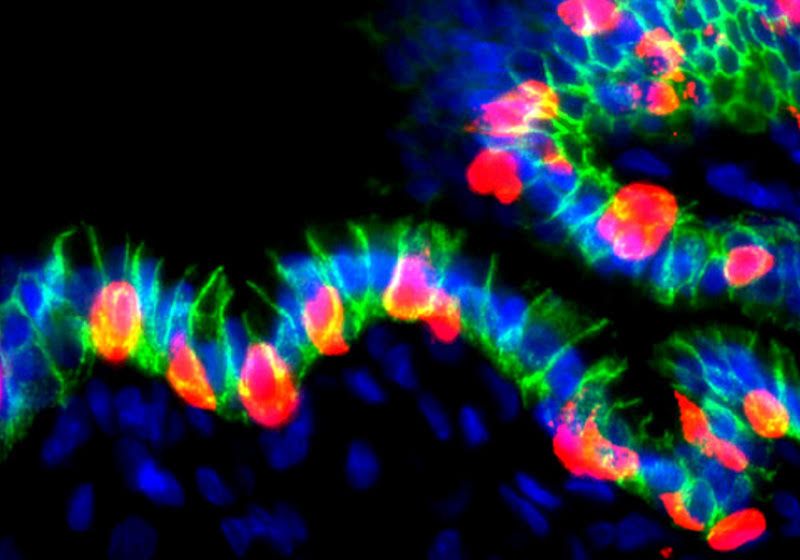
    Human organoids grafted in mice generated cells that secreted insulin (red) when coaxed with appropriate molecular cues. Nuclei are shown in blue.

    Image credit:Hyunkee Kim

    An estimated 9.5 million people all over the world live with type 1 diabetes, wherein the beta cells in their pancreas cannot produce enough insulin to keep blood glucose in check.1 In the long run, elevated glucose can damage organs such as the kidneys, heart, and eyes. Over the past few decades, scientists have been studying how to generate functional insulin-secreting cells which could be transplanted into patients.

    Now, researchers led by Xiaofeng Huang, a molecular biologist at Weill Cornell Medical College, engineered human stomach organoids to secrete insulin. Transplanting these into diabetic mice reduced hyperglycemia.2 Their findings, published today in Stem Cell Reports, could help develop technologies to engineer a person’s own insulin-secreting cells for diabetes treatment.

    Researchers had previously reprogrammed cells in the mouse stomach and intestine into insulin-producing pancreatic beta-like cells.3,4 Building upon this, Huang and others in the field differentiated human gastric stem cells in vitro into gastric insulin-secreting cells resembling pancreatic beta cells.5 The researchers sought to further explore whether human gastric cells in a complex in vivo environment could similarly differentiate into insulin-secreting cells.

    Continue reading below…

    To find out, Huang and his team differentiated human embryonic stem cells into gastric organoids. They engineered the organoids such that the structures could be reprogrammed into pancreatic beta-like cells upon flipping a genetic switch using appropriate molecular cues.

    The researchers then transplanted these organoids into the abdomen of mice and coaxed the organoids to produce insulin-secreting cells. Within three weeks, they observed insulin-producing cells within the organoids, which expressed key markers of pancreatic beta cells.

    To investigate whether these cells could secrete insulin into the bloodstream and alleviate diabetes, Huang and his team transplanted the organoids into diabetic mice. Insulin secreted from the cells induced from the organoids helped reduce blood glucose and maintain it at normal levels for up to six weeks.

    However, this treatment did not help manage hyperglycemia over the long-term in the transplanted mice. Despite this, Huang and his team noted that their results offer a proof of principle that human stomach tissue could be reprogrammed in vivo to generate insulin-secreting cells. This could pave the way for developing an autologous therapeutic strategy wherein cells derived from a diabetic person could be reprogrammed to secrete insulin and transplanted back to manage their type 1 diabetes.

    Human Insulin Organoids Reprogrammed Secrete Stomach
    Share. Facebook Twitter Pinterest LinkedIn Tumblr WhatsApp Email
    Previous ArticleFrench Onion Smashed Potatoes in a Muffin Tin
    Next Article Why Snackiness Increases In Your 40s & What To Do About It
    admin
    • Website

    Related Posts

    A Video Report from AGBT

    February 27, 2026

    Novo Nordisk, Vivtex Ink Up to $2.1B Deal to Develop Oral Biologics for Metabolic Conditions

    February 27, 2026

    Increasing Rice Yields with Gene-Informed Selective Breeding

    February 27, 2026

    Mutant p53 Selective Reactivation Demonstrated in Advanced Solid Tumors

    February 27, 2026
    Leave A Reply Cancel Reply

    Our Picks

    9 Time-Saving Kitchen Gadgets for Fall at Amazon

    September 5, 2025

    Why Exercise Is So Important For Heart Health, From An MD

    September 5, 2025

    An Engineered Protein Helps Phagocytes Gobble Up Diseased Cells

    September 5, 2025

    How To Get Rid Of Hangnails + Causes From Experts

    September 5, 2025
    • Facebook
    • Twitter
    • Pinterest
    • Instagram
    • YouTube
    • Vimeo
    Don't Miss
    Longevity

    Nautilus debuts Voyager platform in push toward next-gen proteomics

    By adminMarch 1, 20260

    Company’s new benchtop system promises a clearer view of proteins following validation at a leading…

    First-in-Human Success for Prenatal Stem Cell Therapy in Spina Bifida

    February 28, 2026

    Pressure-Driven Pathway Links Liver Congestion to Fibrosis and Cancer

    February 28, 2026

    A cellular atlas of aging comes into focus

    February 28, 2026

    Subscribe to Updates

    Get the latest creative news from SmartMag about art & design.

    About Us

    At FineGut, our mission is simple: to enhance your self-awareness when it comes to your gut health. We believe that a healthy gut is the foundation of overall well-being, and understanding the brain–gut connection can truly transform the way you live.

    Our Picks

    9 Time-Saving Kitchen Gadgets for Fall at Amazon

    September 5, 2025

    Why Exercise Is So Important For Heart Health, From An MD

    September 5, 2025

    An Engineered Protein Helps Phagocytes Gobble Up Diseased Cells

    September 5, 2025
    Gut Health

    Nautilus debuts Voyager platform in push toward next-gen proteomics

    March 1, 2026

    First-in-Human Success for Prenatal Stem Cell Therapy in Spina Bifida

    February 28, 2026

    Pressure-Driven Pathway Links Liver Congestion to Fibrosis and Cancer

    February 28, 2026
    X (Twitter) YouTube
    • Contact us
    • Privacy Policy
    • Disclaimer
    • Terms and Conditions
    © 2026 finegut.com. Designed by Pro.

    Type above and press Enter to search. Press Esc to cancel.