


The Innovation Institute for Food and Health (IIFH) at the University of California (UC) Davis, US, has recently partnered with foundational nutrition company AG1 to accelerate product development for nutrition and metabolic health innovations and commercialize research discoveries. The partnership aims to bridge the gap between academia and industry by developing science-based nutritional innovations for improved metabolic health.
AG1 and IIFH will combine advanced omics analytics with product development to match nutrients from ingredients with the specific needs of a target population.
Nutrition Insight speaks with Kat Cole, CEO of AG1, and Dr. Justin Siegel, IIFH faculty director and professor of Chemistry, Biochemistry, and Molecular Medicine at UC Davis, about how the collaboration will drive a paradigm shift in metabolic health.
“There’s a historical gap between industry and academic research,” Cole tells us. “What makes this partnership interesting is that AG1 has the scale and platform to use this work, because we’re leaning into science-backed nutrition, but we also have the desire to story tell the science — we are an amplifier of existing research.”
“We’re partnering so that we can get better,” she adds. “We might discover things where we want to go faster, but the institute says that it’s not possible to meet its standard. That’s the reason we partnered with UC Davis.”
Cole says that she prefers partners who push back and maintain rigorous standards. “This is a heavyweight partnership with a heavyweight institution in this space, with a high degree of reputational responsibility.”
Siegel underscores that science and business are deeply integrated. “Good science is good business, and good business is good science.”
 AG1 could commercialize UC Davis research that has not been used yet, or flag if certain discoveries are too challenging to bring to the market.“Areas where things come and go and there are fads often lack scientific rigor. Similarly, if you’re doing scientific work and it translates into impacting humans, there’s a business there.”
Commercializing science
Cole highlights the benefits of combining IIFH and UC Davis’ leading science with AG1’s market awareness and commercial insights. AG1 could commercialize research that has not been used yet, or the company might flag that certain viable discoveries might be “too difficult to make people understand through marketing.”
“For example, there is a particular ingredient that UC Davis has a ton of research on, which is not in AG1 and most of the market hasn’t heard about it,” she details. “I have to think about the marketing lift that would be required to tell the story. It doesn’t mean we won’t include it, but it affects, among others, planning, timing, economics, and pipelines.”
“The university may also have insights at the intersection of agriculture, nutrition, and consumer products that will help us innovate twice as fast because we don’t have to consult different sources of data and information.”
Siegel highlights that in his conversations with companies, he underscores that UC Davis reserves the right “to publish what we find — the good, the bad, and the ugly.”
“Some companies walk away from that. The ones that stay are the ones we want to work with, who are genuinely interested in making better products for people.”
Metabolic dysfunction
While focusing on the intersection of nutrition and metabolic health, the organizations have not yet set specific focus areas, as metabolism underlies many health outcomes.
“There’s a general bucket of metabolic dysfunction that drives many disease states and issues that populations are navigating,” details Cole. “That’s why our partnership is broad.”
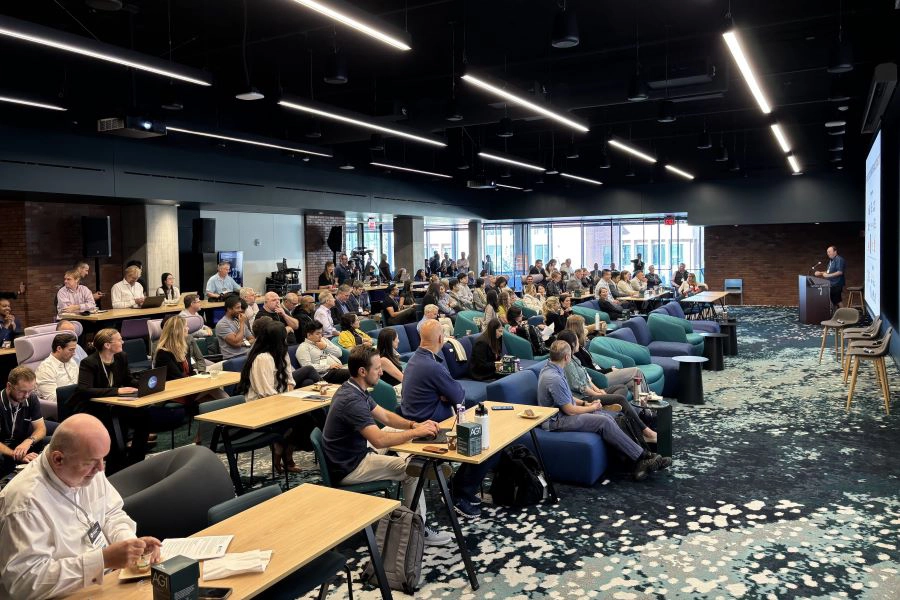 At the Discovery Forum, Siegel highlighted GLP-1 medication as a “fundamental shift” in the food industry (Image credit: IIFH / Marissa Pickard).“Foundationally, metabolic dysfunction may contribute in varying ways to negative outcomes — but it’s a common thread, whether it’s inflammaging, gut-brain connection, diabetes, or obesity.”
She notes that AG1’s all-in-one supplement powder mix focuses on closing nutrient gaps and providing gut health support, as both are “foundationally relevant” to metabolic health.
Siegel adds that one of the goals of the recent IIFH Discovery Forum was to start identifying focus areas. This conference explored how the science behind metabolic hormones can inspire a new wave of innovation in food for health.
“We’ve already heard at least a dozen possibilities,” he details. “After this conference and connecting with experts here at Davis and around the world, we can return and ask: What excites us most? Where do we really want to focus? And, once we’ve identified that, do we have the scientific expertise and capability to execute that?”
Food system shift
Siegel says that science is at a transition point in the food system, with most conversations and daily recommended values for nutritional ingredients focusing on avoiding illness, rather than helping people to thrive.
In this space, GLP-1 medications are fundamentally changing the food system. These drugs address the root cause of metabolic dysfunction and obesity, instead of treating the consequences.
“It’s a once-in-many-generations opportunity to reframe and restructure the food system — not ‘what is the bare minimum to keep us alive,’ but what can we deliver to GLP-1 users so they can thrive and enjoy food and live the lives they want.”
He imagines that, in the future, food retailers will have a GLP-1 section, similar to having a gluten-free aisle. Already, companies are launching complementary food and supplement innovations to fill in gaps in GLP-1 diets, which are prominently featured at industry tradeshows.
 Cole notes that the collaboration could result in a new version of AG1 or build research and models to get the product to practitioners.“The food industry still sees the GLP-1 as a drug, but in reality, it’s changing people’s lifestyles and relationships with food,” says Siegel. “It’s a fundamental shift. It’s right up there with any of those other modifications or adjustments the food industry makes.”
“Partnerships like AG1-IIFH are essential, but it will also take foundations, investors, and large food companies,” he adds.
GLP-1 support
The IIFH Discovery Forum highlighted that a growing percentage of the US population is using GLP-1 drugs or is eligible to use the anti-obesity medications. At the conference, a surgeon, a researcher, and a nutritionist all agreed that this population needs more micronutrient support.
Cole notes that this growing demand may not lead to a “new version” of AG1, but an outcome could be to build new bodies of research to expand research, expertise, and models, ultimately getting the product to practitioners.
“Supplements haven’t historically had enough clinical rigor to be recommended by practitioners. Some of the outcomes may be that we don’t have enough connective tissue, clinical rigor, or AI-powered models to become a recommendation at scale.”
AG1 has been very cautious about entering the GLP-1 conversation as it is complex, scientific, and new, she adds.
“Yet, we’re hearing from customers on these drugs how much AG1 helps them. We can’t make that claim without clinical trials,” underscores Cole. “Our ability to partner with the top researchers and practitioners in the world is advancing a body of work so that this product with high-quality nutrients and gut health support can enter the conversation among rigorous professionals.”
Innovating for consumer adherence
Another area where Cole says the partnership will explore is food innovation to leverage the benefits of AG1 in this population.
 The partnership aims to bridge the gap between academia and industry by developing science-based nutritional innovations for improved metabolic health.“Food and beverage innovation, with our ingredients and expertise in nutrient-density, could become an entirely new product platform as a result of this partnership,” Cole highlights. “Imagine food or drinks that incorporate AG1, like a snack bar, or a drink with some of these ingredients.”
“It’s easy to say ‘everyone should eat healthy and stop eating sugar,’ but until that happens, there’s a near-term view of products that are differentiated, backed by science, and commercially viable. They don’t have to be huge, but they must justify economic investments or they’ll never reach consumers.”
Siegel adds that rituals will be key for people using the GLP-1 medications, emphasizing that this is one of AG1’s strengths because it becomes a ritual for consumers. “For individuals coming off these drugs, these rituals help them live healthier lives, keep the weight off, and thrive.”
AG1 recently launched AGZ, which offers a similar ritual: a natural, magnesium-based, non-habit-forming product to wind down, with a high safety profile. “These platforms provide nutritional support with a high adherence rate,” says Cole.
“We want to make very few products, but make them complex and work hard, with a high daily consistency, because that’s where all the benefits happen.”
