
Close Menu
My Blog

    Subscribe to Updates

    Get the latest creative news from FooBar about art, design and business.

    What's Hot

    Nautilus debuts Voyager platform in push toward next-gen proteomics

    March 1, 2026

    First-in-Human Success for Prenatal Stem Cell Therapy in Spina Bifida

    February 28, 2026

    Pressure-Driven Pathway Links Liver Congestion to Fibrosis and Cancer

    February 28, 2026
    Facebook X (Twitter) Instagram
    X (Twitter) YouTube
    My BlogMy Blog
    Sunday, March 1
    • Home
    • About Us
    • Healthy Living
    • DNA & Genetics
    • Podcast
    • Shop
    My Blog
    Home»Gut Health»molecular biologist who co-discovered precise molecular scissors for cutting DNA
    Gut Health

    molecular biologist who co-discovered precise molecular scissors for cutting DNA

    adminBy adminNovember 10, 2025No Comments3 Mins Read
    Facebook Twitter Pinterest LinkedIn Tumblr WhatsApp VKontakte Email
    molecular biologist who co-discovered precise molecular scissors for cutting DNA
    Share
    Facebook Twitter LinkedIn Pinterest Email

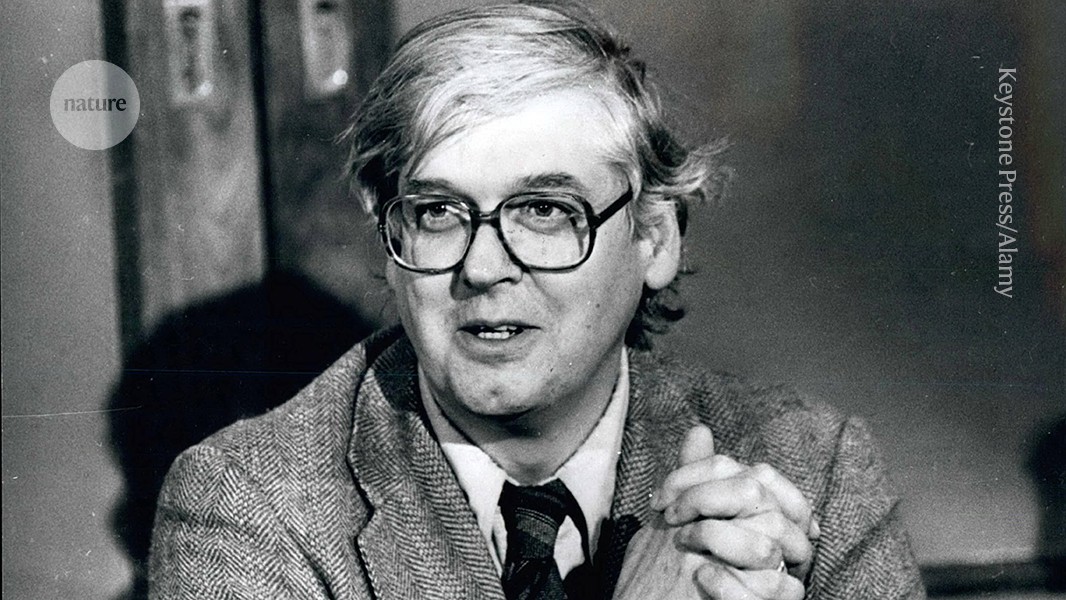
    Credit: Keystone Press/Alamy

    Hamilton (Ham) Smith co-discovered type II restriction enzymes, molecular scissors that cut DNA at precise sequence sites, which proved to be an essential tool for the emerging field of molecular biology. For this work he shared the 1978 Nobel Prize in Physiology or Medicine with Werner Arber and Daniel Nathans. Smith began a second career in 1993, when he agreed to collaborate with me on sequencing the genome of the bacterium Haemophilus influenzae. On its publication in 1995, it was the first complete genome of any organism.

    That fortunate collaboration led to the first draft human genome sequence in 2001, and then to the first cell made from a synthetic genome in 2010. Smith was a scientist’s scientist, working in the laboratory almost every day and quietly being an inspiration, friend and a collaborator to all his colleagues.

    A wealth of discovery built on the Human Genome Project — by the numbers

    Born in New York City, Smith grew up in Champaign-Urbana, Illinois, where his father was a college professor. Smith discovered biology while studying mathematics at the University of California, Berkeley, and went on to receive his medical degree from Johns Hopkins University School of Medicine in Baltimore, Maryland, in 1956. Following his military service in the US Navy, and a medical residency at Henry Ford hospital in Detroit, Michigan, in 1962, Smith received a fellowship from the US National Institutes of Health to work with Myron Levine — a pioneer in infectious-disease research — at the University of Michigan in Ann Arbor. Studying the bacteriophage P22, a virus that infects the bacterium Salmonella Typhimurium, he mastered DNA isolation techniques that became an essential component of all his main contributions to science.

    In 1967, Smith joined the microbiology department at Johns Hopkins. Beginning work on H. influenzae, he discovered a restriction enzyme by studying changes in DNA viscosity. He used several clever techniques to prove that the enzyme recognized a unique DNA sequence, long before the advent of DNA sequencing, and published two key papers in the Journal of Molecular Biology in 1970 (H. O. Smith and K. W. Wilcox J. Mol. Biol. 51, 379–391 (1970); T. J. Kelly Jr and H. O. Smith J. Mol. Biol. 51, 393–409; 1970). His parents were driving to the grocery shop on 12 October 1978 when the news came over their car radio that Hamilton Smith at Johns Hopkins had won the Nobel prize. His mother told him that she looked at his father and said, “Do you suppose there is another Hamilton Smith at Hopkins?”

    In 1993, Smith and I met at a conference in Bilbao, Spain. I had founded the Institute for Genomic Research (TIGR) in Rockville, Maryland, the year before and Smith agreed to join the science advisory board. At his suggestion, we decided to collaborate on sequencing the genome of H. influenzae using my idea of whole-genome shotgun sequencing. The method is dependent on achieving a perfect statistical Poisson distribution of the DNA fragments that cover the genome in a genomic sequencing library, and Smith developed techniques to achieve this. We sequenced 25,000 fragments and mathematically assembled them into the complete circular genome. After this, Smith joined TIGR and its successor firm, the J. Craig Venter Institute, where he stayed for the remaining 25 years of his career. We went on to collaborate on dozens of other genomes, including the Neisseria meningitidis genome that led to the development of the first meningococcal B vaccine that has saved thousands of lives.

    Biologist CoDiscovered Cutting DNA Molecular Precise scissors
    Share. Facebook Twitter Pinterest LinkedIn Tumblr WhatsApp Email
    Previous ArticleResearch cautions that ignoring calorie reductions on intermittent fasting reduces benefits
    Next Article Announcing the 2026 NutraIngredients SANS Start-Up Stars
    admin
    • Website

    Related Posts

    Precise Locations of Oligodendrocytes, Myelin Density Mapped Across Mouse Lifespan

    February 25, 2026

    The ins and outs of the new Dietary Guidelines for Americans in light of the gut microbiome

    February 25, 2026

    Reinventing Gene Editing for Safer, More Precise Therapies

    February 18, 2026

    Patrick Veiga – Gut Microbiota for Health

    February 17, 2026
    Leave A Reply Cancel Reply

    Our Picks

    9 Time-Saving Kitchen Gadgets for Fall at Amazon

    September 5, 2025

    Why Exercise Is So Important For Heart Health, From An MD

    September 5, 2025

    An Engineered Protein Helps Phagocytes Gobble Up Diseased Cells

    September 5, 2025

    How To Get Rid Of Hangnails + Causes From Experts

    September 5, 2025
    • Facebook
    • Twitter
    • Pinterest
    • Instagram
    • YouTube
    • Vimeo
    Don't Miss
    Longevity

    Nautilus debuts Voyager platform in push toward next-gen proteomics

    By adminMarch 1, 20260

    Company’s new benchtop system promises a clearer view of proteins following validation at a leading…

    First-in-Human Success for Prenatal Stem Cell Therapy in Spina Bifida

    February 28, 2026

    Pressure-Driven Pathway Links Liver Congestion to Fibrosis and Cancer

    February 28, 2026

    A cellular atlas of aging comes into focus

    February 28, 2026

    Subscribe to Updates

    Get the latest creative news from SmartMag about art & design.

    About Us

    At FineGut, our mission is simple: to enhance your self-awareness when it comes to your gut health. We believe that a healthy gut is the foundation of overall well-being, and understanding the brain–gut connection can truly transform the way you live.

    Our Picks

    9 Time-Saving Kitchen Gadgets for Fall at Amazon

    September 5, 2025

    Why Exercise Is So Important For Heart Health, From An MD

    September 5, 2025

    An Engineered Protein Helps Phagocytes Gobble Up Diseased Cells

    September 5, 2025
    Gut Health

    Nautilus debuts Voyager platform in push toward next-gen proteomics

    March 1, 2026

    First-in-Human Success for Prenatal Stem Cell Therapy in Spina Bifida

    February 28, 2026

    Pressure-Driven Pathway Links Liver Congestion to Fibrosis and Cancer

    February 28, 2026
    X (Twitter) YouTube
    • Contact us
    • Privacy Policy
    • Disclaimer
    • Terms and Conditions
    © 2026 finegut.com. Designed by Pro.

    Type above and press Enter to search. Press Esc to cancel.