

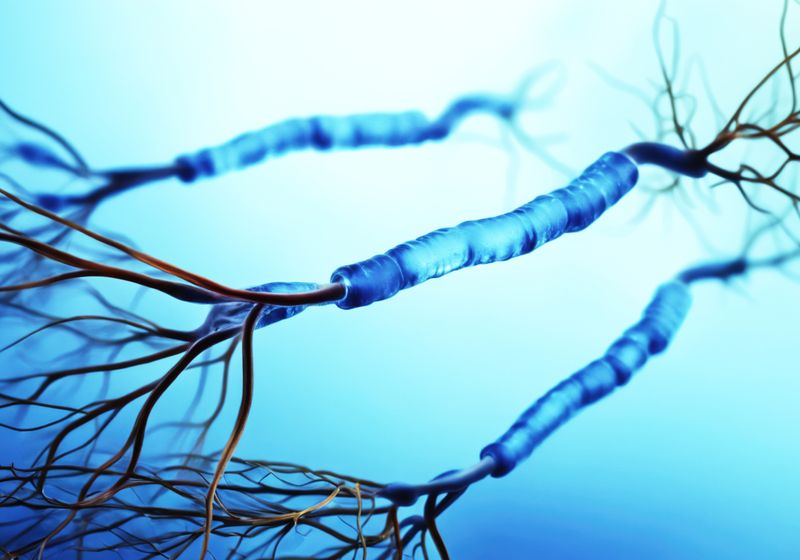
Studying the complex interactions of genetic and epigenetic factors will help researchers like Maja Jagodic better understand multiple sclerosis progression.
While multiple sclerosis (MS) relapses are manageable with immune-modulatory treatments, the mechanisms behind the progressive stage of this disease are poorly understood. Karolinska Institute molecular biologist Maja Jagodic is drawn to the challenge of untangling the genetic and epigenetic layers driving this chronic disorder. Recently, she embarked on a project to better understand the neurodegenerative processes behind MS and identify biomarkers of disease activity and progression based on DNA methylation. Using biomodal’s duet multiomics solution that combines genetic and epigenetic analyses in a single, low input workflow, Jagodic is capturing all four canonical DNA bases along with 5 methylcytosine and 5 hydroxymethylcytosine modifications in patient-derived cerebrospinal fluid (CSF) samples.
What are the biggest challenges in multiple sclerosis treatment and diagnosis?
In MS, the immune system is dysregulated. There are autoimmune attacks on the myelin in the brain, and eventually the disease leads to neuroaxonal death. This can cause lesions in different brain regions, which affects various functions and results in an unpredictable disease. A patient with MS typically starts having bouts of disease followed by phases of partial or full recovery.
We speculate that people usually have had the disease for a number of years before they are diagnosed, losing valuable time and accumulating brain damage. However, intervening very early with potent drugs can postpone MS progression. We would like to diagnose the disease much earlier than what is typical today. Also, it seems that the mechanisms of progression are different from the mechanisms triggering the disease.
It would be great to have prognostic biomarkers and therapies that effectively interfere with progressive disease. To do this, we need to learn about the mechanisms taking place in the brain, which is very a challenging organ to study.
Why is it important to study genetic and epigenetic changes in the context of disease?
Finding a genetic variant that is predisposing for a disease implicates causal mechanisms.
MS is challenging because there are many genetic variants, in complex combinations with environmental or lifestyle factors, that increase susceptibility for disease development. I am interested in epigenetics because it is the molecular layer where these influences affect how cells put their genomes to use, ultimately impacting their phenotype. Looking at the epigenetic layer can help us learn more about the different etiological factors and dig deeper into their molecular mechanisms.
What is your current research focus?
My research group studies DNA methylation. First of all, these marks are quite stable, so we can utilize archival samples in our research. Secondly, it is probably the only epigenetic mark for which we know the mechanism of heritability through cell division. We can study clinical samples to learn more about the underlying genetic variants and potential environmental influences that trigger the disease and drive disease progression. We also investigate if some of these epigenetic profiles can be used as biomarkers.
Why did you start using biomodal’s six-base sequencing technology for your research?
We tested a lot of technologies with varying outcomes. Bisulfite sequencing is not applicable to our low input samples because the technique is harsh on the DNA. With enzymatic sequencing, we get methylation and hydroxymethylation signals in bulk, which eliminates valuable information.
If we wanted to study more than one epigenetic modification, we would have to split our material into different batches. This was not really an option due to our sample constraints, so we looked for a way to get as much genetic and epigenetic information as possible from low inputs. Also, we wanted to study epigenetics in the context of genetic variation. While analyzing the literature, we learned about biomodal’s exciting method that simultaneously provides DNA sequence information along with methylation and hydroxymethylation data in one workflow.
What results have you obtained so far with the six-base sequencing method?
The premise of our current study is to find an epigenetic mark specific for neurons or glial cells that can act as a biomarker. We know from our previous research looking at neuronal nuclei from postmortem tissues that hydroxymethylation is really important in MS.1 When these cells are dying, such as in MS, their debris shed into the bloodstream and CSF. We started analyzing CSF because it is close to the brain. There is an extremely low amount of DNA in that fluid, but at the same time the samples are less complex, as there are no other organs releasing their DNA into the CSF as they would into the blood. However, it would be ideal to have a blood biomarker for monitoring disease, so we are also translating our study to blood plasma or serum.
Recently, we have identified the presence of neuronal DNA and hydroxymethylation in low input CSF samples. Next, we will locate epigenomic regions that have the most useful information for our application in MS. Our preliminary results using biomodal’s technology look very interesting and promising, not only because of the technology itself but also due to our collaboration with the biomodal team, who address our analytical questions and help us refine our model.
What is on the horizon for this collaboration with biomodal?
Once we have a signature that is discriminatory, we will consider a targeted approach using the biomodal technology to sequence only those loci that are really informative.
Studying downstream mechanisms of genetic variants without considering the epigenetic layer is an oversimplified approach. It will be groundbreaking if we can learn more about the underlying biology of multiple sclerosis as well as identify potential biomarkers from CSF using this technology.
This interview has been condensed and edited for clarity.
References
1. Kular L, et al. Neuronal methylome reveals CREB-associated neuro-axonal impairment in multiple sclerosis. Clin Epigenetics. 2019;11(1):86.
