

Teeth help animals bite and chew food. Meat-eating carnivores tend to have sharp teeth to sink into their prey, while herbivores tend to have flatter teeth to grind down their plant-based meals.
Some animals also use their pearly whites for specialized purposes like digging or fighting. Tusks, like you see in elephants, walruses and warthogs, are one special kind of teeth – they grow continuously for as long as the animal is alive.
Over time, no matter what you use them for, teeth wear down. This is good news if you’re a rodent, such as a beaver or a rat. Because their teeth never stop growing, rodents rely on gnawing and chomping to grind their teeth down so they don’t grow so long that they cause problems.
Some animals deal with wear and tear by continuously developing new teeth as their old ones fall out. Sharks and crocodiles, for example, are what scientists call polyphyodont: They can grow nearly infinite sets of teeth.1
Like most mammals, humans are diphyodont: We have two sets of teeth – baby teeth and adult teeth. The technical term for our baby teeth is deciduous teeth because they fall out, the same way deciduous leaves fall off trees in autumn.
We are a dentist who focuses on treating kids and an anthropologist who studies how humans’ teeth and faces grow. We are both passionate about teeth and oral health care, and love thinking and learning about teeth. How did two sets become standard for human beings?
How Human Teeth Develop
Most people are born with no teeth showing in their mouths at all, even though your baby teeth start developing before you’re even born. Baby teeth usually start poking through the gums when you’re between 6 and 8 months old. Sometimes when dentists take X-rays to check for cavities or other problems, they can see adult teeth growing within the gums.

Baby teeth are relatively small because they need to fit in the small faces of babies and little kids. As you grow older and your face gets bigger, you have room in your mouth for more and larger teeth. Teeth have different sizes and shapes, depending on their purpose. Human front teeth are good at biting into things and tearing off a piece of food. Your back teeth are good at chewing foods into smaller bits before you swallow.
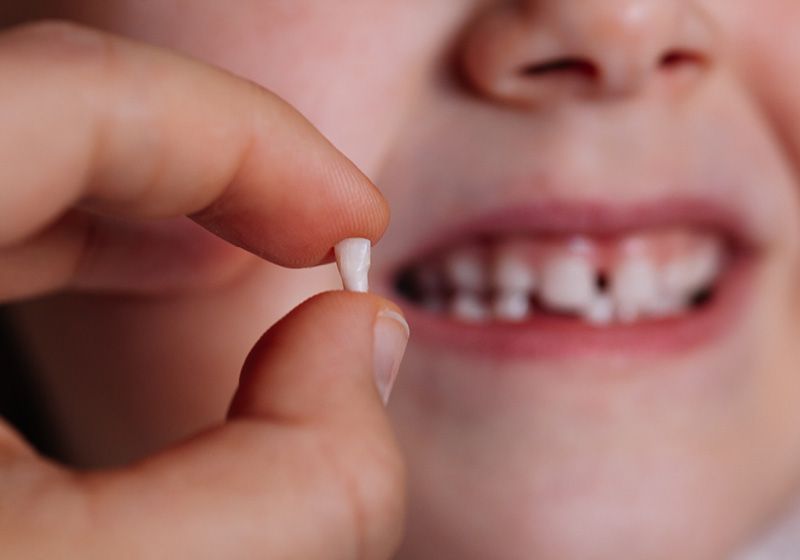
Most kids lose their first baby tooth when they’re between 5 and 6 years old, and the process slowly continues until you’re between 10 and 12 years old and all 20 of your original choppers have fallen out.
During that same time, your adult, or permanent, teeth gradually take their spots in your mouth. They’re bigger than your baby teeth and can help you chew more food at once. Eventually you have a set of 28, with the potential of four more wisdom teeth at the very back. Some people just naturally don’t ever grow wisdom teeth, some have wisdom teeth that don’t fit their jaws and need to be removed, and some have big, wide smiles with 32 teeth.
So, getting two sets of teeth means your teeth fit the size of your face as you grow, and helps make sure you can chew food your entire life.
Baby Teeth Deserve Gentle Care
You might be thinking that if baby teeth are just going to fall out, they can’t be that important. But that’s not true.
If you were a shark, every time you got a bunch of cavities or chipped a tooth, you’d just grow a new one and keep on chewing. But unlike sharks or crocodiles or even manatees, we humans only get two sets of teeth. By taking care of your baby teeth, you can keep them healthy and make sure they stay right where they belong until they’re ready to fall out.
If you don’t take care of your baby teeth, they can wind up with lots of cavities. If the cavities get too large or teeth become infected, they may need to be removed by the dentist. Not only is this process not fun, but taking out baby teeth too early can create problems for your adult teeth.2
You can wind up with not enough space for your adult teeth to come in – that is, what dentists call “erupt” – into the right spots. This issue happens in part because the other teeth around where the baby tooth was will shift and may move into the space where your adult teeth are supposed to come in. Teeth can get stuck in the jaw and not erupt, or your teeth can be crowded in your mouth. If there is a mismatch between the size of your teeth and the size of your jaws, an orthodontist might attach braces to your teeth to reposition them so they all fit.
What Is the Future of Teeth?
Because people can live long lives, 70 or 80 years or more, many outlive their teeth even if they do their best to take care of them. While there are lots of options for artificial teeth – like removable dentures or even dental implants, which are fake teeth that are screwed into your jaws – it’s not quite the same as having natural teeth.

If you break a bone, it heals because you can grow new bone to patch up the part that broke. Scientists call this process fracture healing. Human teeth aren’t bone and, unfortunately, do not heal themselves. Unlike your bones, which are mostly composed of a structural protein your body makes called collagen, your teeth are primarily made up of minerals such as calcium-rich hydroxyapatite.3 In some ways, teeth are closer to being like hard stones than living bones.
Regenerative dentistry is the study of how teeth grow and develop, with the goal of ultimately designing new ways to repair and replace our teeth. Scientists are working hard to figure out ways to grow new teeth or help existing teeth regenerate.4 They’re learning about the environment and materials needed to grow new teeth.
For now, the best thing you can do is take good care of the teeth you have and keep the gums and bones that support them healthy. Brush your teeth twice a day with toothpaste that contains fluoride, and floss once a day. Try to limit sugary, sticky foods and drinks – a good diet keeps your whole body healthy, not just your teeth. See a dentist regularly, and protect your teeth from injury.
Being kind to your teeth now can help your future self have a beautiful, healthy smile.
Christina Nicholas, Associate Professor of Orthodontics and of Anthropology, University of Illinois Chicago and David Avenetti, Associate Professor of Pediatric Dentistry, University of Illinois Chicago
This article is republished from The Conversation under a Creative Commons license. Read the original article.
