

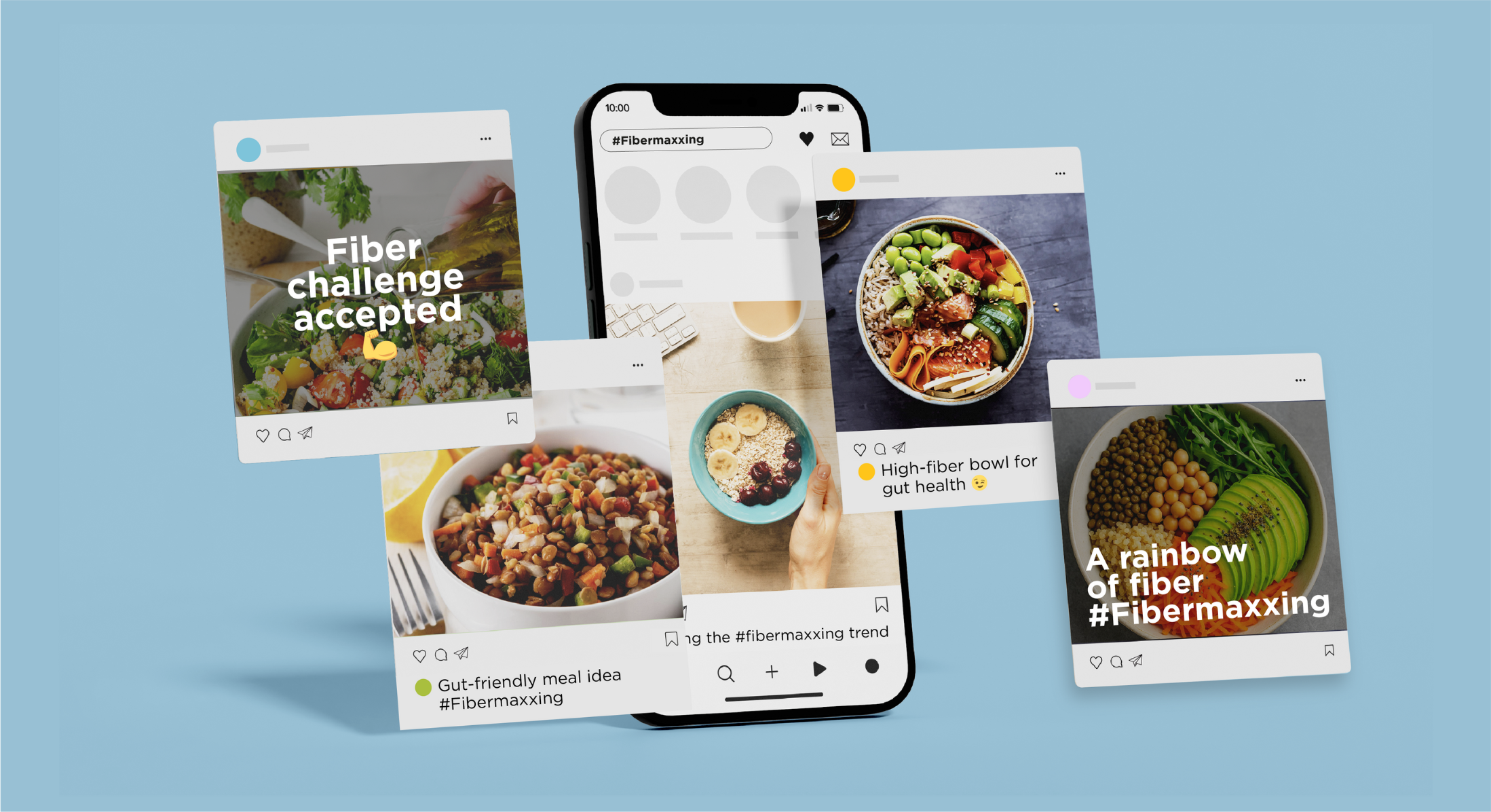
A new wellness trend is taking over social media: fibermaxxing. From overnight oats and chia puddings to legume-rich bowls, users are sharing creative ways to “maximize” their daily fiber intake, often aiming well above the commonly recommended 25 grams per day.
But while it’s encouraging to see more people interested in fiber, scientists remind us that how much we eat is only part of the story. The type of fiber, how our gut microbes use it, and our individual gut health also matter, and these nuances are not always reflected in current dietary guidelines.
How fiber fuels our gut and our health
When we consume dietary fiber, our gut bacteria break it down, producing short-chain fatty acids (SCFAs) such as butyrate and propionate. These molecules nourish intestinal cells and play an important role in regulating inflammation and immune responses.
Recent research from Stanford University revealed that SCFAs can also modulate gene expression, influencing cell proliferation and cancer control through epigenetic mechanisms. “We found a direct link between eating fiber and modulation of gene function that has anti-cancer effects,” said Professor Michael Snyder, author of the study.
These findings add to a growing body of evidence connecting a fiber-rich diet with a lower risk of obesity, diabetes, and certain cancers — all through the metabolic activity of the gut microbiota.
Dietary guidelines may need a microbiome update
As Professor Yolanda Sanz explains, “Up until now, those guidelines and recommendations for healthy diets […] have not considered what research on the microbiome contributes.”
In fact, the standard daily intake of 20 to 35 grams of fiber was established decades ago, based mainly on its effect on bowel movements. Today, experts such as Patrick Veiga point out that higher intakes may help prevent chronic diseases — from cardiovascular disease to diabetes and cancer — yet the evidence is still emerging, and most people barely reach 20 grams a day.
“Fiber recommendations are still based on bowel movement data from decades ago,” says Veiga. “Today, we suspect that more than the recommended intakes might be needed to better prevent chronic diseases — but we don’t yet have enough data to confirm it.”
Yet as research on the gut microbiome advances, scientists are realizing that the story of fiber is not only about quantity, but also about quality and individual response.
While increasing fiber intake is generally beneficial, not all fibers behave the same.
As Professor Sanz points out, “Fiber is an umbrella term for a diverse group of substances. Different types behave differently, and not everyone benefits the same.”
In people with inflammatory bowel disease (IBD), for example, β-fructans (a type of fiber found in foods like chicory root and Jerusalem artichoke) can help promote the production of SCFAs and support colonic repair. However, their effects depend on the individual’s microbiota composition and whether the disease is in remission or active. For some patients, certain fibers might worsen symptoms instead of relieving them.
Altogether, these insights suggest that future dietary advice could integrate not only how much fiber we need, but also how our microbiota respond to different types of fiber, reinforcing the importance of personalized nutritional approaches over one-size-fits-all recommendations.
A positive trend — if we follow science, not hype
The popularity of fibermaxxing reflects a positive shift: people are recognizing the value of fiber for digestive and overall health. But rather than focusing solely on hitting a number, scientists encourage us to:
- Increase fiber intake gradually,
- Diversify fiber sources (fruits, vegetables, legumes, whole grains, nuts, and seeds),
- Stay hydrated, and
- Pay attention to individual tolerance and gut health.
Because ultimately, feeding our gut microbiota is about balance and diversity, not extremes.
As research continues to uncover how dietary fiber shapes our microbiome and influences long-term health, one message is clear: making fiber a daily habit is one of the most powerful — and simple — ways to support our well-being from within.
References:
Sanz Y, Cryan JF, Deschasaux-Tanguy M, et al. The gut microbiome connects nutrition and human health. Nat Rev Gastroenterol Hepatol. 2025; 22(8):534-555. doi: 10.1038/s41575-025-01077-5.
Nshanian, M., Gruber, J.J., Geller, B.S. et al. Short-chain fatty acid metabolites propionate and butyrate are unique epigenetic regulatory elements linking diet, metabolism and gene expression. Nat Metab 7, 196–211 (2025). Doi: 10.1038/s42255-024-01191-9
Armstrong HK, Bording-Jorgensen M, Santer DM, et al. Unfermented β-fructan Fibers Fuel Inflammation in Select Inflammatory Bowel Disease Patients. Gastroenterology. 2023;164(2):228-240. doi:10.1053/j.gastro.2022.09.034
Shin A, Kashyap PC. Promote or Prevent? Gut Microbial Function and Immune Status May Determine the Effect of Fiber in Inflammatory Bowel Disease. Gastroenterology. 2023 Feb; 164(2):182-184. doi:10.1053/j.gastro.2022.11.022
