

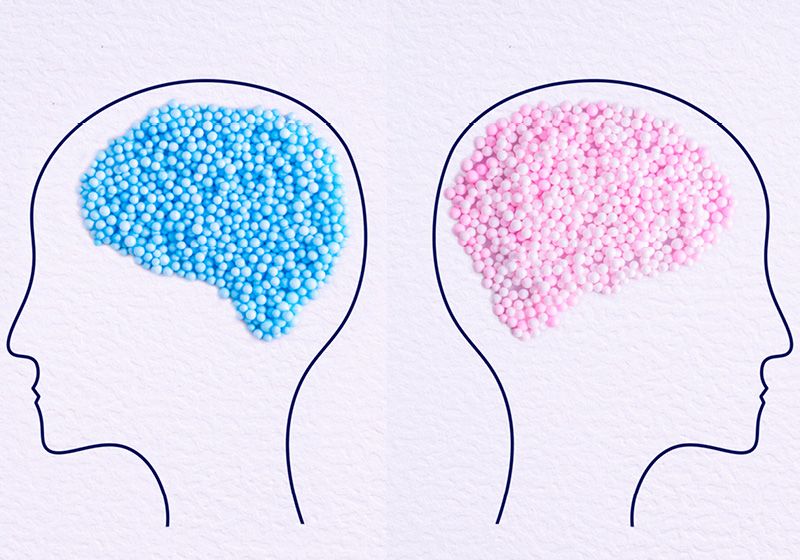
Neuroendocrinologist Catherine Woolley and her team at Northwestern University were studying synaptic modulation in female mice when they ran into some trouble. They were attempting to replicate experiments that had been done in male mice, but the researchers soon realized that they couldn’t.
“Since then, I’ve come to think that sex differences in the brain could be very important, less for figuring out how our minds work, and more for ensuring that we maximize the benefits of science for medicine,” said Woolley in a Presidential Special Lecture at the 2025 Society for Neuroscience Meeting.
For years, neuroscientists thought that studying female animals would introduce too much variability into their experiments due to fluctuations in hormones during the estrus cycle. This led to a bias in neuroscience research where researchers at one point overwhelmingly decided to use only male mice in their experiments. However, subsequent experiments revealed that the estrus cycle does not lead to more variability in female mice.1 In fact, in 2016, the National Institutes of Health made the inclusion of female animals in preclinical biomedical research a requirement.
In her presentation, Woolley dispelled some misconceptions that several scientists and members of the public still have about sex differences in the brain, while also spotlighting the very clear sex differences in the brain at the level of molecular mechanisms. She emphasized the importance of including both male and female animals in neuroscience research and how revealing sex differences in the brain could lead to the development of better-targeted drugs.
For Brain Size, Sex Differences Are Minimal
A common misconception, Woolley explained, is that brains differ in size between males and females and that the male brain is larger. When researchers directly asked this question using structural MRI data on brain volume from more than 500,000 people in the UK Biobank, they found that there was quite a bit of variability among both the men and the women: 36 percent of the time male brains were larger and 29 percent of the time female brains were.2 After correcting for total brain volume, the difference in brain size between males and females was very small.
To get a more detailed picture of the brain, researchers at the University of Edinburgh looked at a subset of the UK Biobank data and focused on four brain regions: the hippocampus, the nucleus accumbens, the amygdala, and the caudate nucleus.3 After normalizing for individual differences in brain size, the researchers found that based on sex, there was no difference in hippocampus size, females had slightly larger nucleus accumbens, males had slightly larger amygdala, and no difference in the caudate nucleus. Taking this analysis one step further, researchers at Tel Aviv University measured the volumes of 116 different brain areas and showed that there was a wide amount of variation in size among the different brain regions between the sexes.4
“The vast majority of individual brains are mosaic. That is, they are a mixture of disproportionately larger and disproportionately smaller brain areas,” said Woolley. “This mosaicism of the brain, together with the substantial overlap in regional brain volumes, I think really undermines or at least challenges the concept of dichotomous male and female brains.”
Sex Matters at Synapses
While overall structural differences may be minimal, sex differences at the level of molecular mechanisms are much more meaningful, Woolley said. She and her team have focused specifically on estrogen, which acts as a neurosteroid in the hippocampus. In particular, they are interested in its role in revealing “latent” sex differences in the brain: when a process in both males and females has the same result but occurred by different mechanisms.
“These latent sex differences are interesting because on the surface males and females appear to be identical, and a difference between them is revealed only with some type of intervention.”
The team asked how estradiol, a type of estrogen, affected synaptic transmission in the hippocampus of male and female mice. They found that estradiol treatment led to an increase in the strength of the synapse at both the pre-synaptic and post-synaptic terminal for both sexes.
“It finally starts to get more interesting when we think about the estrogen receptors that mediate these effects,” Woolley said. “In the hippocampus, there are three estrogen receptors that could be involved, each of which can be activated separately by a selective agonist.”
In fact, when they assessed each estrogen receptor individually in males and females, they found that each receptor acted differently within the same sex and between them.
“It’s not really clear what this would do under normal circumstances because estradiol itself appears to have the same effect in males and females, but this would matter with some intervention, say, a drug that affects one of these receptors selectively,” said Woolley. “The idea that manipulating one receptor could have differential effects in males and females when that receptor is involved in a latent sex difference is not just hypothetical.”
Hormones? Both Males and Females Have Them
To dispel one more common misconception, Woolley focused on the role of hormones on the brain in female and male subjects. She acknowledged that often, hormones—such as those that regulate the menstrual cycle—do matter in the female brain, but, she added, “Hormones matter in males too.”
She highlighted a study performed by Emily Jacobs and her team at the University of California, Santa Barbara, in which the researchers took blood, saliva, and brain imaging every day—either in the morning, the evening, or both—for one month from one human male.5 By using this dense sampling approach, they found that not only do the levels of hormones such as testosterone and cortisol fluctuate throughout the day (both higher in the morning than in the evening), but that the volumes of different brain regions change during the day too.
“What I would like you to take away from this is that males have hormones, and they matter in males, just as they also matter in females. And, I think this is probably worth keeping in mind as neuroscience moves more and more into doing experiments in whole animals,” Woolley said. “Whole organisms have whole organism physiology, including hormones.”
Wrapping up her presentation, Woolley spoke directly to the early career neuroscientists in the room, calling them to be the ones to change the status quo in neuroscience research and to get into the habit of using both female and male samples in their research.
“That will reveal novel patterns of synaptic and other forms of modulation in the brain, and that will strengthen and broaden opportunities for drug development and development of other therapeutics,” she said. “In that way, you will be helping to ensure that we maximize the benefits of science for medicine.”
