
Close Menu
My Blog

    Subscribe to Updates

    Get the latest creative news from FooBar about art, design and business.

    What's Hot

    Nautilus debuts Voyager platform in push toward next-gen proteomics

    March 1, 2026

    First-in-Human Success for Prenatal Stem Cell Therapy in Spina Bifida

    February 28, 2026

    Pressure-Driven Pathway Links Liver Congestion to Fibrosis and Cancer

    February 28, 2026
    Facebook X (Twitter) Instagram
    X (Twitter) YouTube
    My BlogMy Blog
    Sunday, March 1
    • Home
    • About Us
    • Healthy Living
    • DNA & Genetics
    • Podcast
    • Shop
    My Blog
    Home»DNA & Genetics»DNA Damage Sensor Reveals Repair in Real Time
    DNA & Genetics

    DNA Damage Sensor Reveals Repair in Real Time

    adminBy adminNovember 21, 2025No Comments3 Mins Read
    Facebook Twitter Pinterest LinkedIn Tumblr WhatsApp VKontakte Email
    Source: man_at_mouse/Getty Images
    Share
    Facebook Twitter LinkedIn Pinterest Email

    Credit: man_at_mouse/Getty Images

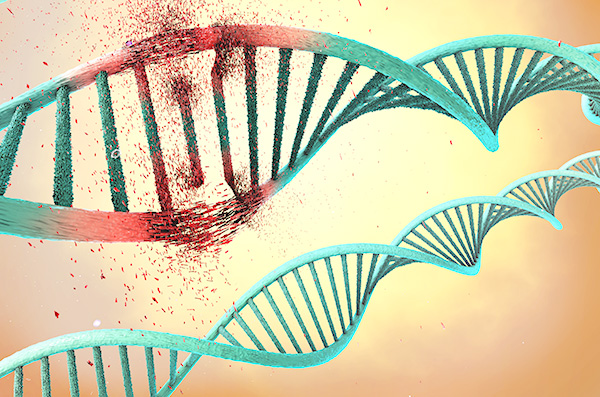
    A new fluorescent sensor is giving scientists an unprecedented view of how cells respond to DNA damage, capturing the repair process as it unfolds in real time. The tool, developed at Utrecht University and published in Nature Communications, could accelerate research in cancer biology, drug safety testing, and aging. The paper is titled “Engineered chromatin readers track damaged chromatin dynamics in live cells and animals.”

    Our DNA is constantly under assault from sunlight, chemicals, radiation, and even normal metabolic processes. While cells usually repair this damage quickly, failures in repair can contribute to cancer, neurodegeneration, and aging, and we know that a lowered capacity for DNA repair is linked to many human diseases. Until now, however, researchers have struggled to watch repairs directly. Most methods relied on antibodies that bind to damaged DNA, but these approaches required fixing and killing cells at different time points and can interfere with the cell’s ability to repair itself, offering only static snapshots.

    The Utrecht team engineered a live-cell sensor that changes this picture entirely. Built from the tandem BRCT domain of the protein MCPH1, the probe binds briefly to the histone mark γH2AX, which appears at sites of DNA double-strand breaks. By attaching a fluorescent tag, the researchers created a tool that lights up DNA damage without interfering with the cell’s own repair machinery.

    “Our sensor is different,” explained lead researcher Tuncay Baubec, PhD. “It’s built from parts taken from a natural protein that the cell already uses. It goes on and off the damage site by itself, so what we see is the genuine behavior of the cell.”

    That dynamic binding is key. Unlike antibodies or nanobodies that can block repair proteins, the MCPH1-based sensor associates and dissociates rapidly, allowing scientists to track the full kinetics of repair. In live-cell imaging experiments, the probe revealed how damage foci form within minutes of exposure to genotoxic agents such as etoposide or ultraviolet light, and how they resolve over hours as repair progresses.

    Richard Cardoso Da Silva, PhD, who engineered and tested the tool, recalls the moment he realized its potential. “I was testing some drugs and saw the sensor lighting up exactly where commercial antibodies did,” he said. “That was the moment I thought: this is going to work.”

    The researchers can now see when damage appears, how quickly repair proteins arrive, and when the cell finally resolves the problem. “You get more data, higher resolution and, importantly, a more realistic picture of what actually happens inside a living cell,” said Cardoso Da Silva.

    The team also demonstrated the sensor’s versatility beyond cultured cells. In the nematode C. elegans, the probe revealed programmed DNA breaks that occur naturally during gametogenesis. This suggests broad applicability in living organisms, not just cell lines.

    Although the sensor itself is not a therapy, its potential impact on translational research could be useful moving forward. Many cancer treatments rely on inducing DNA damage in tumor cells, and aging studies increasingly focus on repair capacity. By making the probe openly available, the Utrecht team hopes to accelerate discoveries across fields.

    With this innovation, researchers can finally watch DNA fix itself—live, in real time—opening a new window into one of biology’s most fundamental processes.

    Damage DNA Real Repair Reveals sensor Time
    Share. Facebook Twitter Pinterest LinkedIn Tumblr WhatsApp Email
    Previous ArticleThe 8 Cheap Healthy Foods Everyone Should Be Buying
    Next Article 15+ High-Fiber Soup Recipes for Better Digestion After 50
    admin
    • Website

    Related Posts

    A Video Report from AGBT

    February 27, 2026

    Novo Nordisk, Vivtex Ink Up to $2.1B Deal to Develop Oral Biologics for Metabolic Conditions

    February 27, 2026

    Increasing Rice Yields with Gene-Informed Selective Breeding

    February 27, 2026

    Mutant p53 Selective Reactivation Demonstrated in Advanced Solid Tumors

    February 27, 2026
    Leave A Reply Cancel Reply

    Our Picks

    9 Time-Saving Kitchen Gadgets for Fall at Amazon

    September 5, 2025

    Why Exercise Is So Important For Heart Health, From An MD

    September 5, 2025

    An Engineered Protein Helps Phagocytes Gobble Up Diseased Cells

    September 5, 2025

    How To Get Rid Of Hangnails + Causes From Experts

    September 5, 2025
    • Facebook
    • Twitter
    • Pinterest
    • Instagram
    • YouTube
    • Vimeo
    Don't Miss
    Longevity

    Nautilus debuts Voyager platform in push toward next-gen proteomics

    By adminMarch 1, 20260

    Company’s new benchtop system promises a clearer view of proteins following validation at a leading…

    First-in-Human Success for Prenatal Stem Cell Therapy in Spina Bifida

    February 28, 2026

    Pressure-Driven Pathway Links Liver Congestion to Fibrosis and Cancer

    February 28, 2026

    A cellular atlas of aging comes into focus

    February 28, 2026

    Subscribe to Updates

    Get the latest creative news from SmartMag about art & design.

    About Us

    At FineGut, our mission is simple: to enhance your self-awareness when it comes to your gut health. We believe that a healthy gut is the foundation of overall well-being, and understanding the brain–gut connection can truly transform the way you live.

    Our Picks

    9 Time-Saving Kitchen Gadgets for Fall at Amazon

    September 5, 2025

    Why Exercise Is So Important For Heart Health, From An MD

    September 5, 2025

    An Engineered Protein Helps Phagocytes Gobble Up Diseased Cells

    September 5, 2025
    Gut Health

    Nautilus debuts Voyager platform in push toward next-gen proteomics

    March 1, 2026

    First-in-Human Success for Prenatal Stem Cell Therapy in Spina Bifida

    February 28, 2026

    Pressure-Driven Pathway Links Liver Congestion to Fibrosis and Cancer

    February 28, 2026
    X (Twitter) YouTube
    • Contact us
    • Privacy Policy
    • Disclaimer
    • Terms and Conditions
    © 2026 finegut.com. Designed by Pro.

    Type above and press Enter to search. Press Esc to cancel.