

Researchers used a high-resolution imaging technique to zap and freeze synaptic vesicle dynamics in both mice and human brain slices.
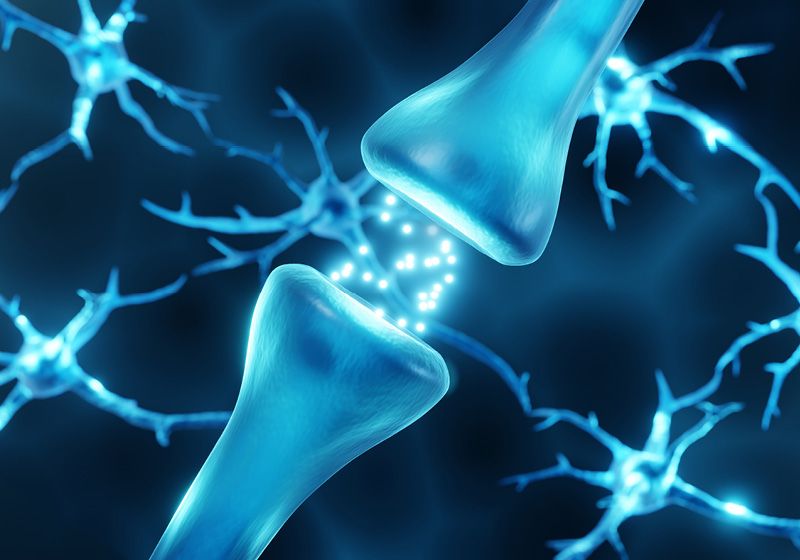
Synaptic vesicles act as the brain’s chemical couriers, transporting neurotransmitters between cells. When a nerve impulse arrives, these vesicles fuse with the neuron’s membrane and release their neurotransmitters into the synaptic cleft—the tiny gap between neurons. In neurodegenerative disorders, such as sporadic Parkinson’s disease, this process can become disrupted.
This problem motivated Shigeki Watanabe, a molecular neuroscientist at Johns Hopkins University, to use a “zap-and-freeze” technology to study the synapse, or connection point, in finer detail.1 Previously, he used this approach to understand how a key protein kept these vesicles in place within a brain cell until they were ready to be released.2
In a new study, published in Neuron, Watanabe and his colleagues demonstrated that synaptic vesicles can be rapidly recycled in both mouse and human brains, in part, due to the presence of a protein celled Dynamin 1xA.3 These findings provide a deeper understanding of synaptic membrane activity and may help advance treatments for cognitive disorders.
The zap-and-freeze approach works by using an electrical impulse to stimulate neurons and then freezing the tissues rapidly to capture cell movement for electron microscopy observation—with millisecond and nanometer resolutions. To validate this approach on brain slices, the team first looked at calcium signaling, the process that prompts the release of neurotransmitters, in mouse samples. When the researchers stimulated the brain slices, they visualized how the neurons recycle the used synaptic vesicles. This recycling occurs through endocytosis, when the new coated or uncoated vesicles form after releasing neurotransmitters, and the cell membrane next to this active zone is pinched off into the neuron to be refilled for its next use.
The most common form of endocytosis in the cell is clathrin-mediated endocytosis; however, this is a slow recycling process that forms clathrin-coated vesicles when assembling at the plasma membrane. Notably, the recycling that the researchers saw occurred ultrafast after a single stimulus, and they observed uncoated vesicles that appeared in the surrounding area by the active zone.
Because synaptic vesicle recycling through ultrafast endocytosis does not require clathrin, the researchers took a closer look at the proteins that helped mediate this process. They found depots of the protein Dynamin 1xA, which is essential for this recycling step, localized along the membrane where ultrafast endocytosis is expected to occur.
Curious as to whether this trait was conserved in humans, the team applied this technique on brain tissue samples from people with epilepsy. They compared stimulated and non-stimulated (control) slices. Like the mouse samples, the human brain tissue demonstrated the same synaptic vesicle recycling pathway with Dynamin 1xA present.
Excited by these findings, Watanabe aims to extend this technique to study synaptic vesicle dynamics in brain tissue samples from patients with Parkinson’s disease undergoing deep brain tissue stimulation.
“We hope this new technique of visualizing synaptic membrane dynamics in live brain tissue samples can help us understand similarities and differences in nonheritable and heritable forms of the condition,” said Watanabe in a statement.
