

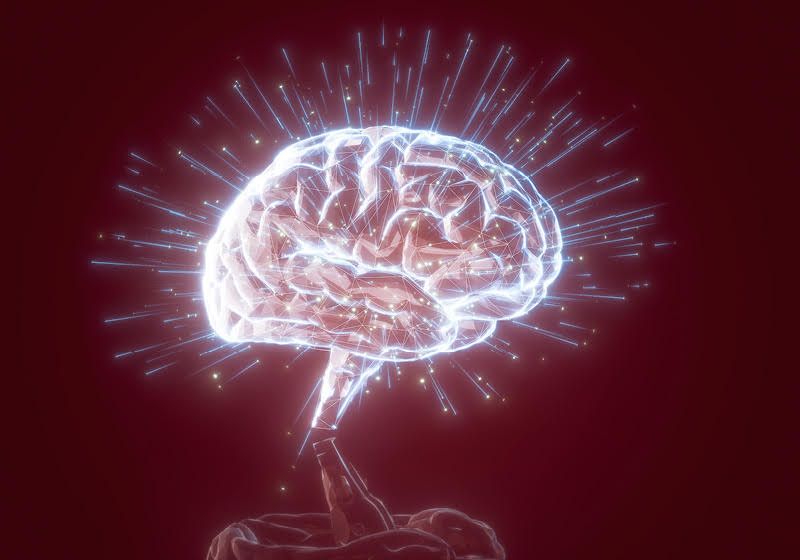
Artificial intelligence and machine learning can aid in basic as well as translational discoveries in the field of neuroscience.
The development of better and more reliable artificial intelligence (AI) technologies has immense applications in the field of scientific research. AI has become a powerful extra set of eyes and hands for scientists: It can sift through heaps of data in seconds, guide experiments, and help write better manuscripts.
“We’re seeing the emergence of subdisciplines that are AI plus X, where X is essentially every field of science. Neuroscience is no exception,” said Christopher Rozell, a neuroengineer at Georgia Institute of Technology, who mediated the AI press conference at the 2025 Society for Neuroscience meeting.
During the session, five panelists discussed the applications of AI in biology and how machine learning can augment clinical practice and the field of neuroscience, from data analyses to clinical diagnoses.
Modified Artificial Neural Networks Offer Clues on How the Brain Integrates Sensory Information
The human brain integrates various sensory inputs to reliably perceive the surroundings.1 “This task nowadays is also very successfully solved by artificial neural networks (ANNs), which are indeed inspired by the brain,” said Marcel Oberlaender, a neurobiologist at the Max Planck Institute for Neurobiology of Behavior.
This motivated Oberlaender and his team to explore whether ANNs could help better understand brain function, particularly perception. However, ANNs lack many properties of the brain, such as neuronal diversity and connectivity.
Incorporating these elements into ANNs led them to outperform conventional models: Brain-like ANNs needed less data and less time to produce the same result. Generating ANNs by incorporating properties from the brain could help neuroscientists better understand how these properties contribute to brain functions like perception, said Oberlaender.
Reverse Engineering Neurons with AI
The inability of neurons to send electrical signals to each other underlies nearly all neurological disorders ranging from epilepsy to schizophrenia.2 While patch clamp electrophysiology can help measure the electrical output of a neuron, it cannot provide information about the ion channels responsible for altered electrical signals.
Classical computational models integrate ion channel and neuron morphology to predict the cell’s electrical output. To reverse this process, Roy Ben-Shalom, a neurobiologist at the University of California, Davis, and his team built a deep learning model called NeuroInverter. The AI tool successfully analyzed and predicted the ion channel composition of more than 170 different types of neurons.
“We’ve opened the door to a deeper understanding of brain disorders with NeuroInverter,” said Ben-Shalom. “We can now make ‘digital twins’ of any neuron just knowing the voltage response, which will be an incredibly powerful tool for disease modeling and discovery.”
AI Tool Aids Gait-Impairment Analyses
Aging and neurological disorders like stroke and multiple sclerosis impair the ability of individuals to walk.3,4 To treat and rehabilitate patients, clinicians must first accurately measure gait deficits. Clinicians’ assessments could be subjective, while objective tools like motion capture systems require specialized and expensive equipment.
These limitations have prompted researchers to look for practical, cost-effective alternatives. Trisha Kesar, a rehabilitation medicine researcher at Emory University, and her team used machine learning algorithms to analyze smartphone videos of normal and impaired walking patterns. This helped them classify clinically relevant gait impairments with more than 85 percent accuracy.
“Overall, our goal is to have accurate and objective gait analyses that can be used by clinicians in diverse settings in communities in practices and have that help with more precise, more effective, and more personalized rehabilitation,” said Kesar.
AI Detects Freezing of Gait Early in Parkinson’s Disease Patients
People with Parkinson’s Disease may suddenly find themselves unable to take a step, as if their feet are glued to the floor.5 While deep brain stimulation has proved to be a promising treatment for other symptoms, it remains limited in treating freezing of gait due to the symptom’s unknown onset.
Using virtual reality, Jay Alberts, a scientist at Cleveland Clinic, and his team found that scenarios that induce freezing of gait activated unique neural signatures in participants’ brains. Alberts and his team trained a machine learning model on data obtained from each of these trials to predict the probability of an individual experiencing freezing of gait. The AI model could accurately detect freezing of gait before it occurred.
“This allows for adaptive deep brain stimulation paradigms to potentially treat freezing of gait prior to its actual onset,” said Paul Cantlay, a scientist in Alberts’s team.
AI Tool Decodes the Meaning of Words from Brain Activity
Brain-computer interfaces (BCIs) can help restore communication in severely disabled patients.6 Current approaches decode the phonetic aspects of speech but can confuse words that sound similar.
To overcome this, Mathew Nelson, a neurophysiologist at the University of Alabama at Birmingham, and his team recorded people’s brain activities as they thought about words from different categories such as clothing or animals. They used a machine learning algorithm to decode across these semantic categories based on an individual’s brain activity. The AI-based tool could accurately decode the category 77 percent of the time.
“Altogether, this is an important step towards language BCIs, and we believe that we can ultimately combine semantic information with phonetic information as well as information from other domains of language to get the riches and most robust and best overall language decoding in a BCI,” said Nelson.
