

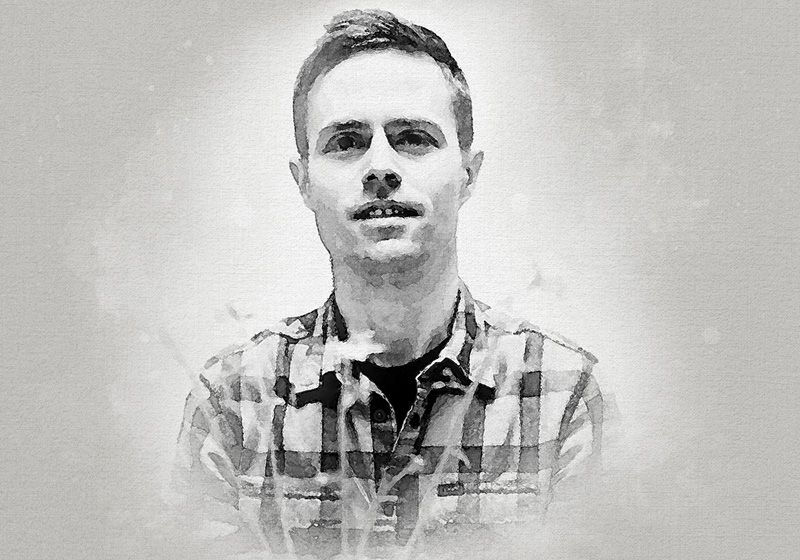
From farm fields to sequencing labs, this postdoc studies how plant-microbe chemistry could transform crop protection.
Q | Write a brief introduction to yourself including the lab you work in and your research background.
I am Henry Janse van Rensburg, a postdoctoral researcher in the Plant Pathology and Microbiology group at Aarhus University. My research focuses on how root exudates shape soil microbiomes and how these microbiomes, in turn, influence plant health—particularly in the context of disease suppression and microbiome-informed crop protection.
Q | How did you first get interested in science and/or your field of research?
Growing up on a farm, I was surrounded by plants, soil, and the constant challenge of managing pests and environmental stress. I became fascinated by how some fields thrived while others struggled, even under similar conditions—long before I understood the concept of the microbiome. During my studies, I learned how plants interact with soil microbes through root exudates, and how this interaction can shape microbial communities that feed back on plant health.
What captivated me was the idea that the microbiome acts as an extension of the plant’s genetic potential—similar to how the gut microbiome supports human health. Plants, through their root exudates, influence which microbes colonize their roots, and in turn, these microbes can affect growth, immunity, and resilience. This dynamic, reciprocal relationship forms the basis of my current research. I study how specific plant metabolites condition the soil microbiome and how this microbial legacy can benefit subsequent crops. The ability to harness these plant–microbe interactions for sustainable agriculture drives my scientific curiosity.
Q | Tell us about your favorite research project you’re working on.
One of my favorite projects investigates how plants can condition their soil environment to suppress root-knot nematodes in subsequent crops. We study how plant-produced secondary defense metabolites shape the composition and function of soil microbial communities, creating persistent microbial legacies. These legacy effects can influence whether future plants grown in the same soil experience greater or reduced disease pressure.
What makes this work exciting is the idea that plants don’t just passively experience their environment, they actively modify it in ways that benefit future crops. We’re particularly interested in how microbes metabolize these exuded compounds and how this affects their protective functions. By combining microbiome profiling, plant phenotyping, and soil chemistry, we aim to identify when and how these plant-driven changes result in disease-suppressive soils. Ultimately, this research supports the development of microbiome-informed strategies for sustainable, pesticide-free crop protection.
Q | What do you find most exciting about your research project?
One of the most exciting parts of my journey so far was during my postdoc in Basel, when I started working with plant microbiomes. I ran an experiment using several natural genotypes of the same plant species—genetically distinct, but all belonging to Arabidopsis thaliana—and grew them in identical soil. What I expected was a range of subtle growth differences. What I got instead was chaos. Some plants thrived with the microbiome, while others were clearly worse off. It was the same soil, the same microbes, yet completely opposite outcomes.
It was at that moment that the microbiome stopped being an abstract concept for me. I saw firsthand that it wasn’t just about which microbes are present, but how the plant responds to them. Even more exciting, we eventually traced the difference back to a single defense gene: One genetic switch that determined whether a plant could benefit from its microbiome or not.
What made it so thrilling wasn’t just the result, but the process; that feeling of uncovering something hidden, of the data surprising you, and then slowly making sense of it. The microbiome is complex, messy, and full of unknowns. That’s exactly what makes working with it so addictive.
Q | If you could be a laboratory instrument, which one would you be and why?
I’d be a DNA sequencer. There’s something fascinating about being able to read the code of life, quietly transforming tiny fragments of biological material into meaningful information. Sequencers don’t just look at what’s happening on the surface; they reveal what’s written deep inside, at the level of genes and genomes. That ability to uncover hidden patterns, to decode complexity, and to turn noise into data feels a lot like what I enjoy about science more broadly.
I also like that sequencers are both precise and curious. They don’t assume anything. They just read, base by base, and let the story emerge. Whether it’s profiling the makeup of a soil microbiome or identifying the one gene that flips a plant’s response to its environment, a sequencer is a quiet powerhouse that helps us see connections we couldn’t find any other way. If I could be any tool in the lab, I’d want to be the one that helps make sense of the invisible.
Are you a researcher who would like to be featured in the “Postdoc Portraits” series? Send in your application here.
