

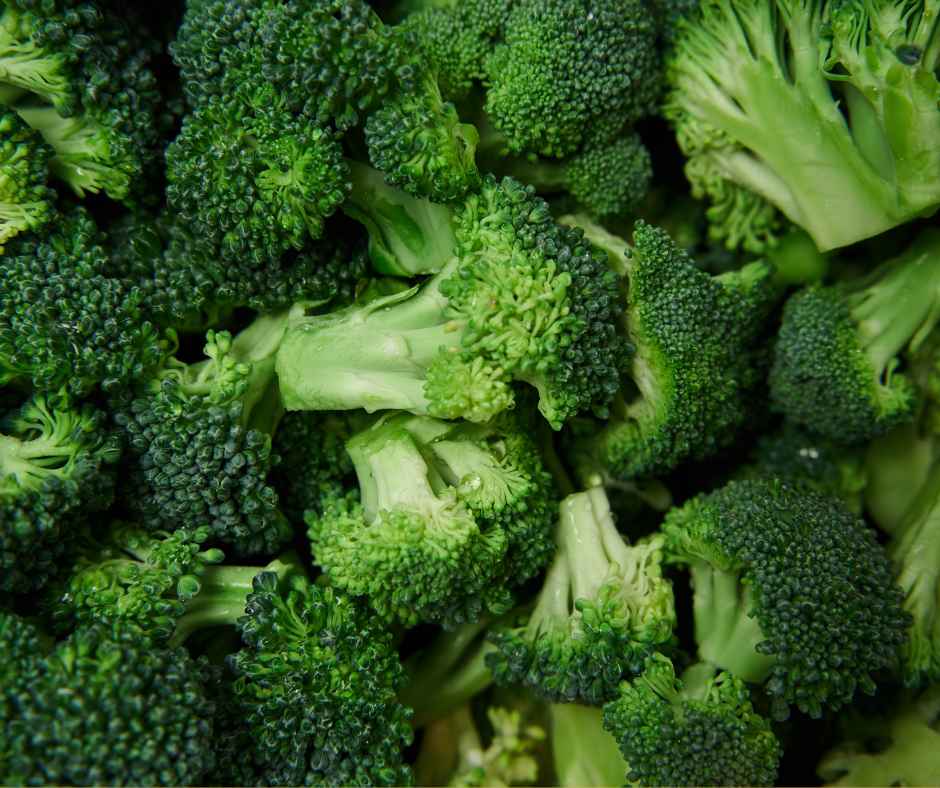
Broccoli is a powerful source of vitamins, fiber, and antioxidants. It has been a staple of healthy eating for a long time. Yet, people still ask one question about this classic green vegetable: Is broccoli man made?
This simple question connects to a fascinating part of farm history. People often misunderstand this history. The debate is about whether broccoli is natural or artificial. Confusion about genetic engineering and lab-made produce usually causes this.
The short answer is complex: Yes, broccoli is a man-made food. But it was not created how you might think.
It is not a product of modern genetic modification. It did not come from a sterile laboratory. Instead, broccoli is one of humanity’s greatest success stories. People achieved this over centuries of careful farming. It is a cultivated plant. Ancient agricultural scientists essentially designed it.
In this guide, we will break down the history and the science. We will look at the surprising origins of this simple vegetable. You will learn exactly how broccoli was created. You will learn where it came from. And you will find out why it absolutely does not grow naturally. You will see that broccoli is a real vegetable. By the end, you will know the difference between a cultivated plant, a hybrid, and a genetically modified organism.
Is Broccoli Man Made or Natural?
The question “Is broccoli man made or natural?” introduces us to plant domestication. It also introduces us to agricultural history. The answer is clear. Centuries of farming records and evidence support it: Broccoli is man-made through selective breeding.
To be clear, we are not talking about synthesis. We are not talking about assembly from non-natural parts. The key is that humans had to step in. Human intervention changed a simple wild plant. It became the dense, edible form we eat today.
Selective Breeding vs. Genetic Modification (GMO)
The confusion over “is broccoli a man made vegetable” often comes from mixing up two processes:
Selective Breeding (The method used to create broccoli): This is a slow process. It takes many generations. Farmers choose plants with good traits. These traits include the largest heads or best taste. They breed these selected plants together. This process is natural. It copies evolution. But human intent guides it, not the environment. It just makes nature’s timeline faster.
Genetic Modification (GMO): This is a modern lab process. Scientists physically change a plant’s DNA. They add genetic material from another species. This achieves a desired trait. Examples are resistance to insects or herbicides.
Broccoli is a great example of selective breeding. It is a man-made plant. A purebred dog is also man-made in the same way. It was made by choosing and breeding specific traits over time.
So, the question “are broccoli man made” has a clear answer: Yes. It is a man-made food. The edible version of the plant did not exist before humans cultivated it.
Does Broccoli Grow Naturally in the Wild?
The short answer is a strong: No, broccoli does not grow naturally in the wild.
People often ask “Is broccoli found in nature.” But you would never find a head of broccoli ready to harvest today. This is true even if you walked in a forest or field.
Broccoli is a species that needs human care. It cannot survive otherwise. It needs specific cultivation. Its modern form is very different from its ancestor. If left alone, it would quickly return to a primitive, non-edible state.
The wild ancestor of broccoli is the wild cabbage (Brassica oleracea). It is a humble, salt-tolerant plant. It looks nothing like the massive, dense heads on your plate.
So, is broccoli a real vegetable? Yes, it is a real, whole-food vegetable. But it is completely a result of human agriculture. It is a “real vegetable” that humans have carefully chosen and improved over 2,000 years.
The Origin of Broccoli
To understand if is broccoli man made food, we must look at its history. We must trace it back to its simple ancestor. We must also look at the region that created this nutritious food.
Where Did Broccoli Come From?
Broccoli’s origins are in the ancient world. It comes specifically from the Mediterranean region.
The Ancestor: The story begins with the wild cabbage plant (Brassica oleracea). This is a leafy green plant. It still grows on the rocky cliffs of Western Europe. It grows mostly along the Mediterranean coast. This unassuming plant is the single ancestor of broccoli. It is also the ancestor of many other common vegetables. Wild cabbage is scraggly. It has loose leaves. It rarely grows the dense, edible parts we know today.
The Birthplace: The region of ancient Italy is the birthplace of modern broccoli. This was part of the Roman Empire. Early farmers there started to domesticate the wild cabbage. They probably used its leaves first. They soon realized they could change its growth patterns.
The Development: Farmers in ancient Italy worked on this for centuries. They focused on making the plant’s unformed flower clusters edible. They made these florets dense. The name “broccoli” is Italian. It is the plural of broccolo. This word means “the flowering top of a cabbage.”
So, broccoli does not grow naturally. But the complex crop we eat today came from ancient and early modern Italian farmers. They refined it continuously. This answers “where does broccoli originate from.” It gives a specific place, time, and ancestor. It shows how a careful farmer can create a whole new food source.
When Was Broccoli Created?
Broccoli’s creation was not one event. It was a long process of evolution. Humans guided this evolution. However, the plant started to look like modern broccoli around 2,000+ years ago. This happened within the Roman Empire.
By the first century AD, Roman writings describe a vegetable. This description clearly fits the dense, tender shoots of broccoli. It was a prized food for Romans. But it did not yet look like the massive heads we buy today. The modern, refined version became popular later. It was introduced to the Americas only in the 1700s.
The key takeaway is that the story of “when was broccoli created” starts long ago. It is a steady process of human cultivation that lasted for thousands of years.
Who Invented Broccoli?
No single person invented broccoli. The credit belongs to the early Italian (Roman) farmers. They first saw the potential in the wild cabbage plant.
They were the real “inventors” of broccoli. They didn’t invent a machine. They didn’t invent a new chemical. They invented a new form of plant life. They achieved this by always choosing the best seeds. They picked seeds from Brassica oleracea plants with the best traits. These were the ones with the thickest stems and densest flower buds. They acted as selective agents. They guided the plant’s natural evolution toward a better outcome. This shows that the argument “is broccoli made by humans” is true. The farmer’s decisions, generation after generation, created the broccoli we eat today.
How Broccoli Was Created
Selective breeding is the core scientific process. It created broccoli. It is the reason we can answer “is broccoli man made.” This method is the basis for almost all agriculture. It explains how one weedy plant became many diverse, nutritious vegetables.
How Is Broccoli Made? The Science of Selective Breeding

Selective breeding is also called artificial selection. It is a systematic process. It uses the natural variation found in all living species.
Here is the simple, step-by-step process of how is broccoli made from a plant science view:
- Observation of Natural Variation: Ancient farmers watched Brassica oleracea (wild cabbage) grow. They saw that some plants had bigger flower heads. Others had more leaves. Others had thicker stems.
- Selection of Desired Trait: The farmers decided they wanted a plant with large, edible flower clusters (florets).
- Cross-Pollination and Reproduction: They only allowed the plants with the biggest, densest flower heads to grow seeds. They saved those good seeds. They threw away the seeds from less desirable plants.
- Generational Refinement: They repeated this process for hundreds of generations. Each new plant was slightly closer to the perfect broccoli. The desired traits became stronger. The flower buds got denser. The stems became more tender. The overall yield increased.
Selective breeding is not fast. It took centuries to get from wild cabbage to the first Roman broccoli. It took more centuries to create the uniform, dense heads in modern stores. The process is biological. But humans entirely guided the outcome.
A Family of Brassicas: How Traits Were Chosen
There is one great piece of evidence that broccoli is man-made. It shares a common ancestor, the wild Brassica oleracea, with many other diverse vegetables. All these vegetables were created by humans. They were made by focusing on one specific trait of the original wild cabbage.
| Vegetable | Trait Magnified by Selective Breeding |
| Broccoli | The unformed flower clusters (florets) |
| Cauliflower | The immature flower head (white curds) |
| Cabbage | The apical bud (the tightly packed terminal leaves) |
| Kale | The large, loose, edible leaves |
| Kohlrabi | The thick, swollen stem (stalk) |
| Brussels Sprouts | The lateral buds (small, compact side buds) |
Each of these is a hybrid vegetable. They are crossbreeds from the same species. All were grown by humans. This clearly shows that the broccoli man made plant is part of a large farming revolution.
How Was Broccoli Made in a Lab? Myth vs Reality
Many people wrongly believe that “how was broccoli made in a lab” is the right question. This is absolutely wrong.
The Myth: People often think broccoli is unnatural. This leads them to assume it was made in a modern biotechnology lab. They think it was created through genetic engineering.
The Reality: The technology that created broccoli is thousands of years old. This is selective breeding. The Roman farmers who invented it worked in fields. They did not work in laboratories. Their main tools were observation, patience, and seed saving. They did not use micro-pipettes or gene guns.
We will discuss the concept of “is broccoli genetically modified” later. But you must know that the process that created broccoli was done in the field. It is an ancient form of plant biology. It is completely different from modern genetic engineering.
Broccoli & Genetic Modification
The question “is broccoli a man-made vegetable” is answered with a firm yes. However, the separate question about genetic modification has a different answer.
Is Broccoli Genetically Modified (GMO)?
No, broccoli sold commercially is not genetically modified (GMO).
Broccoli is man-made through human effort. But it is not a genetically modified food. All broccoli you buy today was created using the old method of selective breeding. This is true for both conventional and organic broccoli.
Non-GMO: Currently, there is no approved commercial broccoli. No variety has had its DNA intentionally changed using recombinant DNA technology. That technology is the definition of a GMO.
The Distinction: This point is key for anyone worried about where their food comes from:
- Man-Made (Broccoli): This resulted from natural cross-pollination. Humans guided this process for hundreds of generations. This is safe, natural evolution under a farmer’s care.
- Genetically Modified (GMO): This results from lab techniques. Scientists insert genes from another organism. This is done in a single generation.
Broccoli shows the power of traditional, non-GMO plant domestication.
Comparison With Other Man-Made Vegetables
Broccoli is not alone in its origin. Once you learn about human cultivation, you realize one thing. Humans have heavily influenced or entirely created almost every fruit and vegetable we eat today.
Is Broccoli the Only Man-Made Vegetable?
Absolutely not. Broccoli is just one of countless vegetables that are man-made. They were all created through the same process of plant domestication and selective breeding.
The whole brassica family is man-made. This includes all descendants of the wild cabbage. But the history of hybrid vegetables and plant domestication goes much further:
- Carrots: The original wild carrot was thin and pale. It was often white or yellow, and stringy. Dutch growers created the modern, bright orange, sweet carrot in the 17th century. They used selective breeding.
- Corn (Maize): Corn is perhaps the most dramatically man-made crop. Its tiny, grass-like ancestor was called teosinte. It was barely edible. Farmers in central Mexico spent thousands of years changing this plant. They turned it into the large cobs we eat today.
- Bananas: The modern dessert banana is a sterile hybrid. This means it cannot reproduce its own seeds. It is a highly man-made plant. Humans must clone it to grow more. The original bananas had large, hard seeds.
Agriculture is the process of changing wild plants. It turns them into man-made food sources. The difference is simple. Does a species exist in nature, or does it depend entirely on human help to exist in its current, edible form?
Benefits of Broccoli
People often worry that “is broccoli artificial” means it is unhealthy. They assume anything man-made is bad. This is not true for broccoli.
Why a Man-Made Vegetable Can Still Be Healthy
Man-Made ≠ Unhealthy: Selective breeding had one goal. It was not just to make the plant edible. It was to make it better. It was made more robust and higher yielding. In many cases, it became more nutritious and tastier. The idea that “natural” always means “healthy” is a myth. Many truly wild plants are toxic or not safe to eat.
Nutritional Powerhouse: Farmers selected strong plants. By doing this, they also chose plants with dense nutrition. Broccoli is an incredible man-made food. It is a true cruciferous vegetable powerhouse.
- Vitamins: It is very high in Vitamin C (for immune health) and Vitamin K (for blood and bones). It also has folate.
- Fiber: It has lots of fiber. This is good for gut health and digestion.
- Antioxidants: It contains strong compounds like sulforaphane. Scientists are studying this compound for its anti-inflammatory and anti-cancer properties.
The fact that is broccoli made by humans is a good thing. It is a highly optimized, nutrient-dense food. It is the result of brilliant, ancient farming science.
Myths & Misconceptions
The fascinating origin of broccoli has caused some myths. They need to be corrected. These myths often focus on calling broccoli an artificial food.
Common Myths About Broccoli Being Artificial
Myth: Broccoli Was Made in a Lab
Reality: This is false. Broccoli was created in the field. It was created over hundreds of generations. This happened through selective breeding. This is a gradual process of choosing the best plants. It was not developed using modern lab techniques or genetic engineering.
Myth: Broccoli Is Unnatural and Unhealthy
Reality: All food we call “crops” is unnatural. This is because crops need human management. All major crops (wheat, corn, rice, most fruits) are very different from their wild ancestors. Broccoli is a real, whole-food vegetable. It is chemically and biologically sound. It provides real and important health benefits. So, calling it “artificial” is misleading. Its components are entirely natural. Only its final form is not.
Myth: Broccoli Is a GMO
Reality: This is false. No commercial broccoli is genetically modified. It is a product of traditional, non-GMO cross-breeding. People often confuse human cultivation (which applies to broccoli) with genetic modification (which does not).
Understanding broccoli’s true, ancient history helps us. It separates science from fear. It allows consumers to see the vegetable for what it is: a healthy, safe, and historically important food source.
Summary
The question “Is broccoli man made?” has a definitive and interesting answer: Yes.
Broccoli is one of humanity’s greatest farming achievements. It is a man-made food. This is because the dense, edible head we eat cannot grow naturally in the wild. It depends entirely on human cultivation to exist.
We must understand the term “man-made” in its historical context. Broccoli was not created in a laboratory using modern genetic engineering. Therefore, the answer to “is broccoli genetically modified” is a No.
It was created through selective breeding. This is a natural process thousands of years old. Early Italian farmers chose the wild cabbage plant (Brassica oleracea) repeatedly. They cross-bred it. This action magnified the desired trait. The result was an edible, tightly packed flower cluster.
Broccoli is a whole, real, and very nutritious vegetable. It is a powerful source of fiber, vitamins, and antioxidants. Its history proves something important. When humans use intention and science, they can create superior and safe food sources.
References
1. Scholarly & Scientific Review on Genetics and History: Advances in Genetics and Molecular Breeding of Broccoli
2. Ethnobotany & Domestication of the Brassica Family: Domestication, diversity, and use of Brassica oleracea L., based on ancient Greek and Latin texts
3. The Evolutionary History of Wild Cabbage: The Evolutionary History of Wild, Domesticated, and Feral Brassica oleracea (Brassicaceae)
4. General Information and Cultivar History (Wikipedia): Broccoli – Wikipedia
5. Informational Articles on Selective Breeding vs. GMO: Is Broccoli Man-Made? The Truth Behind Its Human-Created Origins
