

Aging researcher expands on how addressing 100 key problems can provide the field with a roadmap for future investigation.
Earlier this week, we brought you the news of a new paper in Geroscience that maps out the most pressing unanswered questions in the science of aging. Entitled Open problems in aging science: a roadmap for biogerontology, the study distilled a final set of 100 open problems spanning molecular and cellular mechanisms, comparative biology and model organisms, biomarkers of aging, and therapeutic interventions. The result is a structured snapshot of where aging research stands today, highlighting both long-standing fundamental mysteries and newer challenges.
Longevity.Technology: By drawing together fundamental biology, biomarkers, model systems and therapeutic development into a single, structured framework, the new roadmap offers a holistic perspective on where aging science has been, where it is now, and where it might most productively go next. In a field that is often highly specialized and fragmented, this kind of integrative overview is both timely and refreshing.
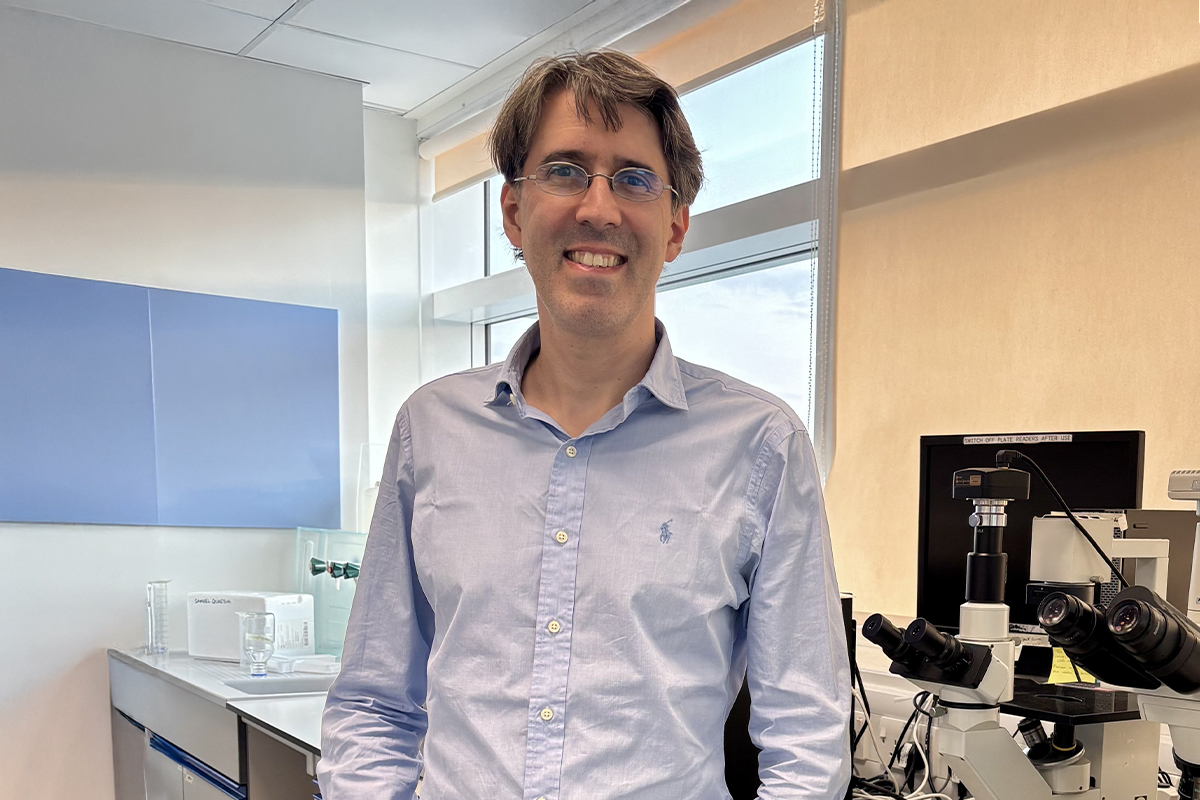
We sat down with one of the paper’s authors, University of Birmingham professor João Pedro de Magalhães, to explore how the roadmap came together, what it reveals about the state of aging research and how it can help guide the next decade of discovery.
Together with a host of leading researchers in the aging field, including Joris Deelen, Vera Gorbunova, Steve Horvath, Andrea Maier, Morten Scheibye-Knudsen and Maximilian Unfried, among many others, de Magalhães says he sought to emulate the work of one of his early mentors – renowned gerontologist, the late Bernard Strehler.
Along with Leonard Hayflick, Strehler is regarded as one of the pioneers of research into the biological mechanisms of aging. In 1977, he mapped out 100 key questions facing the field, and addressed them in his book Time, Cells, and Aging.
“Bernard did something very similar to what we did – he developed a list of problems, questions and gaps in our knowledge of aging, which he included in his book,” says de Magalhães. “His approach was probably quite different – I think he largely worked alone, and his list was probably informed by informal discussions rather than a structured process.”
Addressing today’s challenges
As you might expect, the new set of 100 questions was developed in a manner more befitting the 21st century.
“We used social media and created a website where people could suggest questions from the start of the project, and involved scientists early on,” says de Magalhães. “We also held a workshop in Birmingham last year, and brought in experts for a couple of days of discussion. The idea was to open things up so anyone could suggest questions.”
Of course, opening things up meant the suggestions ranged widely in quality, but de Magalhães says the diversity was valuable.
“We wanted to capture longstanding questions along with newer ones involving epigenetic clocks, rapamycin or senolytics, which weren’t around 40 years ago,” he explains. “New breakthroughs tend to raise more questions, which is part of the point. We wanted to bring in different experts and perspectives and think a bit outside the box.”
Initially, de Magalhães says the researchers created a long-list of more than 200 questions, and then applied Natural Language Processing (NLP) techniques to determine how frequently each topic appears in scientific literature, allowing them to balance popular topics with more specific, emerging ones.
“We clustered questions into major themes – mechanisms, evolutionary biology, interventions, and so on – which Bernard didn’t do, but we thought made sense,” says de Magalhães. “The largest group concerns mechanisms – both molecular mechanisms and broader aging mechanisms. Another large group is interventions in aging, which reflects a more translational focus in the field today compared to 30–40 years ago. Other groups include evolutionary and comparative biology, biomarkers, immune system–related questions, environmental factors and model organism issues.”
Is there a fundamental aging process?
After clustering and manual filtering, the researchers made their final selections to the 100. Perhaps unsurprisingly, an all-too familiar question reigned supreme at the top of the pile.
“In terms of specific questions, the big one is still: Why do we age?” says de Magalhães. “But drilling down, an important emerging question is whether there is a fundamental aging process. Many people outside the field argue that aging is just the sum of various diseases – cancer, Alzheimer’s, cardiovascular disease, sarcopenia – rather than a unified process.”
While most aging researchers, including de Magalhães, disagree with such views, he points out that they haven’t been able to conclusively demonstrate it yet.
“We can manipulate aging in model organisms, but we don’t yet know whether a fundamental aging process exists, and if so, how it synchronizes aging changes and age-related diseases,” he says.
Other important mechanistic questions in the list of 100 include those relating to whether specific cell types, tissues or mutations contribute more to aging, as well as senescent cells’ role in aging, and under what circumstances are they beneficial or detrimental.
“Regarding interventions, we have many that work in animal models, but we still don’t know how to prioritize interventions for human clinical trials, or how to prove that a drug slows human aging,” says de Magalhães. “Another intriguing area is organ-specific contributions to aging. For instance: Can an organ transplant from a long-lived species extend lifespan in a short-lived species? And which organs would need to be replaced in an old individual to reverse aging? Very little work has been done on this, but it’s potentially important.”
Biomarkers of aging are another big category in the 100, especially when it comes to biological age clocks.
“Some of the questions are focused on what epigenetic clocks actually measure, and which molecular processes do they reflect?” says de Magalhães. “Model organisms also raise their own questions, such as how much of aging in these models is representative of human aging?”
Despite working in aging for his entire career, even de Magalhães found the process threw up some suggestions and topics that wouldn’t have occurred to him.
“For example, a question about whether ‘blood cleanup’ could target aging processes was something I hadn’t considered,” he says. “Another was about the trapping of citrate in mitochondria – it’s not my field, and not something I would have thought about. There were also questions about environmental heat and cold, and their contribution to aging, which were new to me.”
A roadmap to advance the field
While all questions on the list are valid in their own right, de Magalhães picks out three that he’d like to answer tomorrow, if he could.
“Why do we age is still the fundamental question for me,” he says. “In addition to that, I’d love to know which mechanisms determine the longevity of long-lived species. I work a lot in comparative biology – naked mole-rats, monkeys, whales – and understanding species differences would help shed light on why humans age the way we do.”
“Finally, I’d love to know how many organs would need to be replaced with young organs to reverse aging, and which ones? It’s extremely understudied and touches on systemic interactions in aging. There’s a bit of work on the immune system, for example showing that accelerated immune aging can accelerate aging of other organs, but not much more than that. I’d like to understand these inter-organ interactions better.”
Looking ahead, de Magalhães hopes that the wider field of aging research will use the questions as a guide for where to focus its efforts.
“My hope is that students and researchers will use it to guide or inspire projects, and that funders will also use it when deciding which areas to support,” he says. “Ideally, it becomes a roadmap for advancing the field. It will be interesting to see, in 10 years, how many of these questions have been answered. I think that we might have answers for some of the more specific ones – the broader ones will take longer.”
Aging is an extraordinarily complex, multifaceted process, shaped by molecular damage, cellular dysfunction, systemic changes, environmental influences and evolutionary trade-offs, and today’s research landscape reflects that diversity, with thousands of scientists and a growing number of companies each tackling narrow slices of the problem. Against this backdrop, the 100-question roadmap stands out as a rare attempt to step back and view the field as an interconnected whole.
“I’ve always taken integrative approaches – exploring different systems, models, and methods – and I think that’s essential for developing conceptual and theoretical frameworks,” says de Magalhães. “These aren’t always appreciated; you can’t easily get a grant just to develop a theory. But in fields like aging, where we lack a deep biological understanding, taking a systematic, integrative view is very important.”
