

Hibernating animals go into a state of torpor wherein they lower their metabolic rate and internal temperature.
As leaves fall off the trees and temperatures grow bitingly cold, many animals prepare to hibernate for the winter. During this period, animals enter a state of torpor wherein they reduce their metabolic activity and lower their body temperature, which helps them conserve energy. Organisms can also enter other kinds of dormancy or adaptations to stressful environments that resemble hibernation. While studying these behaviors can teach scientists more about the unique biology of these animals, it can also inform human health and disease. These include neurodegeneration mechanisms in the brain, ways to potentially treat metabolic conditions like type 2 diabetes and obesity, how to better preserve organs for transplantation, and much more. Grab a blanket and get cozy to learn more about hibernation.
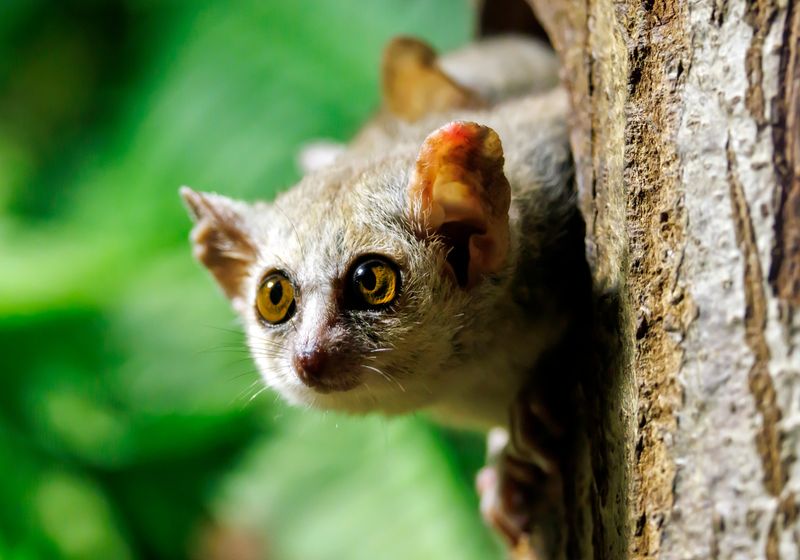
Winter temperatures in the tropical country of Madagascar never dip too low. However, scientists doing fieldwork there noticed that in the winter, the fat-tailed dwarf lemurs seemed to disappear. Eventually, researchers found these little primates hibernating in underground chambers and inside tree holes. To better understand hibernation in warm climates, researchers led by Carleton University molecular physiologist Ken Storey investigated gene expression changes in grey mouse lemurs in and out of hibernation and compared them to arctic ground squirrels. They identified multiple gene expression changes; however, they noted that during hibernation, the grey mouse lemurs only upregulated some of the previously identified hibernation genes. Understanding how animals hibernate in warm climates could lead to new strategies for preserving organs for transplantation by using the same mechanisms these hibernators use to maintain organ function.
Shrews shrink their brains and other organs during the winter to help conserve energy.
© iStock.com, CreativeNature_nl
The common shrew has an extremely fast metabolism—in fact, it has the highest resting metabolic rate of any mammal. While many animals slow their metabolism in the cold winter months by hibernating, the shrew instead shrinks its organs, including the spleen, liver, skull, and brain. Researchers hypothesize that this behavior helps the shrew conserve energy by reducing the mass of these highly metabolically active organs. Focusing on how this shrinking process affects the shrew’s brain, researchers assessed gene expression changes in the brain by RNA sequencing as the shrews were shrinking their brains in the fall and as they regrew them in the spring. They found that, in the spring, genes involved in inhibitory synapses increased expression while some genes in the apoptosis pathway decreased. Insights from these data could help scientists better understand the mechanisms underlying neurodegeneration in the human brain.
In the face of environmental stressors, tardigrades protect themselves by curling up into their dormant state called a tun. As tuns, these water bears can survive the radiation of space, sub-freezing temperatures, and complete desiccation. Curious to find out how tardigrades accomplish this hibernation feat, researchers asked what molecules these organisms produce in response to different stressors, including high pressures, freezing temperatures, and harsh chemicals. They found that oxide production is the switch that triggers tardigrades to transition into the tun form. The water bears produced oxides in response to multiple different stressors, providing new insight into the biology of these resilient creatures.

Bears become insulin resistant during hibernation, but this resistance reverses when they wake up.
© iStock.com, troutnut
For biologist Heiko Jansen at Washington State University, a serendipitous look into a bear’s brain led him down the path to studying hibernation. He is interested in learning how bear physiology changes during hibernation and how those changes could lead to a better understanding of human metabolic conditions such as obesity and type 2 diabetes. While bears become insulin resistant during hibernation, they can reverse this resistance when they wake up in the spring. Jansen and his team study this process using adipocytes—fat cells—collected from bears in and out of hibernation. They are investigating the mechanism underlying how this insulin sensitivity switch works and hope that it could one day inform new therapies for metabolic disorders.
Neuroscientist Siniša Hrvatin from the Whitehead Institute for Biomedical Research had always wondered how animals that hibernate begin the process of entering this dormant state. He and his team began their studies with mice, which don’t naturally hibernate. However, when mice fast, they enter a state of torpor. Using these fasted mice, Hrvatin and his team discovered that neurons in the hypothalamus regulate torpor. The researchers plan to use Syrian hamsters, which are natural hibernators, to identify brain regions and neurons that regulate the behavior in these animals. Hrvatin hopes that the insights gleaned from his team’s research will inform metabolic disease treatments as well as improve tissue preservation protocols for organ transplantation.
To dig into the molecular mechanisms that underly hibernation, researchers recently performed a bioinformatic analysis of the mouse hypothalamus. The scientists, led by Christopher Gregg, a molecular neurobiologist at the University of Utah, profiled mice that were fed, fasted, or refed. They found that thousands of genes changed expression and had altered chromatin accessibility in the different conditions tested. The team also found that knocking out gene regulatory elements in mice led to torpor-like responses, suggesting that rather than one or two genes controlling hibernation, a gene regulatory system does. The new findings are just the start to revealing more hibernation secrets.
Subscribe to The Scientist to stay up to date on the latest news in life sciences.
