

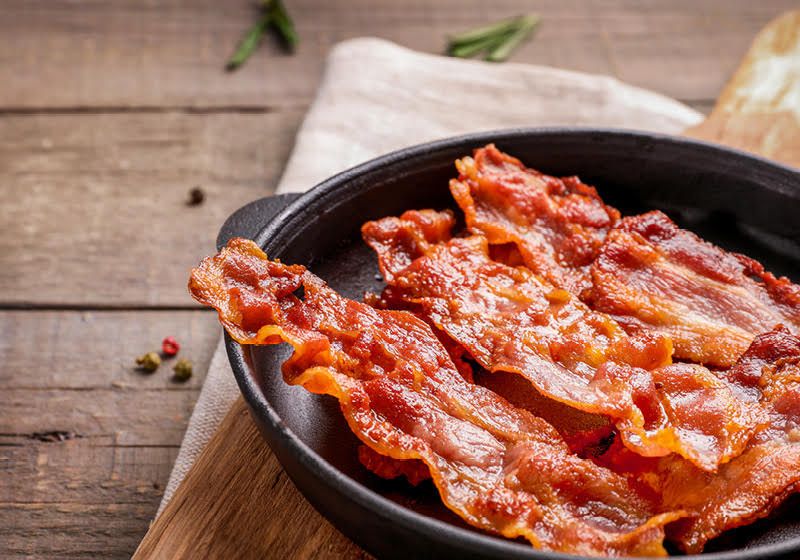
Exposure to smells associated with fatty foods that mothers consume, such as bacon, during development may increase the risk of obesity later in life, according to a study in mice.
People often tell expecting moms that they are “eating for two.”1 While doctors recommend a balanced diet during pregnancy, they also warn against a high-fat diet that could predispose the mother to obesity or insulin resistance. Evidence from animals and humans suggests that adverse maternal metabolic conditions due to such a diet rewire offspring metabolism and increase their risk of developing obesity later in life.2
The effects of hypercaloric components of maternal high-fat diets on offspring health are well known. However, the consequences of dietary non-nutritive components—such as volatile odors which are transferred directly to the amniotic fluid and milk—are poorly understood. This prompted Max Planck Institute for Metabolism Research neurobiologist Sophie Steculorum and her team to investigate the effect of fat-associated sensory cues on offspring metabolic health.
Now, Steculorum and her team found that the non-nutritive components of maternal high-fat diet change how an offspring’s brain responds to food and increase their obesity risk during adulthood in mice.3 The findings, published in Nature Metabolism, highlight that fat-related sensory cues during development can prime the regulation of whole-body metabolism.
To investigate the effect of maternal dietary volatile odors, Steculorum and her team fed pregnant mice either a normal chow diet, or a diet flavored with bacon odors. The latter diet had the same nutritional value as the normal chow diet.
While fetuses exposed to both diets showed similar weight gain, offspring exposed to the bacon-flavored diet showed increased weight gain and fat composition when fed a high-fat diet during adulthood. These animals also developed insulin resistance, revealing that fat-related sensory cues during early life can trigger metabolic defects in adulthood.
Developmental exposure to high-fat diet alters reward-related circuits in the brain, prompting Steculorum and her team to examine whether fat-related sensory cues affected similar brain regions. The researchers observed increased neuronal activity in dopaminergic reward-associated brain areas of mice exposed to bacon-associated smells, resembling the activity typically seen in obese animals.
Steculorum and her team also observed that mice exposed to fat-related sensory cues showed impaired activity of neurons expressing agouti-related peptide (AgRP). Food intake normally inhibits AgRP neuronal activation, but mice exposed to a bacon-flavored diet during development did not show AgRP neuronal inhibition in response to a high-fat diet.
Overall, the researchers identified a novel mechanism in mice through which early exposure to maternal diet primes long-term metabolic health in the offspring. However, they noted that additional work must be done to investigate the findings’ translational relevance to human health.
