
Close Menu
My Blog

    Subscribe to Updates

    Get the latest creative news from FooBar about art, design and business.

    What's Hot

    Nautilus debuts Voyager platform in push toward next-gen proteomics

    March 1, 2026

    First-in-Human Success for Prenatal Stem Cell Therapy in Spina Bifida

    February 28, 2026

    Pressure-Driven Pathway Links Liver Congestion to Fibrosis and Cancer

    February 28, 2026
    Facebook X (Twitter) Instagram
    X (Twitter) YouTube
    My BlogMy Blog
    Sunday, March 1
    • Home
    • About Us
    • Healthy Living
    • DNA & Genetics
    • Podcast
    • Shop
    My Blog
    Home»DNA & Genetics»Sick, Immobile Young Ants Send “Kill Me” Signal to Colony Workers
    DNA & Genetics

    Sick, Immobile Young Ants Send “Kill Me” Signal to Colony Workers

    adminBy adminDecember 3, 2025No Comments3 Mins Read
    Facebook Twitter Pinterest LinkedIn Tumblr WhatsApp VKontakte Email
    The Scientist Logo
    Share
    Facebook Twitter LinkedIn Pinterest Email

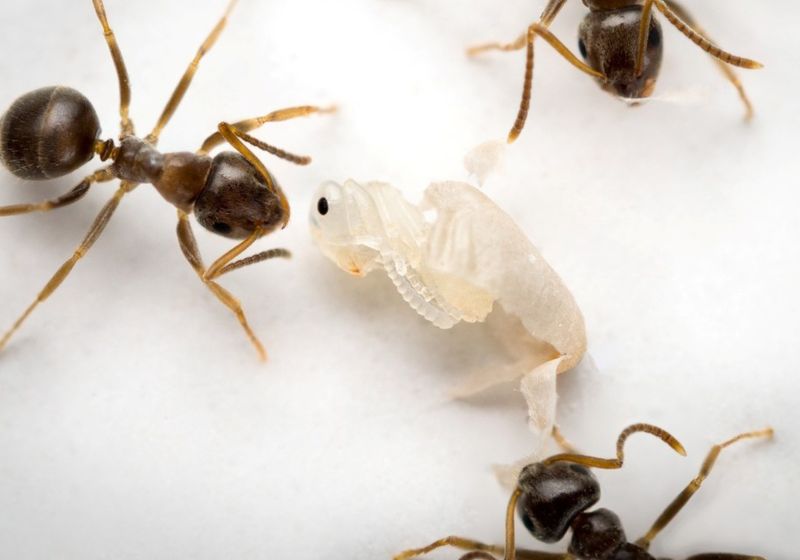
    Cocooned young ants that have been infected with a deadly pathogen can’t isolate themselves from the colony, so they signal the colony’s workers to find and kill them.

    Image credit:Christopher Pull, Institute of Science and Technology Austria (ISTA)

    Adult ants that have been infected with deadly pathogens often leave the colony to die so as not to infect others. But, “like infected cells in tissue, [young ants] are largely immobile and lack this option,” said Sylvia Cremer, a researcher at the Institute of Science and Technology Austria (ISTA) who studies how social insects such as ants fight diseases collectively as superorganisms, in a statement.

    Cremer’s team previously found that invasive garden ant pupae that have been infected with a deadly fungal pathogen produced chemicals that induced worker ants to unpack their cocoons and kill them, preventing the disease from spreading to the rest of the colony.1 However, the researchers did not know if the chemicals were simply a result of the fungal infection or if the sick pupae specifically released them to call for their own demise.

    In a new study, Cremer and her colleagues discovered that the infected pupae only released chemicals when there were workers nearby, suggesting that the sick young ants put these events in motion.2 The researchers’ findings, published in Nature Communications, are the first evidence of altruistic disease signaling in a social insects and share similarities with how sick and dying cells send a “find me and eat me” signal to the immune system.3

    Continue reading below…

    Like this story? Sign up for FREE Immunology updates:

    Latest science news storiesTopic-tailored resources and eventsCustomized newsletter content

    Subscribe

    To identify fungus-infected pupae, worker ants sense chemicals on the surface of pupae known as cuticular hydrocarbons (CHCs). They then “unpack” the infected ants from their cocoons and disinfect them by creating a hole in the pupae and spraying poison into the hole. The multi-step behavior prevents the fungal pathogen from producing spores that could infect the rest of the colony. Cremer’s team previously noted that certain CHCs were significantly more abundant on the infected pupae than on their uninfected counterparts. They found that washing the pupae with pentane removed CHCs and reduced workers’ unpacking behavior.

    In the present study, Cremer wanted to know what triggered the release of these specific CHCs. To address this, the team compared immune gene activation and CHC profiles between infected pupae in the presence and absence of workers.

    Infected pupae consistently upregulated immune genes upon infection, regardless of whether workers were around. However, changes in the level of specific CHCs only occurred when the pupae were infected and workers were nearby. Furthermore, the team found that when they coated healthy pupae with extracts from infected pupae, workers unpacked the healthy pupae more frequently than healthy pupae covered in “non-signal” extracts. Altogether, these observations indicate that infected pupae likely release specific CHCs so workers could find and kill them, which means that these young ants sacrifice themselves to benefit the colony.

    Continue reading below…

    However, evolutionarily, this behavior likely benefits the young ants too, said Erika Dawson, a behavioral ecologist and a former postdoctoral researcher at ISTA who led the study. “By warning the colony of their deadly infection, terminally ill ants help the colony remain healthy and produce daughter colonies, which indirectly pass on the signaler’s genes to the next generation.”

    Ants Colony Immobile Kill Send Sick Signal workers Young
    Share. Facebook Twitter Pinterest LinkedIn Tumblr WhatsApp Email
    Previous ArticleBiovit data backs bioavailability of organic micronutrients
    Next Article ‘Fire amoeba’ survives in hotter conditions than any other complex cell
    admin
    • Website

    Related Posts

    A Video Report from AGBT

    February 27, 2026

    Novo Nordisk, Vivtex Ink Up to $2.1B Deal to Develop Oral Biologics for Metabolic Conditions

    February 27, 2026

    Increasing Rice Yields with Gene-Informed Selective Breeding

    February 27, 2026

    Mutant p53 Selective Reactivation Demonstrated in Advanced Solid Tumors

    February 27, 2026
    Leave A Reply Cancel Reply

    Our Picks

    9 Time-Saving Kitchen Gadgets for Fall at Amazon

    September 5, 2025

    Why Exercise Is So Important For Heart Health, From An MD

    September 5, 2025

    An Engineered Protein Helps Phagocytes Gobble Up Diseased Cells

    September 5, 2025

    How To Get Rid Of Hangnails + Causes From Experts

    September 5, 2025
    • Facebook
    • Twitter
    • Pinterest
    • Instagram
    • YouTube
    • Vimeo
    Don't Miss
    Longevity

    Nautilus debuts Voyager platform in push toward next-gen proteomics

    By adminMarch 1, 20260

    Company’s new benchtop system promises a clearer view of proteins following validation at a leading…

    First-in-Human Success for Prenatal Stem Cell Therapy in Spina Bifida

    February 28, 2026

    Pressure-Driven Pathway Links Liver Congestion to Fibrosis and Cancer

    February 28, 2026

    A cellular atlas of aging comes into focus

    February 28, 2026

    Subscribe to Updates

    Get the latest creative news from SmartMag about art & design.

    About Us

    At FineGut, our mission is simple: to enhance your self-awareness when it comes to your gut health. We believe that a healthy gut is the foundation of overall well-being, and understanding the brain–gut connection can truly transform the way you live.

    Our Picks

    9 Time-Saving Kitchen Gadgets for Fall at Amazon

    September 5, 2025

    Why Exercise Is So Important For Heart Health, From An MD

    September 5, 2025

    An Engineered Protein Helps Phagocytes Gobble Up Diseased Cells

    September 5, 2025
    Gut Health

    Nautilus debuts Voyager platform in push toward next-gen proteomics

    March 1, 2026

    First-in-Human Success for Prenatal Stem Cell Therapy in Spina Bifida

    February 28, 2026

    Pressure-Driven Pathway Links Liver Congestion to Fibrosis and Cancer

    February 28, 2026
    X (Twitter) YouTube
    • Contact us
    • Privacy Policy
    • Disclaimer
    • Terms and Conditions
    © 2026 finegut.com. Designed by Pro.

    Type above and press Enter to search. Press Esc to cancel.