

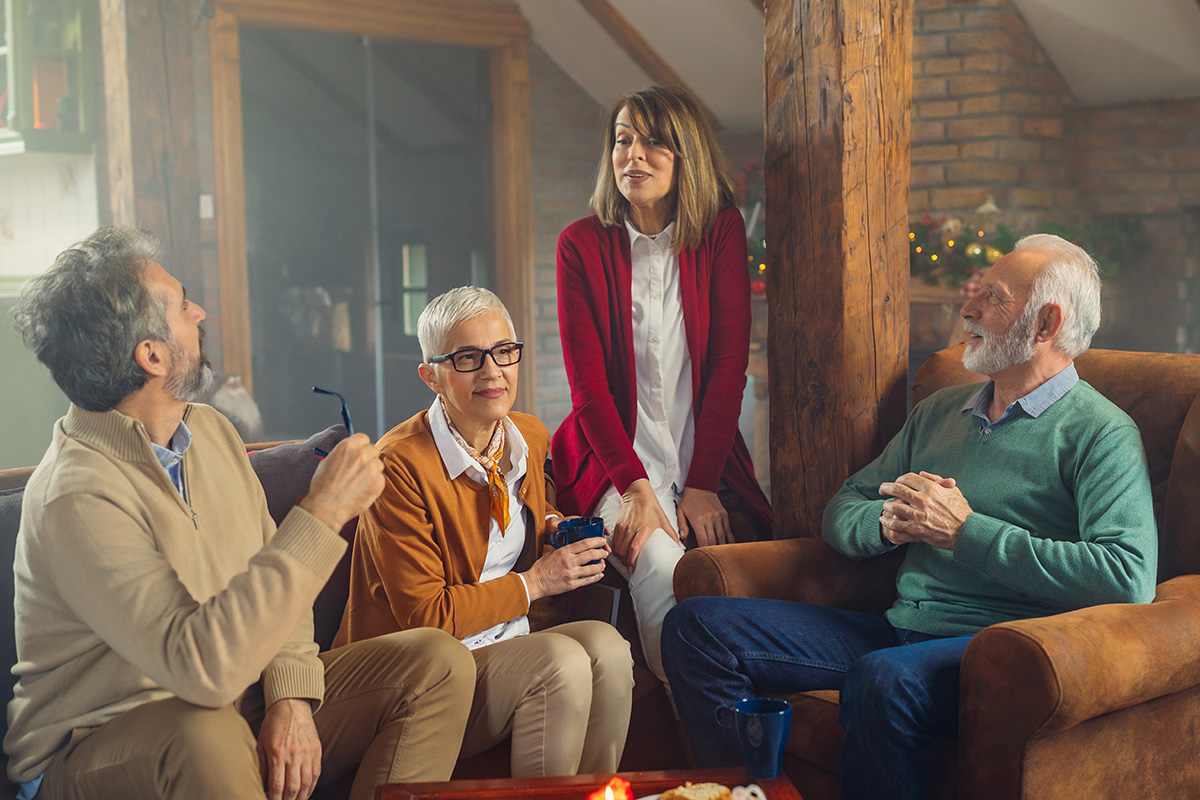
New studies show that broader social support networks may slow aging, extend lifespan and improve quality of life for older adults.
Two new studies out of the University of Eastern Finland shed light on something surprisingly powerful: the people around us may shape how long and how well we live. While genetics, income and health care access often dominate the conversation, researchers say the structure of our social world carries real biological weight.
Older adults with strong social support networks lived, on average, two years longer than those without them. And for those already receiving home care, having reliable emotional and practical support was tied to significantly better day-to-day well-being.
The evidence comes from long-running datasets, including 21 years of follow-up from the CAIDE study, offering one of the most extensive looks at how different forms of support affect survival over decades.
The first study found that general and health-related social support – from relatives, friends, neighbors and colleagues – directly predicted lower mortality risk [1]. But one insight stood out: support from family members was associated with a higher mortality risk than support from friends, neighbors or colleagues.
“We also observed that, contrary to expectations, those below 70 years of age, who did not receive general and health-related social support, had a higher risk of mortality than their over-70 counterparts,” said doctoral researcher Catherine Kayonga.
The authors argue that social relationship building should not be left to old age. Preventative policies, they write, should encourage social engagement across all stages of life, not just retirement.
Meanwhile, the second study focused on older adults receiving home care. Here, too, the pattern held: those with strong social support networks reported a significantly better quality of life. Those with limited support faced lower emotional well-being, more loneliness and greater difficulty coping with daily tasks [2].
“We found that having access to social support was associated with a better quality of life, while those with less social support experienced a lower quality of life,” Kayonga says.
The research highlighted the impact of education on later-life well-being, suggesting that social and cognitive resources built earlier in life can provide long-term resilience. Meanwhile, difficulty with activities of daily living – bathing, dressing, mobility – was linked to steep declines in quality of life. The authors say home-care systems need to consider both medical needs and social needs to prevent avoidable deterioration.
A complementary study published in Brain, Behavior and Immunity – Health shows that the effects of relationships may run even deeper, down to the molecular level. Researchers analyzed more than 2,100 participants and developed the idea of “cumulative social advantage,” a measure that reflects the breadth and stability of a person’s social support from childhood through adulthood [3].
People with higher cumulative social advantage tended to show biological ages younger than their chronological ages, as measured by established epigenetic clocks such as GrimAge and DunedinPACE. They also had lower levels of systemic inflammation, including reduced interleukin-6, which is important because chronic inflammation is tied to many age-related diseases.
Notably, social connectedness did not correlate strongly with short-term stress markers such as cortisol, suggesting that relationships exert their benefits through slow, steady biological pathways rather than moment-to-moment emotional shifts.
Researchers emphasize that the benefits of social relationships accumulate like savings. Parental warmth, community belonging, supportive friendships, workplace connections and neighborhood ties all contribute small deposits into what the authors call a person’s “relational heritage.” Over time, these deposits shape not just emotional well-being but potentially the pace at which cells age.
The findings hold implications for governments and health systems. Policies that promote social cohesion, community infrastructure, education access and equitable living conditions may have long-term biological payoffs. As the evidence grows, the line between “social” and “biological” health becomes harder to draw.
Aging-related markets – spanning home-care services, digital health platforms, community-building technologies and social-engagement programs – may need to consider connection as seriously as they consider clinical risk factors. And for the rest of us, the science suggests a simple truth that investing in people may be one of the most powerful longevity strategies available.
[1] https://journals.sagepub.com/doi/10.1177/21582440251346257
[2] https://journals.sagepub.com/doi/10.1177/10848223251385092
[3] https://www.sciencedirect.com/science/article/pii/S2666354625001541
