

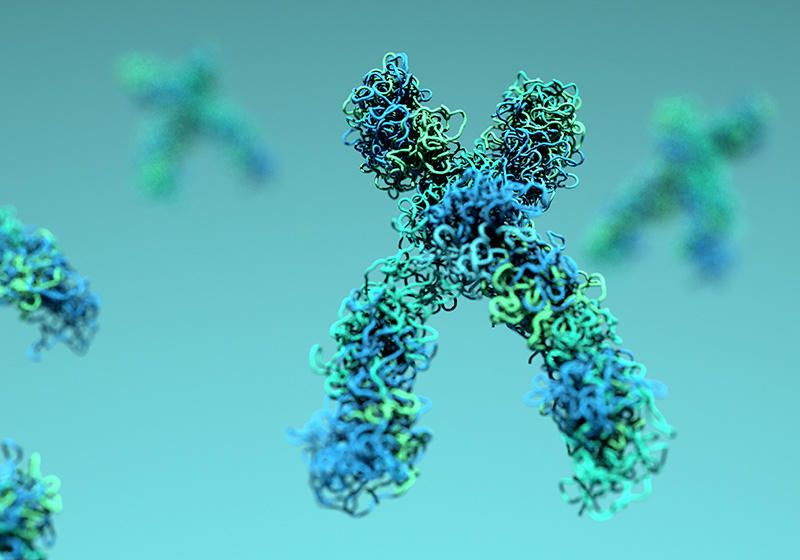
Genomic DNA is organized into chromatin via nucleosomes, regulating its accessibility for critical biological processes such as transcription, replication, and epigenetic modification. The dynamic structure of chromatin fibers directly influences gene expression and cell function. To investigate chromatin architecture, scientists employ a variety of approaches, including advanced genomic sequencing technologies, to map chromatin organization within cells.
Bryan Venters, PhD
Senior Director
Genomic Technologies
EpiCypher
In this Innovation Spotlight, Bryan Venters, the senior director of Genomic Technologies at EpiCypher, discusses the importance of chromatin profiling and highlights both the benefits and limitations of traditional chromatin assessment methods. He further explains the impact of multiomic long-read sequencing (LRS) assays in epigenomics research and illustrates how EpiCypher’s Fiber-seq technology enables single-molecule-level analysis of chromatin organization at higher resolution, overcoming the shortcomings of conventional techniques and broadening the scope of research, particularly for rare genetic diseases.
What is the significance of chromatin profiling in research?
Chromatin profiling is essential for understanding mechanisms of gene regulation and their role in disease. Chromatin structure and composition, from the macro-level structure and accessibility to the individual unique histone modifications on nucleosomes around which DNA is wrapped, are all part of the epigenomic landscape of a cell. Epigenomic regulation explains how the same genome can give rise to many distinct cell types with unique functions. Studying the layers of epigenomic regulation, such as DNA methylation, chromatin accessibility, and protein localization, is essential to understand normal development, aging, and disease mechanisms and to translate these insights into diagnostics and therapeutics. Traditional short-read sequencing (SRS) assays such as whole genome bisulfite sequencing (WGBS) and enzymatic methyl-seq (EM-seq) for DNA methylation, the assay for transposase-accessible chromatin using sequencing (ATAC-seq) for chromatin accessibility, and chromatin immunoprecipitation sequencing (ChIP-seq), and cleavage under targets & release using nuclease (CUT&RUN) for protein-DNA interactions have been invaluable for generating data to advance our understanding of gene regulation. However, each of these methods captures only a subset of the epigenomic landscape at a single instant in time. In reality, these assays describe chromatin features that all function together, and it is challenging to understand how each works as part of a global regulatory network to precisely control gene expression programs.
What challenges do scientists experience in chromatin assessments?
Most widely used epigenomic tools are single-modality and SRS based. This means that each assay measures only one chromatin feature and inherits the limitations of SRS in addition to various assay-specific limitations. While SRS, which generally sequences 300 base pairs or less, has enabled transformative discoveries in genomics, the short-read nature of the technology imposes significant constraints that extend across many areas of biology. For example, SRS cannot reliably resolve haplotype sequence or accurately map highly repetitive regions of the genome, such as centromeres, telomeres, transposable elements, or segmental duplications. Further, because SRS methods require fragmenting DNA, it is difficult or impossible to preserve long-range relationships and interactions between epigenetic features. Finally, few SRS-based assays allow simultaneous measurement of multiple epigenomic features such as DNA methylation, chromatin accessibility, or protein localization in the same DNA molecule. This limits our understanding of how epigenome regulators work in concert at both proximal and distal genetic elements to regulate gene expression and affect cellular responses.
In short, when researchers use SRS, they must rely on multiple assays to infer regulatory mechanisms, average signals across molecules or cells, and accept that they will obtain only limited meaningful data about long-range relationships, haplotypes, or repetitive regions. True multiomic co-measurement capabilities on the same DNA molecule are unique to LRS epigenomic studies. In practice, the limitations of SRS increase the need for more cells, require additional time, and result in higher costs due to more sequencing being required. They also create challenges with batch integration because of variability between experiments. As a result, important biological questions such as allele-specific regulation in complex loci remain unresolved.
What are the pros and cons of conventional chromatin profiling methods?
There are significant advantages to using mature, well-validated assays because they come with large community knowledge bases, and the field generally has a better understanding of their unique advantages and limitations. ATAC-seq, currently the most popular chromatin accessibility assay, is a straightforward method to rapidly profile chromatin accessibility genome-wide. Assays for determining protein localization genome-wide, such as ChIP-seq or CUT&RUN, have the advantage of commercial kits and antibodies. Finally, DNA methylation assays are numerous in the commercial space because DNA methylation is one of the most frequently studied epigenetic features, given that changes in DNA methylation patterns are involved in and potentially lead to a variety of diseases. Together, these assays have driven major insights across biology, and most have been adapted to be compatible with single-cell workflows, further expanding our understanding of epigenomic regulation in complex cell populations like tumors or circulating blood cells.
However, each assay generally targets one modality, either DNA methylation or protein localization, making it difficult to understand how these features are integrated to regulate gene expression. Short sequencing reads eliminate the ability of the researcher to make connections between even the same feature along the same DNA molecule. The dependence upon antibodies for many of these assays creates a variety of problems, such as limited antibody availability to the desired protein target and the uncertainty of antibody quality. Before any experiments are initiated, a large amount of effort must be put into validating the specificity of the antibody employed in protein-targeted assays such as ChIP-seq. Finally, integrating multiple datasets adds cost and can introduce batch effects into the final analysis. Emerging LRS approaches eliminate many of these shortcomings by preserving molecular context through direct detection of DNA features on individual DNA strands, positioning LRS as a new foundation for chromatin profiling.

An LRS approach with high-resolution provides comprehensive insights into chromatin structure.
©iStock, sergunt
What is a multiomic LRS assay, and why is it useful in epigenomic research?
An effective multiomic LRS assay would allow the identification of several genetic and epigenomic features by leveraging a DNA-modifying enzyme that makes changes to the DNA that can be discriminated from native modifications. Native LRS sequencing can detect modified DNA bases, so these multiomic assays allow for simultaneous identification of DNA sequence, endogenous DNA methylation such as CpG methylation, plus an additional, third feature on the same long DNA molecule. Because long reads greater than 10 kb preserve phasing and long-range context, researchers can link genetic variants to changes in regulatory epigenomic features, resolve allele-specific effects, and profile repetitive or structurally complex regions that SRS cannot access.
How does EpiCypher’s Fiber-seq technology help overcome the limitations of existing methods?
Fiber-seq is an LRS-based multiomic mapping platform that simultaneously reports DNA sequence, endogenous CpG methylation, chromatin accessibility, and antibody-free protein footprints across single DNA molecules, at near-base pair resolution. Fiber-seq uses a non-specific N6-adenine methyltransferase (or 6mA MTase), Hia5, to selectively methylate accessible adenines in DNA molecules. LRS platforms can detect both these 6mA residues and the endogenous CpG methylation 5mC simultaneously during direct sequencing, allowing researchers to study both endogenous methylation and chromatin accessibility as they co-occur.
Perhaps most exciting is that the accessibility labeling of Fiber-seq is so sensitive that it also captures protein “footprints” along individual DNA molecules by exclusion of 6mA labeling at bound DNA sequences. This includes both nucleosome localization as well as binding sites for many different transcription factors or chromatin-associated proteins. Therefore, Fiber-seq can capture hundreds of protein-binding events in a single assay, without antibodies, and at single-molecule resolution. This unique advantage allows for the detection of multiple binding events on the same DNA molecule, enabling direct investigation of how transcription factors (TFs), nucleosomes, and other proteins and DNA methylation are integrated at specific DNA elements to regulate gene expression. Prior to the advent of Fiber-seq, collecting so many biological insights required large consortium-level efforts, which can be very costly and must be finely coordinated. Fiber-seq provides researchers with a powerful tool to answer multiple epigenomic questions in a single experiment.
How does the Fiber-seq technology work?
The Fiber-seq assay is a remarkably simple assay that can be completed in approximately the same amount of time as a standard ATAC-seq protocol. In general, nuclei are isolated from a sample, permeabilized, and treated for 10 minutes with the Hia5 6mA MTase along with S-adenosylmethionine as a methyl donor. Genomic DNA is then purified and prepared for native LRS. The Hia5 enzyme is critical to Fiber-seq because it is highly active and selectively methylates adenines in accessible chromatin, thus marking, by exclusion from bound sequences, footprints where chromatin proteins occupy DNA. Importantly, Hia5-treated DNA can be sequenced using both Pacific Biosciences or Oxford Nanopore Technologies LRS platforms. During sequencing, endogenous 5mC and Hia5-modified 6mA are detected, in addition to the underlying DNA sequence. Computational tools for Fiber-seq data are publicly available that enable analysis of DNA methylation, chromatin accessibility, protein footprints (including nucleosomes and TFs), and genetic variants on individual DNA molecules.
In which fields is Fiber-seq having an impact?
Fiber-seq has had an immediate impact in the rare genetic disease space, in part because the inventor of Fiber-seq is a clinical geneticist working as part of the Undiagnosed Disease Network. This is a group of researchers collaborating to identify the root causes of symptoms shared by multiple patients that are as yet not attributed to a specific disease. In cases where the DNA sequence alone was insufficient to provide insight, synchronized long-read multiomic approaches that included Fiber-seq helped resolve the molecular basis of multiple genetic diseases.1 These studies linked non-coding variants or structural rearrangements to altered gene regulation, including altered enhancer activity and transcription factor occupancy, which enabled haplotype-resolved interpretation of the patients’ symptoms.
As Fiber-seq becomes more widely adopted, I think it could have a significant effect in the oncology and immunology spaces as well. Single-molecule maps of chromatin accessibility, protein footprints, and DNA methylation across complex loci will help researchers dissect tumor regulatory programs, allele-specific control in immune repertoires, and drug mechanisms and responses even in repetitive regions and in cases of segmental duplications where SRS methods provide little insight. We have already had some interest from groups in the pharmaceutical industry looking to use Fiber-seq to help define drug mechanism of action and from research consortia studying immune cell populations.
What excites you most about the future prospects of Fiber-seq technology?
Fiber-seq condenses what previously required multi-center consortia into a single experiment from one sample: phased sequence, endogenous methylation, chromatin accessibility, and protein footprints linked along individual molecules. This “all-in-one-molecule” view should redefine how we study gene regulation by capturing cooperative TF binding and nucleosome architecture at near-base pair resolution, in the native genomic context. With the launch of CUTANA Hia5 for Fiber-seq, all-in-one Fiber-seq kits, and expert Fiber-seq assay services, we see Fiber-seq moving rapidly from specialized labs into routine use across basic and translational research pipelines. Its ability to allow linkage of non-coding variants to regulatory mechanisms, accelerate lead molecule selection by clarifying the mechanism of action, and guide precision therapies through detailed molecular profiling will reshape how we connect genomes to disease and treatment. The most exciting prospect is that Fiber-seq makes consortia-level insights accessible to any lab. Fiber-seq turns multiomic discovery into a practical, everyday tool for advancing medicine.

