

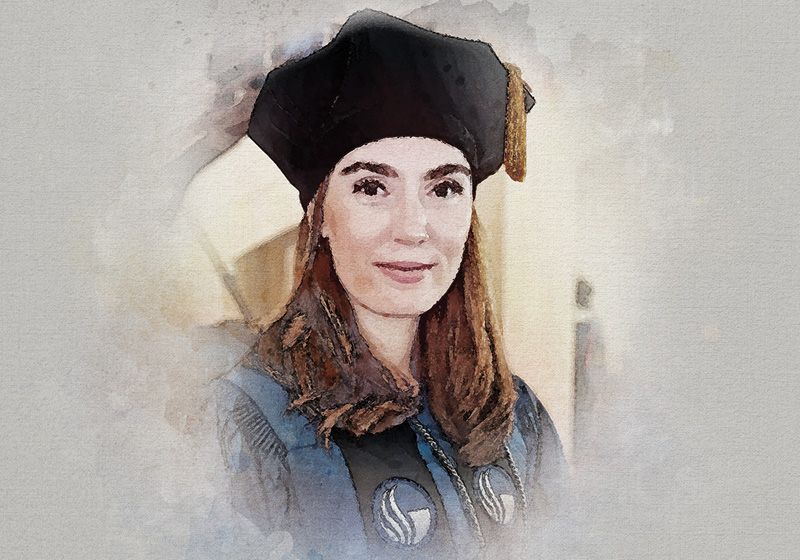
Searching for therapeutic breakthroughs, this postdoc uncovers regulatory mechanisms that drive virulence switching in bacteria.
Q | Write a brief introduction to yourself including the lab you work in and your research background.
My name is Christina Kiessling and I am a postdoctoral researcher at Emory University School of Medicine. In the Rather lab, we have the goal to identify (1) novel antimicrobials against multidrug-resistant Acinetobacter baumannii, (2) genetic vulnerabilities resulting as a byproduct of multidrug resistance, and (3) the regulatory mechanism that facilitates A. baumannii‘s switching from virulent to avirulent subpopulations.
Q | How did you first get interested in science and/or your field of research?
I was lucky to have a very passionate professor in junior year who got me excited about molecular biology. I felt very passionate about studying biology at the smallest level of organization, meaning at a molecular level. I started my PhD in an environmental microbiology lab due to a combination of factors, but luckily for me, I realized I was in the right place because I enjoyed working with bacteria. For my postdoc, I had two goals: learn more and switch specialties within microbiology. I am very thankful that my current PI gave me the chance to work in clinical microbiology.
Q | Tell us about your favorite research project you’re working on.
Because conventional antibiotics don’t work against Acinetobacter baumannii, we screened the U.S. Food and Drug Administration (FDA)-approved drug library in the hopes of identifying drugs that would show activity against Acinetobacter baumannii. These drugs are already being used for a variety of conditions, but we “repurposed” them as antibiotics. Our screen revealed a number of promising drugs whose antibiotic properties we are now studying in detail.
Q | What do you find most exciting about your research project?
I am excited about the fact that during my PhD I studied environmental microbiology with a focus on anaerobic bioremediation of crude oil derived contaminants, and that now, I get to study regulatory mechanisms of pathogenesis as well as promising novel antibiotic agents in Acinetobacter baumannii. I feel very lucky that I get to experience two very different niches of microbiology and believe it will make me a better scientist in the long run.
Q | If you could be a laboratory instrument, which one would you be and why?
I want to be a thermocycler. Thermocyclers are the most essential piece of equipment of modern molecular biology, in my opinion. Without them, nothing would be possible. I am also impressed that before they were invented, scientists manually moved samples through a series of water baths to accomplish PCR.
Are you a researcher who would like to be featured in the “Postdoc Portraits” series? Send in your application here.
