

A new method used Raman spectroscopy to measure blood glucose levels without the need for finger pricks.
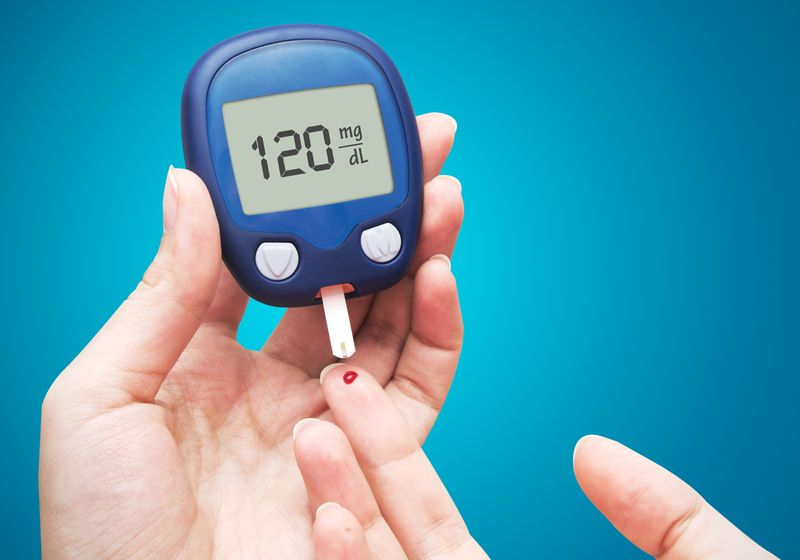
For millions of people living with diabetes, a small sting is a part of their daily routine: a finger prick to draw a drop of blood required measure their glucose levels.1 This painful but necessary ritual helps them monitor their chronic disease status and get the help they need.
Now, scientists led by Jeon Woong Kang, a biomedical optics researcher at Massachusetts Institute of Technology (MIT), utilized Raman spectroscopy to develop a small device that can measure blood glucose levels through intact skin.2 Their approach, described in Analytical Chemistry, offers a noninvasive way for people with diabetes to continuously monitor blood sugar using a portable device.
A shoebox-sized device shined near-infrared light on a volunteer’s skin to obtain accurate readings of blood glucose over a period of four hours.
MIT
“For a long time, the finger stick has been the standard method for measuring blood sugar, but nobody wants to prick their finger every day, multiple times a day,” said Kang in a statement. “Naturally, many diabetic patients are under-testing their blood glucose levels, which can cause serious complications.”
Kang and his team turned to Raman spectroscopy to measure blood glucose because of the method’s ability to identify the chemical composition of samples noninvasively. The approach involves shining monochromatic light on samples and analyzing how the light scatters: Molecules have distinct vibrational fingerprints, so they scatter light in a unique manner.
The researchers had previously used Raman spectroscopy to monitor glucose levels in pigs through their intact ear skin.3 The signal intensity of the glucose peaks it picked up correlated with glucose concentrations, offering a noninvasive method using a printer-sized instrument to measure glucose levels in vivo.
In the present study, Kang and his team built on these results to refine the signal and carry out measurements using a smaller device. By modifying their protocol, the scientists could measure glucose levels with an instrument about the size of a shoebox.
The researchers then tested the device’s feasibility in a clinical setting. The instrument, resting on a healthy volunteer’s arm, shined near-infrared light on his skin and obtained readings over four hours. As he consumed sugary drinks, the Raman-based portable device detected spikes in blood glucose with accuracy comparable to two commercially available invasive glucose monitors that he wore at the same time.
“With this new approach, we can change the components commonly used in Raman-based devices, and save space, time, and cost,” said MIT optical engineer and study coauthor Arianna Bresci.
Kang and his team hope to further reduce the size of the system and ensure that it can obtain accurate readings from people with different skin colors for its adoption as a wearable sensor.
