

A different formulation of Novartis’s gene therapy Zolgensma (onasemnogene abeparvovec), known as Itvisma, achieved good results in a Phase III trial in spinal muscular atrophy (SMA) patients aged 2-17 years.
While the improvements in mobility are smaller than those seen in younger children treated with Zolgensma, they are still enough to give these children significant improvements in their daily life.
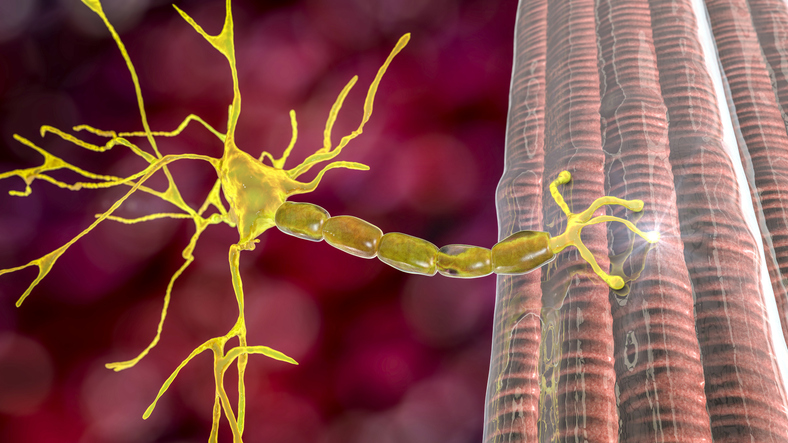
SMA is a rare inherited disease in which a fault in both copies of the SMN1 gene means the body cannot make enough of the protein encoded by this gene, which is needed for healthy motor neuron cells. Over time, these nerve cells die and cannot grow back, causing gradually worsening muscle weakness that impacts breathing, swallowing, and normal movement.
Zolgensma, originally developed by by AveXis and acquired by Novartis, is an adeno-associated viral vector (AAV) based gene therapy delivering an SMN1 transgene to patients to increase levels of the SMN protein. It was approved by the FDA for treatment of children under the age of two years with SMA in 2019.
Two other therapies, the antisense nucleotide treatment Spinraza and Evrysdi, a pyridazine-based compound that boosts the amount of working SMN protein made from the SMN2 gene, have also been approved in the last decade but require indefinite treatment to maintain the benefits.
The current study, led by Richard Finkel, MD, a professor at St. Jude Children’s Research Hospital, and colleagues and published in Nature Medicine, aimed to assess whether a different formulation of onasemnogene abeparvovec (Itvisma) administered as a one-time intrathecal infusion could benefit older children with SMA.
Itvisma is similar to Zolgensma but is injected directly into the spinal fluid and at a lower viral dose to help reduce potential toxicity in older and larger patients.
The study enrolled 126 patients aged 2-17 years with SMA who were able to sit. The results showed treated patients gained about 2.4 points on the main motor scale (HFMSE, 0–66 points), over a year, while sham patients gained about 0.5 points. Overall rates of adverse events were similar between the Itvisma and sham groups.
“The efficacy and safety of OAV101 IT [Itvisma] for SMA has been demonstrated in treatment-naive patients without the confounding effects of other therapies,” write the authors. “There remains a need for a safe and effective, one-time gene therapy option that provides sustained expression of the SMN protein. To address this unmet need, OAV101 IT offers a fixed dose that reduces systemic viral vector exposure, making it a potential one-time treatment for a broad range of patients with SMA regardless of age and weight.”
