

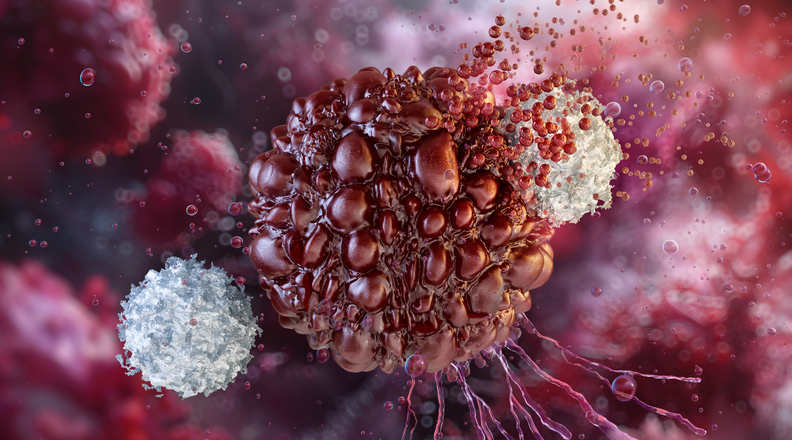
For more than two decades, Timothy Lu, MD, PhD, has been dedicated to a problem that has vexed cell therapy since its inception: how to make engineered cells “smart” enough to distinguish cancer from healthy tissue. In the CAR T era, many of the most transformational therapies have targeted a handful of “clean” antigens—molecules expressed on tumor cells but rarely found on healthy ones. But most cancers don’t present such tidy molecular bull’s-eyes. When healthy tissues share the same markers, CAR T cells can destroy not only tumors but also the cells patients need to survive. The resulting toxicities have kept entire classes of malignancies, especially acute myeloid leukemia (AML) and most solid tumors, out of reach.
Now, Lu—a synthetic biologist, physician, and former MIT professor turned CEO and co-founder of Senti Biosciences (SENTI)—believes his team is finally demonstrating the clinical payoff of “smart” genetic programs long theorized in the field. In new Phase I clinical data to be presented Monday, SENTI reports that its off-the-shelf CAR NK cell therapy SENTI-202 delivered deep, durable remissions in patients with relapsed/refractory AML (R/R AML), one of the deadliest cancers in adult hematology. Equally notable: the therapy appears to be selective, sparing healthy bone marrow stem cells while eliminating both AML blasts and the elusive, quiescent leukemic stem cells that drive relapse.
For a cancer that usually leads to survival of only five months after it comes back and where existing treatments rarely achieve remission rates higher than 12–20%, these early results are impressive. Yet the significance lies not just in the numbers, Lu emphasizes, but in what they reveal: that programmable logic circuits—OR gates, NOT gates, and combinations thereof—can function reliably inside therapeutic cells in patients.
For Lu, the moment is both personal and scientific. “I’ve been working on this concept since the early days of synthetic biology,” Lu told Inside Precision Medicine. “Seeing these logic gates function in real patients—it’s incredibly exciting.”
Opening the (logic) gates to immunotherapy
The idea of embedding decision-making-based logic in living cells dates back nearly two decades, headlined by pioneering academic papers demonstrating engineered genetic circuits in bacteria and mammalian cells. Lu’s lab at MIT emerged as a leading center in this field, developing synthetic promoters, intracellular logic gates, and viral delivery methods that enabled cells to identify intricate environments, integrate signals, and react with precise actions.
But the transition from academic constructs to clinical-grade therapies proved difficult. The circuits had to work reliably inside human immune cells, withstand manufacturing processes, and deliver activity without leaking or misfiring inside a patient. “What we’ve been doing is developing better technologies for programming cell and gene therapy so they can sense their environment, make decisions, and turn those decisions into therapeutic functions,” Lu said. “Cancer is where the need is clearest.”
The limiting factor, he explained, has always been the target problem. The most successful CAR T therapies—those directed at CD19, BCMA, or even HER2—benefit from antigens that are “clean enough.” But in AML and many solid tumors, the antigens that define cancer cells also appear on essential healthy cells. The result: decades of failed drug candidates. Selecta Biosciences’ CD123 CAR T program showed hints of activity but delivered fatal toxicities. Antibody-drug conjugates and bispecific T-cell engagers targeting AML antigens have likewise struggled. “The problem isn’t the drugs—it’s the biology,” Lu said. “There is no single clean target in AML.”
Lu continued, “Genome editing and CRISPR are great when you want to fix something in a cell. But to introduce entirely new biological functions, you need to program the cell, control its sensing and signaling, and implement the logic that lets it make decisions. That’s what synthetic biology brings to cell therapy.”
Synthetic biology offered a possible solution: instead of constraining drug development to the limits of natural biology, engineer a therapeutic that uses multiple inputs—a kind of cellular decision-making—to decide when to kill and when to stand down.
To kill, or not to kill
SENTI-202’s design rests on a simple but powerful Boolean logic using two CARs. The activating CAR serves as the system’s “OR” gate by recognizing two AML-associated markers, CD33 or FLT3. Complementing this, the inhibitory CAR functions as the NOT gate by recognizing markers present on healthy bone marrow stem cells. The concept: the engineered NK cell becomes cytotoxic only when it encounters both cancer markers, while the presence of healthy-cell markers silences the attack. “Programming the protein–protein interactions between the activating CAR and the inhibitory CAR is central to what we’re doing,” Lu explained. “Those interactions are what allow the NOT gate to override the activating signal when a healthy cell is encountered.”
SENTI encodes the full logic program on a single viral vector, simplifying manufacturing to a one-step transduction—an unusual feat in the world of complex gene circuits. Lu said that there are collaborators exploring the use of these programmable logic gates in iPSC platforms with genome-engineered landing pads, but the lead program uses conventional lentiviral methods compatible with GMP workflows.
Lu disclosed that the decision to use NK cells instead of T cells arises from a combination of biological and logistical factors. AML patients’ own T cells are often dysfunctional, which leads to manufacturing failures in autologous CAR T processes. In contrast, NK cells naturally fight leukemia, making them a suitable starting point for creating treatments. Allogeneic NK cells also avoid the graft-versus-host complications that commonly affect donor T-cell therapies. Moreover, NK-cell platforms generally do not trigger severe cytokine release syndrome or neurotoxicity, enabling the possibility of outpatient dosing—an important advantage for the often-fragile AML population.
The result is an off-the-shelf therapy: cryopreserved vials can be shipped on demand, bypassing the months-long manufacturing window that makes autologous CAR T therapies impractical for rapidly progressing AML.
The choice of AML was not merely opportunistic; it was intended as a stress test for the technology. Most AML blasts and leukemic stem cells often show CD33 and/or FLT3, making them appealing targets to attack. However, both markers are also present on healthy hematopoietic stem and progenitor cells, rendering traditional CAR designs extremely dangerous. “This is why the ‘NOT’ gate is absolutely essential,” Lu said. “Without it, you would wipe out the patient’s healthy bone marrow. We showed that preclinically, and historically, that’s what’s happened in other AML CAR T attempts.”
Two alternative strategies have been explored in the field, but each carries significant limitations. Vor Bio’s antigen-editing approach removes CD33 from donor stem cells prior to transplant, a method that requires a complex, multi-step treatment sequence. Another idea, which Lu investigated during his time at MIT, involves forcing cancer cells to express artificial targets through gene-directed antigen display. This strategy, however, is constrained by the challenges of delivering genetic modifications efficiently to patient tumors. By contrast, SENTI’s logic-gated approach embeds the selectivity directly within the therapeutic cell itself, eliminating the need for preparatory conditioning or genetic editing of patient tissue. “Putting that intelligence into the product itself makes everything simpler,” Lu said. “We’re relying on the CAR NK cell to be smart enough to distinguish cancer from healthy bone marrow.”
Without a trace
The Phase I study enrolled 18 patients with R/R AML at sites in the United States and Australia. These were individuals with few remaining clinical options, many of whom had already failed multiple prior therapies.
Across the full cohort, roughly half of the patients achieved an objective response. At the recommended Phase II dose, 42 percent achieved a complete remission. Every patient who achieved a complete remission also became MRD-negative using highly sensitive flow cytometry capable of detecting residual disease down to one cell in ten thousand. The estimated median duration of remission is 7.6 months, and several patients remain alive more than a year after receiving treatment. Comparisons with existing agents—including menin inhibitors, targeted small molecules, and salvage chemotherapy—suggest that SENTI-202 may offer meaningfully improved outcomes. “This compares very favorably to what’s available today,” Lu said. “And because the mechanism is entirely different from chemotherapies and small molecules, we think it can be integrated easily into the treatment paradigm.”
Mechanistic analyses from patient samples provided additional confirmation that the therapy behaved as intended. Paired bone marrow and blood assessments demonstrated that SENTI-202 effectively eliminated leukemic stem cells, a population that typically resists chemotherapy because of its quiescent cell-cycle state. At the same time, the therapy spared—and in some cases appeared to enrich—healthy hematopoietic stem cells in responding patients. These findings align closely with preclinical predictions and offer one of the strongest demonstrations to date that logic-gated cell therapies can achieve true on-target tumor killing while protecting critical healthy tissue. “Getting this kind of selective on-target, on-tumor killing while preserving healthy stem cells—that’s something nobody has been able to show before,” Lu said. “It’s exactly what we engineered the system to do.”
The safety profile was equally striking, especially for a CAR-based therapy in AML. Patients didn’t experience clinically significant cytokine release syndrome, no cases of Immune Effector Cell-Associated Neurotoxicity Syndrome (ICANS) or neurotoxicity, and no severe marrow ablation of healthy stem cells. This clean toxicity profile suggests the possibility of outpatient dosing, a scenario that is nearly unheard of for advanced AML biologics. “Safety is where NK cells and our logic gates shine,” Lu said. “These patients are incredibly fragile. We can’t give them something that makes them sicker.”
Senti’s poster at ASH also provides insight into how their approach takes on the long-standing obstacle of leukemic stem cells, which serve as the reservoir that drives AML relapse. Before treatment, most leukemic stem cells were found to be non-cycling and quiescent, consistent with decades of research demonstrating their ability to evade chemotherapy. Despite this inherent resistance, SENTI-202 achieved at least a ten-fold reduction of leukemic stem cells in patient samples. Lu noted that this is exceptionally rare in AML drug development because no antigen uniquely identifies leukemic stem cells while sparing healthy stem cells.
This lack of a unique marker has historically made it impossible to eliminate leukemic stem cells without destroying nononcogenic blood stem cells and, ultimately, normal hematopoiesis. “But with logic gates, you don’t need a unique target,” he said. “You need a combination that better defines leukemic stem cells compared to healthy ones. That’s what we’ve built.” If validated in larger trials, this capability could pave the way for therapies designed to eliminate the root of relapse rather than merely controlling disease burden.
Into solid tumors
Although SENTI-202 is the company’s lead clinical program, Lu emphasizes that the underlying platform was designed to be indication-agnostic. In principle, logic-gated CAR NK or CAR T therapies could combine multiple tumor antigens to achieve precise OR-gate recognition, incorporate NOT-gate circuits to avoid toxicity in sensitive tissues such as the heart or nervous system, and function in solid tumors where antigen heterogeneity has made single-target approaches ineffective. “Given the data we’re seeing, we think this technology can absolutely be expanded to solid tumors,” Lu said. “We’ve already built logic gates into T cells. There’s no reason we couldn’t deploy this approach for in vivo CAR delivery in the future.” Although the company chose an off-the-shelf NK product for pragmatic reasons, the engineering principles are portable across multiple immune cell types.
In the R/R AML setting, Lu believes that SENTI-202 could follow a regulatory path similar to other recently approved therapies that reached the market on the basis of single-arm studies, given the absence of effective standards of care. Over the longer term, the company anticipates moving into randomized frontline trials, testing combinations with menin inhibitors, venetoclax-based regimens, or other targeted agents, and exploring earlier disease settings in which preserving healthy stem cells may yield the greatest clinical benefit. “AML is a space with a clear, high unmet need,” Lu said. “But our long-term vision includes solid tumors, combination therapies, and eventually programmable in vivo treatments.”
SENTI-202 does not solve every challenge in oncology. But it provides something synthetic biology has long sought: clinical evidence that cells can be programmed to behave like biological computers inside patients, making real-time decisions that improve efficacy while reducing toxicity.
If future trials replicate the early signals, logic-programmed cell therapies could represent a new frontier, especially for diseases long considered incompatible with conventional CAR T and NK strategies. “Ultimately, what we’re showing is that biology can be programmed,” Lu said. “And when you do that, you can treat cancers that were previously untreatable.”
Logic-gating may just be the tip of the iceberg, as Senti Bio’s Gene Circuit Technology platform extends to several other cellular computations. Multi-arming equips cells with multiple therapeutic payloads so they can attack complex diseases through several coordinated mechanisms. Regulator-dial circuits give clinicians external control over a therapy’s activity, allowing them to fine-tune potency or switch functions on and off with a drug. Finally, smart sensors allow gene circuits to detect specific cellular or environmental cues, activating therapeutic responses only under the appropriate conditions. Together, these four technologies create highly precise, adaptable, and controllable next-generation cell and gene therapies.
