

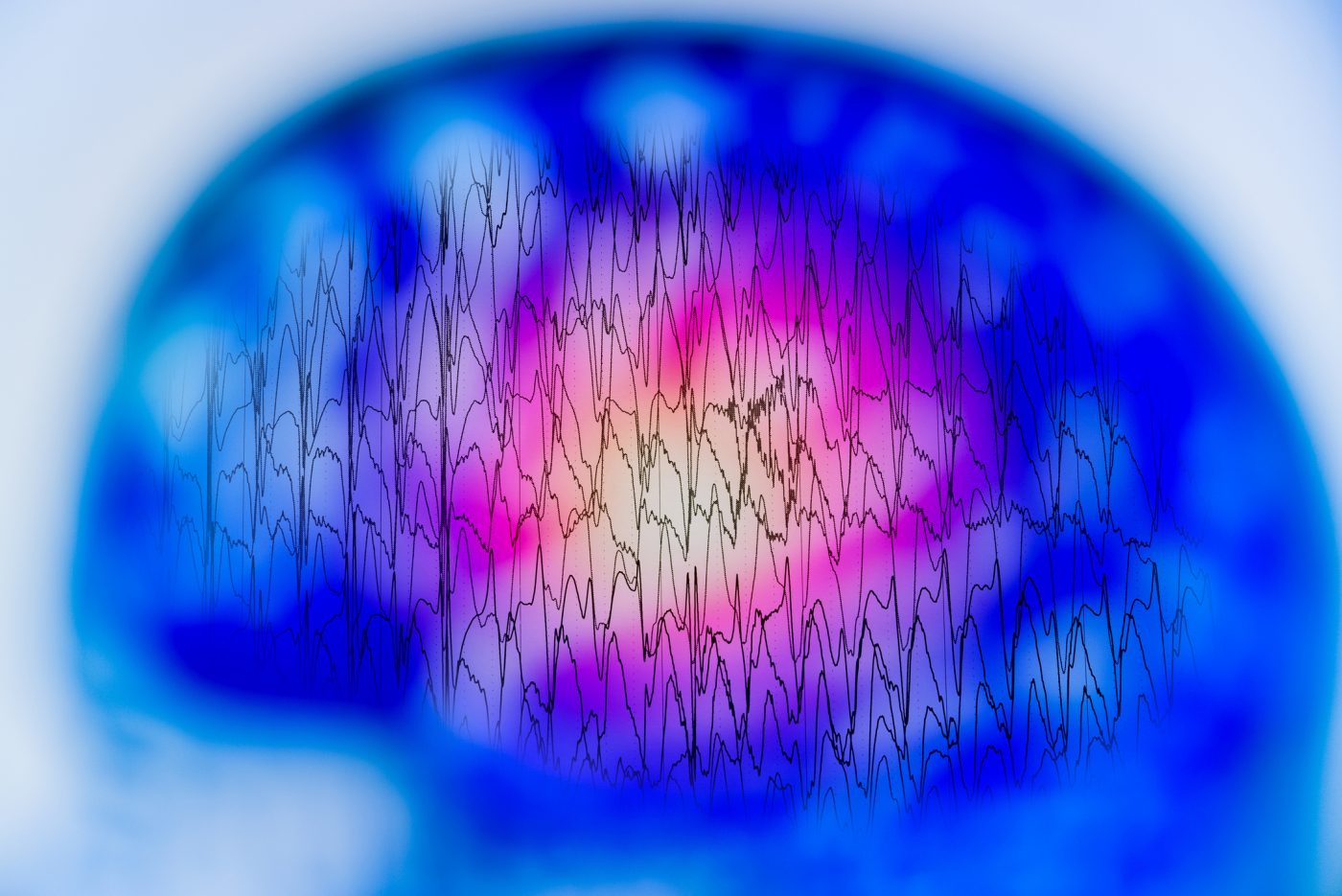
Researchers in the engineering and computer science department of Florida Atlantic University (FAU) report they have developed a deep learning model that uses electroencephalography (EEG) to differentiate Alzheimer’s disease (AD) and frontotemporal dementia (FTD), two conditions with similar symptoms but which damage different regions of the brain. The study, published in Biomedical Signal Processing and Control, details how the new method reduces signal noise from EEG readings to boost its accuracy by analyzing both frequency- and time-based brain activity patterns specific to each disease.
“What makes our study novel is how we used deep learning to extract both spatial and temporal information from EEG signals,” said first author Tuan Vo, a doctoral student at FAU. “By doing this, we can detect subtle brainwave patterns linked to Alzheimer’s and frontotemporal dementia that would otherwise go unnoticed. Our model doesn’t just identify the disease—it also estimates how severe it is, offering a more complete picture of each patient’s condition.”
The FAU team pursued a deep learning approach since EEG interpretation for dementia is challenging. Signals are noisy, vary between individuals, and the overlapping symptoms of AD and FTD can lead to misdiagnosis using this technology. Prior research has indicated it might be possible to use traditional frequency-based EEG analysis and machine learning methods to aid in dementia diagnosis, but these prior attempts were hampered by segment-level predictions, incomplete analysis of brain regions and frequency bands, and lack of modeling to show how advanced the disease is.
“Although electroencephalography (EEG) is portable, non-invasive, and cost-effective, its diagnostic potential for AD and FTD is limited by the similarities between the two diseases,” the researchers wrote, noting these challenges.
Other imaging technologies such as MRI and PET also play a role in AD diagnosis, but aren’t prevalent in all clinical settings and are costly and complex. This pointed to the potential of using EEG since it is widely available, portable, less expensive, and non-invasive, as long as methods could be developed to make it more accurate for this purpose.
To tackle this, the FAU team developed a machine learning model that combines convolutional neural networks with a neural network called long short-term memory (LSTM) to capture spatial and temporal patterns from the EEG signals. Using this framework, the researchers were able to classify the disease while also providing an estimate of disease severity. Using feature extraction across all EEG frequency bands, the model identified increased delta activity in frontal and central regions as biomarkers for both diseases.
Testing their combined technology, the researchers achieved more than 90% accuracy in delineating people with AD or FTD compared with a control group of cognitively normal participants. Severity predictions had relative errors of less than 35% for AD and approximately 15.5% for FTD.
Differentiating the AD from FTD was more complex, but a feature selection procedure increased the model’s specificity in separating AD from FTD from 26% to 65%. From this, the researchers developed a two-stage approach that first identified cognitively normal individuals based on their readings and ML-model’s interpretation, and then distinguished AD from FTD with 84% overall accuracy.
Interpretability was integrated through a method called gradient-weighted class activation mapping (Grad-CAM), which showed the researchers which element of the EEG’s outputs were most relevant to influencing the model’s decision. Grad-CAM visualization helped confirm known biomarkers of dementia such as delta activity and provided insight into how disruptions vary across brain regions.
“Our findings show that Alzheimer’s disease disrupts brain activity more broadly, especially in the frontal, parietal and temporal regions, while frontotemporal dementia mainly affects the frontal and central areas,” said study co-author Hanqi Zhuang, PhD, professor of engineering and computer science at FAU.
The researchers now plan to expand their EEG dataset, explore model generalizability across recording systems, and further study the causes of misdiagnosis between AD and FTD. Their goal is to support development of an EEG-based clinical tool that could complement existing imaging technologies and offer a cost-effective method for early detection and monitoring.
