

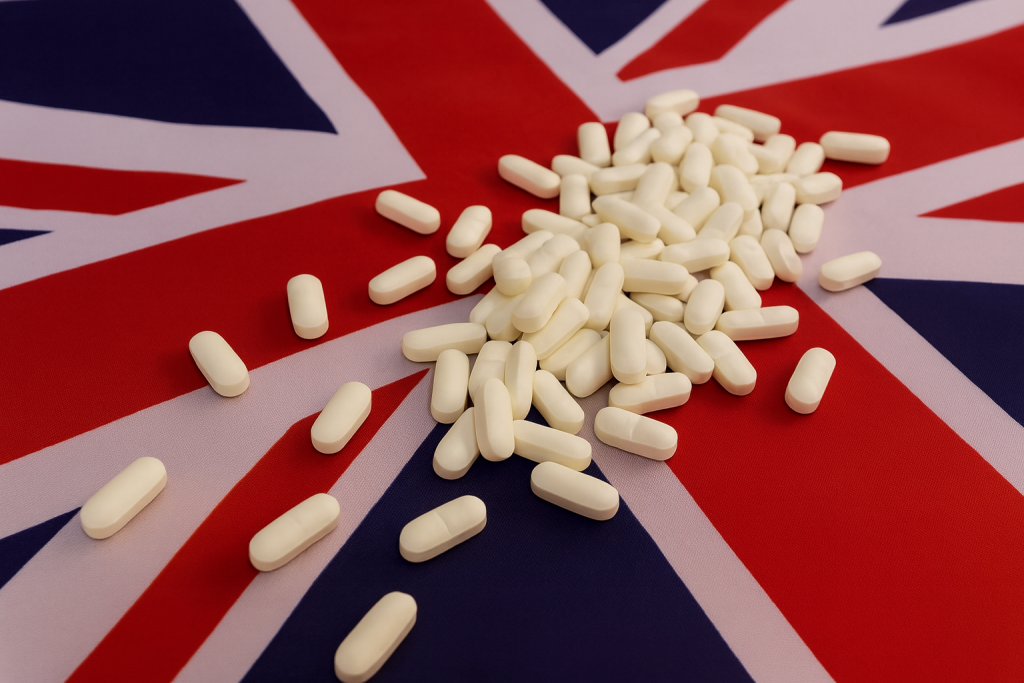
Landmark deal lifts US tariffs on UK medicines, advancing access to innovation and encouraging investment in longevity drugs.
Tens of thousands of NHS patients are expected to benefit from a landmark UK–US pharmaceuticals agreement that eliminates tariffs, secures medicine supply chains and boosts investment in advanced treatments. The pact, part of the UK–US Economic Prosperity Deal, makes the UK the only country in the world with a 0% tariff on pharmaceutical exports to the United States [1].
For the UK’s fast-growing life sciences ecosystem, this represents more than preferential market access; it signals renewed confidence from global biopharma and a meaningful step toward accelerating drug development and delivery, including treatments that target aging, age-related disease and other longevity pathways.
The tariff-free arrangement has already strengthened investor sentiment, with Moderna, Bristol Myers Squibb and BioNTech committing multibillion-pound investments into UK R&D and manufacturing.
As the government aims to make the UK Europe’s leading life sciences economy by 2030, this deal removes a major barrier to scaling production and exporting advanced therapies – including next-generation immunotherapies, genomic medicines and longevity-focused drug candidates.
Business and Trade Secretary Peter Kyle called the deal a pivotal moment, saying it “guarantees that UK pharmaceutical exports – worth at least £5 billion a year – will enter the US tariff-free, protecting jobs, boosting investment and paving the way for the UK to become a global hub for life sciences.”
This shift is significant for companies working on cutting-edge interventions that require stable pricing frameworks and predictable regulatory pathways to accelerate translation from lab research to clinical application.
In tandem with the trade agreement, the UK government will increase its investment in innovative, safe, and effective treatments by around 25%, the largest increase in more than two decades.
The change allows the National Institute for Health and Care Excellence (NICE) to approve medicines that previously fell outside cost-effectiveness thresholds, such as rare disease therapies, advanced oncology drugs and novel mechanisms of action that may benefit patients with chronic or aging-related conditions.
NICE’s updated thresholds – rising from £20,000–£30,000 per QALY to £25,000–£35,000 – plus the introduction of a new value set for health-related quality of life, mean that high-impact medicines with long-term benefits may now clear the bar more easily. For longevity biotech, where outcomes often extend over many years rather than deliver immediate effects, this is a notable shift.
“This vital deal will ensure UK patients get the cutting-edge medicines they need sooner, and our world-leading UK firms keep developing the treatments that can change lives,” said Science and Technology Secretary Liz Kendall.
The UK already has a track record of being first to roll out pioneering medicines, such as Blenrep, Kimmtrak and Aucatzyl, and the new agreement is expected to strengthen early-access pathways further.
With mitigations secured under the US Most Favored Nation drug-pricing initiative, the UK can avoid restrictive pricing pressure and continue offering a favorable launch environment for new therapies.
Several patient groups and research leaders praised the changes. Dr Sophie Castell of Myeloma UK highlighted the urgency.
“Every day counts when you’re living with the incurable blood cancer myeloma… anything that brings medicines into the hands of patients faster and allows them to live better and longer lives is a hugely positive and welcome move,” she said.
For longevity-focused treatments – including senolytics, immunomodulators, engineered cell therapies and targeted genetic approaches – faster regulatory review and broader NICE thresholds could significantly accelerate patient access.
The deal builds on recent reforms that cut clinical trial approval times from 91 to 41 days. With a new Health Data Research Service (HDRS) set to streamline researcher access to NHS data, the UK aims to strengthen its position as a preferred location for longevity clinical trials, particularly those involving large, heterogeneous aging populations and real-world evidence.
Science Minister Lord Vallance captured the broader shift, saying that it is “an era of preventions and cures, and this landmark deal will ensure British patients are among the first in the world to access them.”
For investors in aging and longevity biotech, the agreement creates clearer commercial pathways:
- Lower export costs reduce financial risk for scaling new drug platforms.
- Higher NICE thresholds benefit treatments with long-term preventative or quality-of-life impact, a core characteristic of many longevity-related drugs.
- Accelerated trials support faster validation and de-risking of early-stage assets.
- Large industry commitments – such as Bristol Myers Squibb’s plan to invest “upwards of $500 million” in the next five years – signal confidence in the UK’s regulatory and industrial environment.
Autolus CEO Dr Christian Itin emphasized this stability, saying that “advanced therapy development and manufacturing require long-term commitments and significant capital investment.”
“We view this agreement as an important step forward for our industry and for patient access to new therapies,” he added.
By aligning trade incentives, regulatory reform, and investment in innovative medicines, the UK–US agreement strengthens the country’s position as a global leader in drug development, particularly in areas relevant to aging, chronic disease and regenerative medicine.
The longevity sector stands to gain significantly from this coordinated approach: smoother clinical translation, improved reimbursement compatibility and strengthened investor confidence all contribute to a more robust pathway for treatments that aim to extend healthy lifespan.
As Health Minister Zubir Ahmed put it, “Every patient deserves access to the best possible treatment.” With this deal, the UK moves closer to making that a reality, while helping shape the global future of longevity therapeutics.
