

We all have medical tests done at some point in our lives. However, busy schedules, needle phobia, embarrassment, and sometimes poor accessibility of testing facilities means that we avoid getting essential tests more often than we should.
A survey published earlier this year by Aflac, a U.S. medical insurance company, suggests as many as 90% of Americans have put off at least one medical test that could have serious health consequences if delayed, like screening for cancer.
The COVID-19 pandemic opened the door to widespread, non-invasive testing. Many of us used saliva-based, lateral flow antigen tests on a weekly, if not daily, basis during the height of the pandemic.

CEO, OraSure Technologies
“COVID gave momentum to people’s awareness of solutions that really can connect people to healthcare wherever they want and not just when they’re in a clinical setting,” said Carrie Eglinton Manner, CEO of OraSure Technologies, a diagnostics company headquartered in Pennsylvania, PA with a focus on at-home and non-invasive testing.
There is growing interest in making diagnostic testing and monitoring more patient-friendly by improving non-invasive options and bringing more tests into patient’s homes, albeit with medical oversight.
Home testing for blood glucose for people with diabetes started with less accurate, time-consuming urine testing, but became much more convenient with the introduction of the first home blood glucose monitor in the early ’80s. Another early innovation on the home testing front was the urine-based Predictor pregnancy test developed by Organon Pharmaceuticals, released in the early ’70s. Since then, there has been little development outside of these two indications. But in recent years, likely prompted in some part by the pandemic, there has been increasing demand for and interest from companies developing a range of tests in this space.
OraSure was an early pioneer in the broader home testing space with its oral swab-based, at-home HIV test, approved by the FDA in 2012. “As the first company with an over-the-counter oral fluid HIV self-test [with] a time-to-result of less than 30 minutes … that really changed the way people thought about a rapid at-home test,” said Eglinton Manner.
Putting the patient first is not just about bringing tests into the home, it is also about making tests less invasive to reduce any related pain and anxiety, particularly for those with chronic conditions that require regular monitoring. This has prompted companies in the sector to investigate and improve testing technology. For example, Washington-based medtech company Tasso has developed a minimally invasive blood testing device that can be used in the home.
Other companies are working to improve the accuracy of testing new samples such as breath, sweat, and even experimental measures like tear fluid and voice analysis. “Wearable” technologies like smart watches are also becoming more precise and applicable to medical monitoring. For example, the Apple Watch now offers FDA-cleared ECG (electrocardiogram) functionality for identifying atrial fibrillation.
The combination of new and less invasive sampling with medically enabled wearable technology is not only making life easier for patients, it is allowing the collection of more frequent and sometimes continuous data about different medical conditions. Although still in early stages, this area of diagnostics and monitoring has the potential to enable the development of more and better targeted therapies for patients.
Transforming medical sampling

Co-founder and CEO
Tasso
Ben Casavant, PhD, is the co-founder and CEO at Tasso. When he and his co-founder Erwin Berthier, PhD, were pursuing their graduate studies in biomedical engineering from the University of Wisconsin, they recognized how difficult it could be to simply attend a blood test appointment at a clinic. They decided to try and make the system better.
“It was a night and weekends project. But since then, we’ve been really impressed and excited by seeing the response, both from patients everywhere, but also from the healthcare system at large,” said Casavant.
Their device contains a small lancet for taking blood. All a user has to do is place the device on the upper arm and press a button to take a sample. The small size of the lancet and its positioning mean that the test is almost painless compared with others.
“I think it’s a win-win on both sides of the coin here. For patients, it’s easier, it’s more convenient, and essentially painless,” said Casavant. “But on the other [clinician] side of things, you’re able to get data and information back into the ecosystem irrespective of location. Or if somebody wants to [and] can’t fit that in their day or is afraid of needles, all of the barriers are removed.”
He admits that a lot of fine-tuning and sample validation was needed to make sure the test samples were good enough and not damaged in transit. Casavant added that he and his colleagues worked hard on the logistics and sample packing to make sure the blood taken with their devices could undergo a normal set of lab tests.
In contrast to Tasso’s focus on blood, Massachusetts-based Epicore Biosystems is measuring sweat and the biomarkers it contains. The company has developed a number of soft arm patches, both for single-use and continuous monitoring options, to cater to different audiences. The patches contain microfluidic technology for measuring sweat and its constituent chemicals. Data about the biomarkers being measured can then be streamed to the cloud for analysis.
At the moment, the patches developed by Epicore are being used to monitor athletes and industrial workers for signs of dehydration, but they plan to move into medical monitoring and testing in the future.
“We just published a feasibility study around cystic fibrosis, looking at sodium and chloride levels in sweat and how they fluctuate with certain medications that you’re taking for the condition,” explained CEO and co-founder of Roozbeh Ghaffari, PhD.
“We’ve also seen a lot of interesting data and utility in kidney health biomarkers. Urea and creatinine look really interesting. They’re more down the road of medical applications, so we’re still early in feasibility and clinical study testing, but I think there’s a lot of utility with thinking about how you screen or manage your kidney biomarkers,” he added.
Continuous measurement of biomarkers is less commonly seen in the at-home space, but has been demonstrated very well by continuous glucose monitors (CGMs) developed for people with diabetes.
The first such device to get approved was the Medtronic Minimed, which was approved in June 1999. Since then, several devices made by Medtronic, Abbott, Dexcom, Eversense and, more recently, California-based Biolinq have been approved.

CEO, Biolinq
Richard Yang has a long history of working with glucose sensing technology, having worked at both Medtronic and Dexcom before becoming the CEO of Biolinq in 2020. The company’s new CGM, Biolinq Shine™, was granted marketing approval and De Novo Classification by the FDA last month.
“We got through the FDA in 270 days,” he explained. “The reason why it’s extraordinary is because this is the world’s first semiconductor biosensor. There was no predicate device. There’s no other company that has gotten through the FDA with a semiconductor approach. We’re the first intradermal sensor that can measure glucose levels continuously within the skin.”
Unlike most CGMs that require either an introducer needle or a filament to be placed under the skin, Biolinq’s sensor sits just beneath the skin surface, right on top of the capillary bed. Miniature electrochemical sensors on the underside of the device insert a small way into the skin, but not enough to cause pain.
The technology was developed by the company’s two founders who were graduate students together at University of California San Diego—Joshua Windmiller, PhD, and Jared Tangney, PhD. It uses technology that is similar to smartphone microchips.
“Nobody has ever thought about using silicon as a substrate, it’s so hard,” said Yang. “Each one of these are about the width of a human hair filament, and they are so small that they’re extremely fragile. … Medical device companies don’t have a core competency and expertise around doing this. Even if they wanted to do this, the semiconductor manufacturing domain has a lot of confidential trade secret practices in how they manufacture. It’s really hard to learn.”
Despite this, Biolinq has managed to get its first sensor to market. The Biolinq Shine sensor combines glucose and activity sensing, and is primarily aimed at people with type 2 diabetes.
Notably, the design of this sensor makes it amenable to detecting more than one biomarker at a time, something the company is trying to develop. “It doesn’t cost us anything more to put a different chemistry on a separate microsensor and now you have a multi-analyte sensor array on one patch,” said Yang.
They are currently looking into making a sensor that measures both glucose and lactate, which could be useful for athletes who want to measure blood glucose and training intensity, but also for patients. For example, lactate is a biomarker of sepsis. The company’s sensor technology could also be adapted to test for other biomarkers like reproductive hormones that are relevant for women trying to conceive or for treating symptoms of menopause.

Putting patients first
OraSure was an early advocate of both at-home and non-invasive tests with its saliva-based HIV test, approved in 2012.
“HIV testing has had a very strong uptake, especially because of patient preference for our oral fluid test,” said Eglinton Manner, who adds that people love being able to test at home. “You have to have performance that people can count on. But … privacy is a significant driver for people, especially if it’s a sexually transmitted infection.”
Since then, the company has added a quick test for hepatitis C virus and syphilis to its infectious disease portfolio. These tests can be done using just a drop of blood from a fingerstick, but are not truly non-invasive, at-home tests.
OraSure also created an at-home test requiring a nose swab for SARS-CoV-2 during the pandemic, and has developed a test for Ebola that can use fluid from the mouths of people who recently died from suspected infection.
“Our Ebola test is really around a public health need to ensure that any incidence is contained. But rather than having to deal with blood, the potential for a cadaveric oral fluid test has made that a very nice option for public health professionals trying to contain an outbreak,” explained Eglinton Manner.
At the end of 2024, OraSure acquired Sherlock Biosciences. Sherlock is in the process of developing a combined self-test for sexually transmitted infections caused by Chlamydia trachomatis and Neisseria gonorrhoeae, which will expand OraSure’s portfolio of rapid diagnostics for sexually transmitted infections if approved. The test is designed to analyze DNA and RNA from self-collected vaginal or penile swabs using isothermal amplification and provides results within 30 minutes.
“Sherlock is going to enable us to make a disposable molecular diagnostic. Fast, accurate, convenient, affordable, private. … People will be able to have a chlamydia/gonorrhea result in the privacy of their own home, at a price that’s affordable to them. We think it can be a real game changer for health,” emphasized Eglinton Manner.
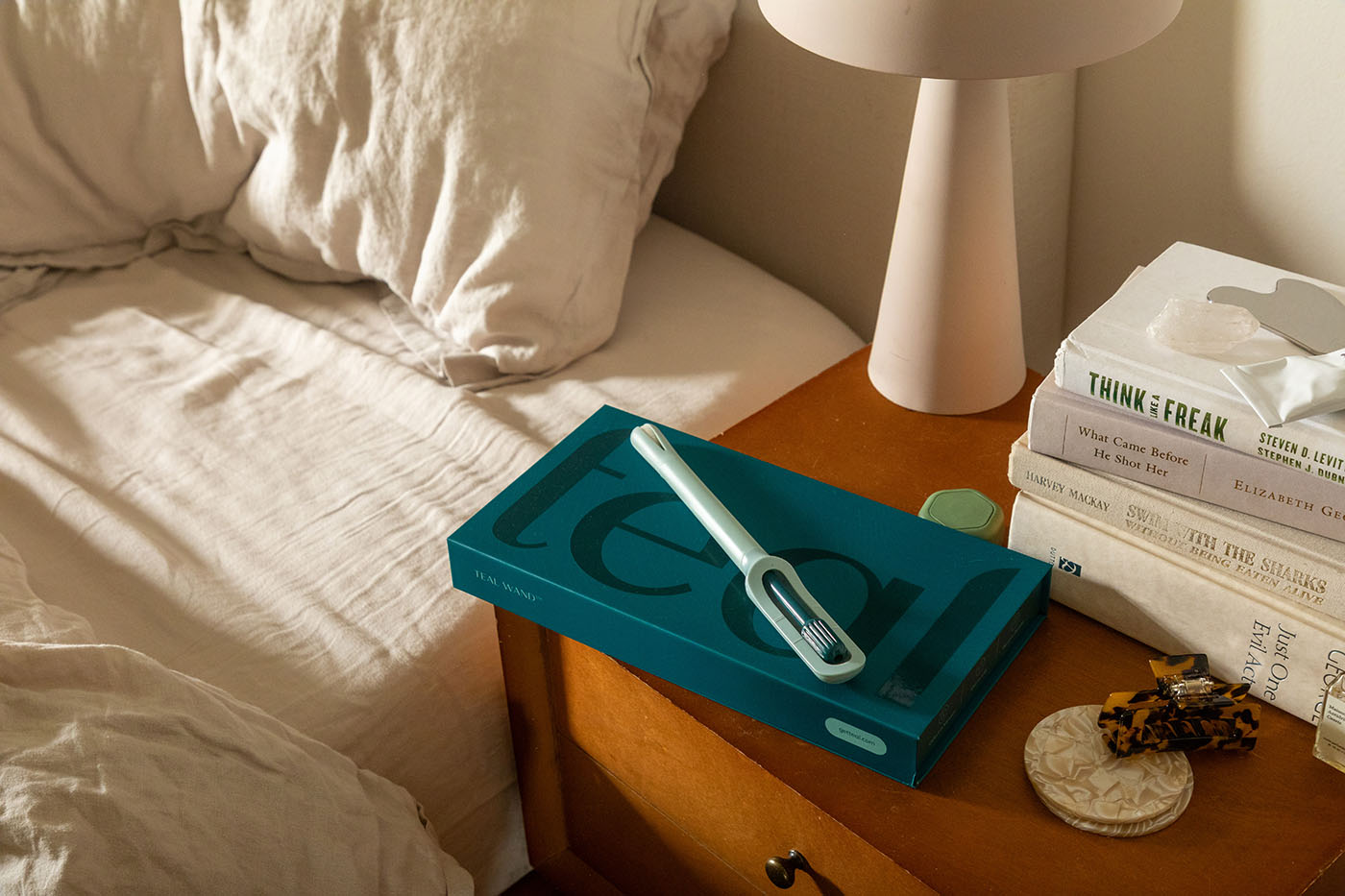
OraSure is not the only company trying to democratize reproductive health testing and screening. Teal Health, founded in 2020, had its flagship product the Teal Wand, a device allowing comfortable self-collection of vaginal samples for human papillomavirus (HPV) testing, approved by the FDA earlier this year. Over 89% of cervical cancer is caused by an HPV infection, making it a very preventable cancer.
Clinical trials demonstrated that the Teal Wand’s accuracy was equivalent to clinician-collected samples, detecting cervical precancer 96% of the time.

VP of Clinical, Regulatory & Quality
Teal Health
“Although we have a very advanced healthcare system and a very effective cancer screening methodology, one in four women in the U.S. underscreen for cervical cancer,” explained Trena Depel, vice president of clinical, regulatory, and quality for Teal Health.
“There’s no good reason for the U.S. as a country to be losing women to cervical cancer, so the company was founded to not only develop a medical device that is purpose-built for vaginal self-collection, but also built to deliver a telehealth service to address the delivery of this self-collection and care of women starting cervical cancer screening.”
Traditionally the Pap test, which involves a healthcare professional taking a sample from the cervix, has been the standard screen for cervical cancer in many countries. A primary test for HPV was approved for cervical cancer screening in the U.S. in 2014. The two tests have been compared, and HPV testing is more sensitive than Pap testing, meaning it creates fewer false negatives.
“The U.S. does not yet employ primary HPV as the predominant screening method, but self-collection is really poised to change that,” said Depel.
Speaking about their device, she said, “It’s been wildly popular with our customers. … The testimonials we’ve been given are just heartwarming. We’ve had patients who haven’t screened in over 20 years, and some who just said they never, ever would screen in the traditional way. So this is the only way they would screen.”
Some countries like the Netherlands, Sweden, and Australia have already been offering self-collection of samples as a screening method for cervical cancer. “Australia will actually eliminate cervical cancer by 2030 between their vaccination and their screening program,” noted Depel.

Increasing numbers of non-invasive testing methods are being researched by medtech and biotech companies around the world. Many are still in the early stages of testing, but one of the more established companies testing unusual diagnostic methods in this space is Owlstone Medical, which uses breath testing to assess different health outcomes.
The company is based in Cambridge, U.K., and had a different focus when it was founded in 2004. The original technology was designed to have a military application and detect poisonous gases, but the founders saw the potential for medical testing and spun out Owlstone Medical from Owlstone in 2016.
“We started to get interest from academic users who were interested in breath,” said Billy Boyle, CEO and co-founder of Owlstone Medical. “After we ran a few studies, we started to take it a bit more seriously. I’d actually been an incredible sceptic beforehand,” he admitted.
The company developed a handheld breath collection device called the OMED Health Breath Analyzer, used for non-invasive diagnosis of gastrointestinal conditions where the amounts of hydrogen or methane on the breath change, like food intolerances or a disrupted gut microbiome.
“It’s a low-cost device that can be used in the home setting that does real-time analysis of these microbiome-derived gases on the breath,” explained Boyle. “You can do your at-home diagnosis and when you go on to treatment, you can monitor the efficacy of the treatment.”
The company has also developed a test, called LIBRA, that can measure liver function and are working on another test for early-stage lung cancer.
Boyle explained that a lot of chemicals on the breath can be quite non-specific. For example, it is possible to tell that someone has an infection similar to COVID-19, but not what the specific infection is.
“Rather than relying on chemicals that you breathe out, we’ve developed an approach called an EVOC® probe. The basic idea is you ingest a chemical substrate that is targeting a particular disease pathway and that then induces a unique chemical signature,” he said.
The LIBRA liver disease test uses limonene, extracted from citrus fruits, as a probe. “If you have chronic liver disease, you metabolize it more slowly and it tends to build up in the fat component within the body,” said Boyle.

In contrast, the company’s test for lung cancer used D5-ethyl-βD-glucuronide, a metabolite of alcohol, as a probe. “[There] is an enzyme that normally sits inside the cell. If you put the chemical probe into the body for someone who’s healthy, the chemical probe can’t penetrate the cell wall, so it gets excreted. Then for patients that have a solid cancer, like a lung cancer, the enzyme in the tumor microenvironment will cleave the probe and release labeled D5-ethanol out onto the breath.”
Current results show that around 70% of early lung cancers are picked up by Owlstone’s test, according to Boyle. The company recently won an award of up to $49.1 million from the Advanced Research Projects Agency for Health in the U.S. to further develop its cancer detection technology.
Democratizing diagnostics
Both the at-home and non-invasive testing markets are predicted to grow significantly over the next 10 years, with a predicted compound annual growth rate of about 5% and 9%, respectively.

“My ideal is that we’ll be able to see pretty much every patient be able to have a blood test done at home for a variety of use cases. … I think we’ll see that broadness and scale, because if people use it once, I think they’re not going to go back to the old and typical way of doing things,” said Casavant.
It makes sense that patients are keen on making testing easier and less invasive, particularly in a large country like the U.S.
“Our barriers in the United States are real. We’re a huge country. We’ve got a very significant rural population that do not have quick access to healthcare in general. So I anticipate seeing many more types of screening that are offered in at-home setting to just address the public health need,” said Depel.
“There are so many reasons that prevent access to care. I just fundamentally believe that bringing rapid diagnostics and access to healthcare closer to people is going to fundamentally change quality of life,” added Eglinton Manner.
Clinicians have typically been less keen on at-home testing, often due to worries about test accuracy and whether self-administration can produce a good result. Many of the test manufacturers are eager to emphasize the importance of working with clinicians and researchers to validate the technology.
“There’s a lot of stuff out there where there’s just no evidence whatsoever. That’s why our approach has been to get the basics nailed first. We publish a lot. We run conferences to get the research community all on the same page,” said Boyle. “It always makes sense to be working with the healthcare providers in the first instance, as opposed to trying to rush things through.”
A positive outcome of more patient-friendly testing is that compliance is higher and there is more data to use for research and more accurate and targeted diagnoses. Yang believes democratizing testing in this way is essential for rolling out a more preventive and precision style of medicine in the future.
“We’re going to see at-home opportunities go from more observational to mandated for changing the cost of care and delivering better outcomes,” he said.
“This is the decade in which we’re going to see the most dramatic change in potentially extending and expanding human healthspan. With an aging population around the world and no new dollars coming in for healthcare, this is the conduit to keeping people out of the hospital and aging in a healthier way.”
Helen Albert is senior editor at Inside Precision Medicine and a freelance science journalist. Prior to going freelance, she was editor-in-chief at Labiotech, an English-language, digital publication based in Berlin focusing on the European biotech industry. Before moving to Germany, she worked at a range of different science and health-focused publications in London. She was editor of The Biochemist magazine and blog, but also worked as a senior reporter at Springer Nature’s medwireNews for a number of years, as well as freelancing for various international publications. She has written for New Scientist, Chemistry World, Biodesigned, The BMJ, Forbes, Science Business, Cosmos magazine, and GEN. Helen has academic degrees in genetics and anthropology, and also spent some time early in her career working at the Sanger Institute in Cambridge before deciding to move into journalism.
