

Bold move aims to scale blood-based diagnostics globally as demand for earlier, more accessible Alzheimer’s disease detection accelerates
ALZpath, Inc, leading developer of innovative diagnostic tools and solutions for Alzheimer’s, and medtech company Siemens Healthineers have signed a licensing agreement aimed at expanding global access to blood-based diagnostic testing for Alzheimer’s disease, marking a significant step toward more scalable and accessible neurodegenerative disease detection.
Under the agreement, Siemens Healthineers will license ALZpath’s high-performing, proprietary pTau217 antibody for use in the development of a pTau217 assay designed for its Atellica immunoassay systems [1].
The test will be added to Siemens Healthineers’ expanding menu of in vitro diagnostic (IVD) offerings for Alzheimer’s disease, enabling deployment across clinical laboratories worldwide.
For healthcare systems grappling with rising dementia prevalence, the partnership targets a critical gap: the limited accessibility of traditional diagnostic methods that are often costly, invasive or constrained to specialized centers.
Blood-based diagnostics for neurodegenerative diseases are increasingly viewed as a turning point in Alzheimer’s care. Conventional diagnostic tools, such as PET imaging and cerebrospinal fluid (CSF) analysis, remain highly accurate, but their cost, invasiveness and infrastructure requirements limit widespread use.
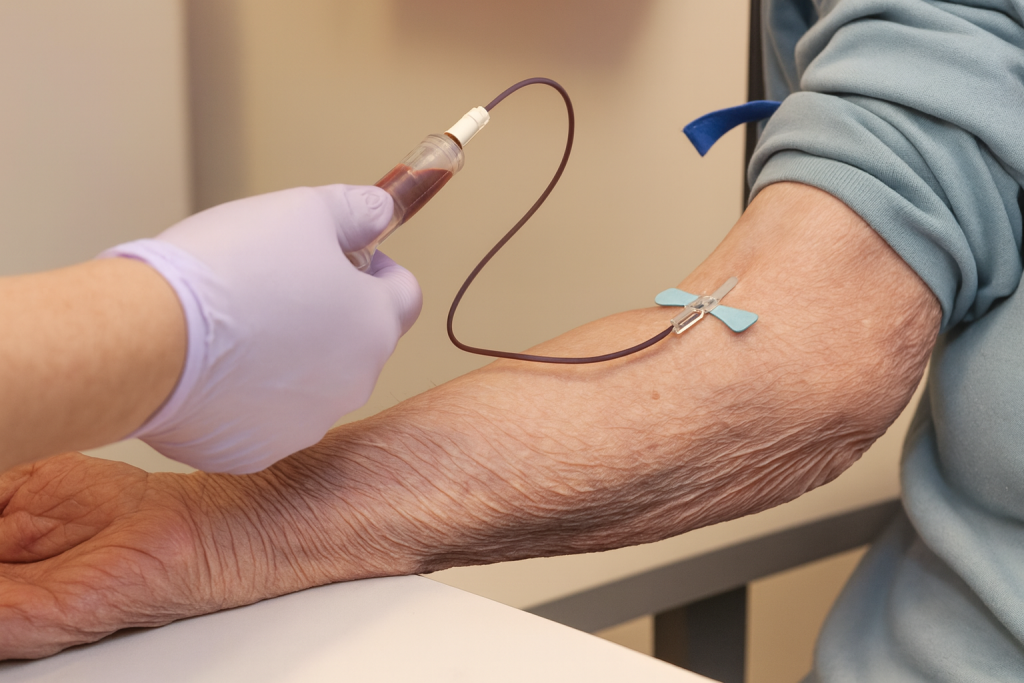
ALZpath’s pTau217 antibody enables sensitive and accurate detection of Alzheimer’s disease pathology through a standard blood draw. Across multiple platforms, it has demonstrated performance comparable to PET imaging and CSF testing, while offering far greater scalability through routine laboratory workflows.
The antibody is supported by substantial clinical evidence, including data from more than 90 peer-reviewed studies, helping establish pTau217 as one of the most clinically validated blood-based biomarkers in Alzheimer’s diagnostics.
ALZpath’s expanding clinical and commercial footprint has been reinforced by industry recognition. The company was recently named “Diagnostics Innovation of the Year” by BioTech Breakthrough, an independent market intelligence organization that honors excellence across the life sciences and biotechnology sectors [2].
The award recognizes the impact of ALZpath’s proprietary pTau217 antibody in driving earlier and more accessible detection and monitoring of Alzheimer’s disease worldwide.
The pTau217 antibody is already used in multiple commercially available blood-based tests, where it has shown strong accuracy, sensitivity and reproducibility in detecting trace levels of phosphorylated tau – a hallmark biomarker of Alzheimer’s disease – well before clinical symptoms appear.
Its adoption across both research and clinical settings has supported earlier patient identification, improved monitoring of therapeutic response, and the generation of robust evidence to accelerate the development and validation of new disease-modifying therapies.
The licensing agreement comes as disease-modifying Alzheimer’s therapies move closer to broader clinical adoption, increasing demand for diagnostic tools that can identify patients earlier in the disease course.
“This agreement supports ALZpath’s mission to democratize access to early and accurate Alzheimer’s disease testing,” said Mike Banville, CEO of ALZpath.
“By enabling Siemens Healthineers to integrate our pTau217 antibody across its expansive immunoassay testing footprint, we are expanding global access to timely diagnosis as new therapies become available to patients,” he added.
Siemens Healthineers brings significant scale to that ambition. The company’s integrated immunoassay and clinical chemistry analyzers are used in clinical laboratories of all sizes around the world. Its Atellica systems are engineered to maximize assay precision while delivering high throughput, allowing laboratories to process large volumes of samples and return results faster.
For Siemens Healthineers, the partnership aligns with its focus on translating diagnostic innovation into routine clinical use.
“Collaboration drives innovation and advances patient care. The sooner we detect degenerative diseases, the more time clinicians, patients, and families have to prepare – and the more impactful disease-modifying therapies can be,” said Dirk Heckel, chief technology officer and head of research, development & innovation for diagnostics at Siemens Healthineers.
By incorporating pTau217 testing into its Atellica platform, Siemens Healthineers aims to embed advanced Alzheimer’s diagnostics into everyday laboratory practice rather than limiting them to specialized settings.
ALZpath has steadily expanded access to its technology through licensing agreements with major diagnostics and life sciences companies, including Alamar Biosciences, Beckman Coulter, Bio-Techne, Quanterix and Roche, as well as collaborations with laboratories such as Neurocode.
Together, these partnerships are extending the reach of blood-based Alzheimer’s testing across research, diagnosis, treatment and disease monitoring.
As aging populations drive Alzheimer’s disease into sharper global focus, the ALZpath–Siemens Healthineers agreement reflects a shift in diagnostics toward tools that are not only scientifically rigorous but practical enough to meet patients wherever care is delivered.
[1] https://alzpath.bio/our-science/
[2] https://alzpath.bio/alzpath-proprietary-ptau217-antibody-wins-biotech-breakthrough-award-for-diagnostics-innovation-of-the-year/
