
Close Menu
My Blog

    Subscribe to Updates

    Get the latest creative news from FooBar about art, design and business.

    What's Hot

    Nautilus debuts Voyager platform in push toward next-gen proteomics

    March 1, 2026

    First-in-Human Success for Prenatal Stem Cell Therapy in Spina Bifida

    February 28, 2026

    Pressure-Driven Pathway Links Liver Congestion to Fibrosis and Cancer

    February 28, 2026
    Facebook X (Twitter) Instagram
    X (Twitter) YouTube
    My BlogMy Blog
    Sunday, March 1
    • Home
    • About Us
    • Healthy Living
    • DNA & Genetics
    • Podcast
    • Shop
    My Blog
    Home»DNA & Genetics»Small, Thick-Walled Cells Help Mangroves Thrive in Saltwater
    DNA & Genetics

    Small, Thick-Walled Cells Help Mangroves Thrive in Saltwater

    adminBy adminDecember 16, 2025No Comments3 Mins Read
    Facebook Twitter Pinterest LinkedIn Tumblr WhatsApp VKontakte Email
    The Scientist Logo
    Share
    Facebook Twitter LinkedIn Pinterest Email

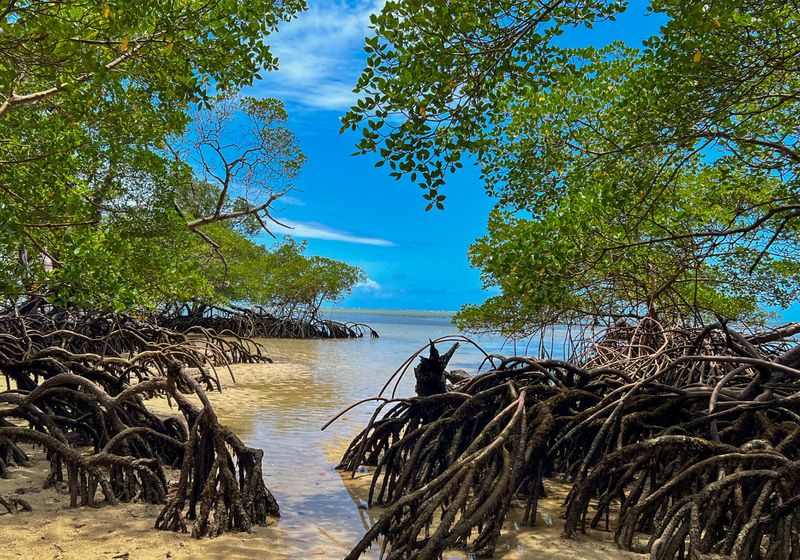
    Mangroves evolve simple traits, such as having small cells with thick walls, to survive in saltwater, an environment that is toxic to other plants.

    Image credit:©iStock, Marcela Koyama

    Saltwater is typically lethal for plants. As sea levels rise, agricultural crops in coastal regions are especially susceptible to damage, so scientists are racing to find solutions to this problem.

    One strategy is to look for ways to engineer plants to be more resilient against saltwater. To this end, Adam Roddy, a plant biologist at New York University, seeks to better understand what allows mangroves—the only plants that can live in saltwater—to thrive in that environment.

    In a new study, Roddy and his colleagues discovered that compared to the cells of their inland relatives, mangrove cells are smaller and have thicker walls, and these traits likely help mangroves survive in saltwater.1 These findings, published in Current Biology, may offer a path to improve salt tolerance in other plants.

    “The work reveals that just a few simple cell traits are critical to tolerating the extreme conditions experienced by some of the most distinctive and resilient plants in the world,” said Roddy in a statement.

    Guo-Feng Jiang, a plant biologist at Guanxi University and a coauthor of the study, added, “Nature offers simple solutions to complex challenges.”

    Researchers typically group mangroves based on their physiological traits rather than genetic ties—there are about 80 species of mangroves spanning nearly 20 plant families. These trees have independently evolved characteristics that help them survive in saltwater, which can kill plants by severely dehydrating them. The accumulation of salt itself can also be toxic to plant tissues.

    Many mangroves have developed special abilities to exclude or pump salt out of their systems, but Roddy and his team wondered if other traits, such as the size and shape of cells that make up the leaves’ outer layer, called the epidermal pavement cells, might contribute to mangroves’ ability to withstand salty waters as well.

    To test this hypothesis, the researchers viewed the leaves of 34 mangrove species and 33 of their inland relatives under the microscope. They measured several properties, such as the size of the epidermal pavement cells and the stomata (openings on leaves that plants use for gas exchange) as well as the thickness of the cell walls. Then, they analyzed whether any of these characteristics were statistically distinct between mangroves and their relatives that live farther from the coast.

    The team discovered that mangroves’ epidermal pavement cells were significantly smaller and had thicker cell walls, supporting the researchers’ hypothesis. In contrast, there was no difference in stomatal size, suggesting that mangrove leaves likely rely more on their cells’ mechanical strength than on gas exchange capacity to adapt. This solution contrasts with the more complex and specialized strategy that mangrove roots adopt: Many mangroves have aerial roots that shoot above the water to help them “breathe” in oxygen-poor saltwater environments.

    Roddy said, “These results point to a promising strategy [for] engineering salt-tolerant plants: manipulating cell size and cell wall properties.”

    Cells Mangroves Saltwater small ThickWalled Thrive
    Share. Facebook Twitter Pinterest LinkedIn Tumblr WhatsApp Email
    Previous ArticleMight eating yogurt daily be one of the secrets to living longer?
    Next Article AI Tool Identifies Disease-Causing Genetic Mutations and Predicts Disease Type
    admin
    • Website

    Related Posts

    A Video Report from AGBT

    February 27, 2026

    Novo Nordisk, Vivtex Ink Up to $2.1B Deal to Develop Oral Biologics for Metabolic Conditions

    February 27, 2026

    Increasing Rice Yields with Gene-Informed Selective Breeding

    February 27, 2026

    Mutant p53 Selective Reactivation Demonstrated in Advanced Solid Tumors

    February 27, 2026
    Leave A Reply Cancel Reply

    Our Picks

    9 Time-Saving Kitchen Gadgets for Fall at Amazon

    September 5, 2025

    Why Exercise Is So Important For Heart Health, From An MD

    September 5, 2025

    An Engineered Protein Helps Phagocytes Gobble Up Diseased Cells

    September 5, 2025

    How To Get Rid Of Hangnails + Causes From Experts

    September 5, 2025
    • Facebook
    • Twitter
    • Pinterest
    • Instagram
    • YouTube
    • Vimeo
    Don't Miss
    Longevity

    Nautilus debuts Voyager platform in push toward next-gen proteomics

    By adminMarch 1, 20260

    Company’s new benchtop system promises a clearer view of proteins following validation at a leading…

    First-in-Human Success for Prenatal Stem Cell Therapy in Spina Bifida

    February 28, 2026

    Pressure-Driven Pathway Links Liver Congestion to Fibrosis and Cancer

    February 28, 2026

    A cellular atlas of aging comes into focus

    February 28, 2026

    Subscribe to Updates

    Get the latest creative news from SmartMag about art & design.

    About Us

    At FineGut, our mission is simple: to enhance your self-awareness when it comes to your gut health. We believe that a healthy gut is the foundation of overall well-being, and understanding the brain–gut connection can truly transform the way you live.

    Our Picks

    9 Time-Saving Kitchen Gadgets for Fall at Amazon

    September 5, 2025

    Why Exercise Is So Important For Heart Health, From An MD

    September 5, 2025

    An Engineered Protein Helps Phagocytes Gobble Up Diseased Cells

    September 5, 2025
    Gut Health

    Nautilus debuts Voyager platform in push toward next-gen proteomics

    March 1, 2026

    First-in-Human Success for Prenatal Stem Cell Therapy in Spina Bifida

    February 28, 2026

    Pressure-Driven Pathway Links Liver Congestion to Fibrosis and Cancer

    February 28, 2026
    X (Twitter) YouTube
    • Contact us
    • Privacy Policy
    • Disclaimer
    • Terms and Conditions
    © 2026 finegut.com. Designed by Pro.

    Type above and press Enter to search. Press Esc to cancel.