

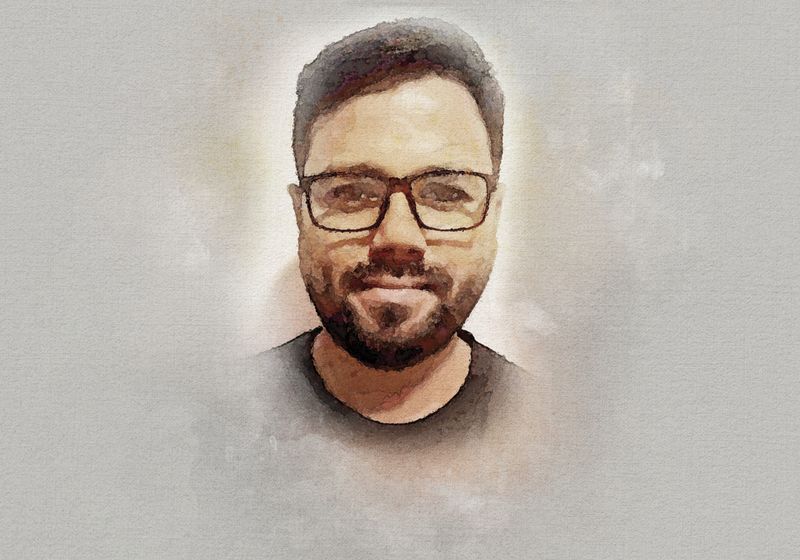
Focused on genome integrity, this postdoc investigates the cellular repair systems that keep DNA intact—and what happens when they break down.
Q | Write a brief introduction to yourself including the lab you work in and your research background.
My name is Rishi Kumar Jaiswal, and I am working as a senior research scientist at the University of Arkansas for Medical Sciences. My research explores how cells repair damaged DNA to maintain genome stability. By combining molecular biology and structural techniques, I aim to uncover how errors in DNA repair contribute to cancer development and progression.
Q | How did you first get interested in science and/or your field of research?
My curiosity about science began early, when I was fascinated by how living systems maintain order despite constant challenges. During my undergraduate studies, I became particularly interested in how cells preserve genetic information, a curiosity that deepened during my PhD at Jawaharlal Nehru University, where I studied telomerase and its role in cancer progression. I was intrigued by how the same enzyme that extends life for cells could also drive tumor growth. This paradox inspired me to explore the broader field of genome stability. Over time, my research evolved toward understanding how cells repair DNA damage, a fundamental process for preventing mutations and maintaining health. Today, as a senior research scientist at the University of Arkansas for Medical Sciences, I am driven by the idea that understanding DNA repair at a molecular level can help design new strategies to treat cancer and other genome instability disorders.
Q | Tell us about your favorite research project you’re working on.
One of my favorite research projects focuses on understanding how cells repair broken DNA strands, a process essential for maintaining genetic stability. In particular, I study how certain proteins act as “guardians” that protect stalled replication forks structures that form when DNA copying is interrupted by stress or damage. When these forks collapse, it can lead to mutations or chromosomal rearrangements that drive cancer. My team is uncovering how these protective proteins coordinate repair and prevent harmful degradation of DNA. What excites me most is combining molecular biology with advanced imaging techniques like cryo-electron microscopy to visualize these repair complexes in action. Seeing how individual molecules work together to maintain life’s blueprint is incredibly rewarding. Beyond the scientific thrill, I’m motivated by the idea that this knowledge could one day help us design better cancer therapies by targeting specific DNA repair pathways.
Q | What do you find most exciting about your research project?
The most exciting part of my scientific journey has been the process of discovery itself, seeing a question evolve from curiosity into a clear, evidence-based understanding of how life works. One particularly thrilling moment came when our research revealed how the human CST complex protects stalled DNA replication forks under stress. It was amazing to realize that our findings explained a fundamental mechanism that helps cells avoid genetic instability—a hallmark of cancer. That sense of uncovering something new and meaningful is unforgettable. Beyond individual discoveries, collaborating with talented scientists across disciplines has been deeply rewarding. Each collaboration has expanded my perspective and reinforced the importance of teamwork in advancing science. Looking back, what excites me most is that every answered question opens the door to new ones, keeping the journey alive with endless curiosity and purpose.
Q | If you could be a laboratory instrument, which one would you be and why?
If I could be a laboratory instrument, I would be a confocal microscope. It’s not just a tool, but it’s a window into the hidden architecture of life. Like the microscope, I love to look deeper, beyond the surface, to uncover the intricate details that explain how things truly work. Confocal microscopy beautifully balances precision with creativity. It captures complexity while bringing clarity, something I constantly strive for in my research. It also reminds me that perspective matters: shifting the focus just a little can reveal a completely different story within the same cell. In many ways, being a scientist feels similar to being a microscope—observing, refining, and illuminating what others can’t yet see. The confocal’s ability to turn invisible molecular events into vivid, meaningful images perfectly mirrors the joy I find in transforming abstract biological questions into tangible discoveries.
Are you a researcher who would like to be featured in the “Postdoc Portraits” series? Send in your application here.
