

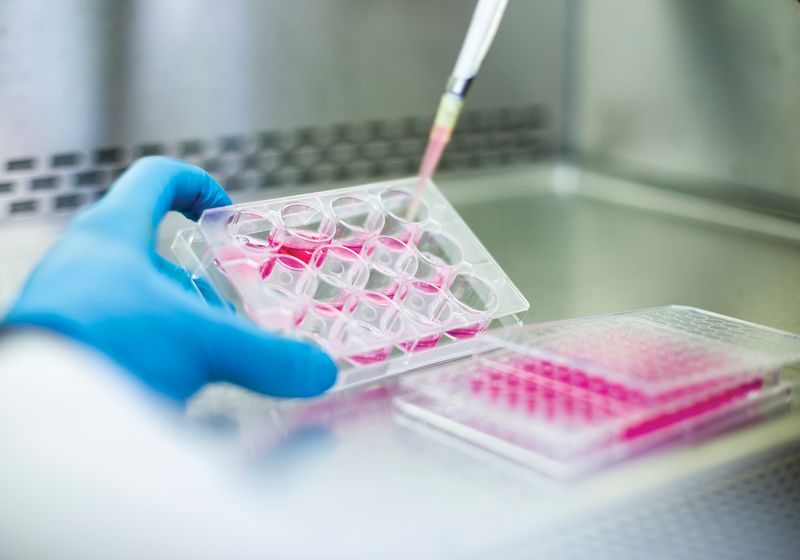
Let’s face it: Nobody pursues a career in science for the joy of culturing cells. But this thankless and time-intensive task is the backbone of biological research. When it’s done extremely well, the results generated from experiments can open entirely new avenues of scientific pursuit, leading to the development of the best-performing cell therapy candidates and minimizing the need for testing animal models. But how often does our cell culture game live up to that potential?
Indeed, one of the most important elements in culturing cells is often overlooked: assessing the influence of the environment on the residing cells and creating physiologically relevant conditions so the cells thrive as they would in the body. Over time, the aim of most scientists has been to keep cells dividing as quickly as possible. Most modern incubators are designed to enable the conditions known to keep cells, for lack of a better word, happy—even though these conditions don’t reflect in vivo biology.
Mounting evidence indicates that focusing on conditions that more accurately represent biological microenvironments leads to cells that behave more realistically during experiments. The results from these studies have taught us a lot more about biology, and they support everything from producing potent cell therapies to more predictive organoid models.
Two of the most important conditions in biological environments are parameters that can’t be precisely adjusted in standard incubators: oxygen levels and hyperbaric pressure. Some biological niches, for example, are far more hypoxic and pressurized than others. Replicating those low oxygen levels in cell culture has been shown to produce more accurate results than using the default oxygen settings in standard incubators. Cells are also extremely sensitive to mechanical stimuli, such as touch and pressure, and they translate these signals into downstream processes that regulate gene expression and nutrient transport. Thus, fine-tuning both pressure and oxygen levels can help scientists produce better results from their cultured cells for various applications.
Creating More Reliable Organoids
While organoids themselves aren’t new to biomedical research, they have recently come into the spotlight thanks to advances in precision medicine and a concerted push to replace animal testing with biological models that yield more human-specific results. With the ability to create mini 3D models of human organs—even using a patient’s own cells to make results as personalized as possible—scientists are seeing tremendous potential to improve drug discovery and development, expand our understanding of basic biological mechanisms, and even evaluate the outcome of specific drugs for each patient ahead of time.
Nobody pursues a career in science for the joy of culturing cells.
—James Lim, Xcell Biosciences
To realize that potential, though, organoids have to actually reflect native biology, and that depends largely on the environment in which they reside. Determining the best conditions for each type of organ is a pressing concern in the nascent field. Those conditions will likely include environmental, chemical, and physical cues. For example, a recent study of organoids designed to model polycystic kidney disease led to the discovery that altering the physical microenvironment triggered changes to the rate of cyst formation.1 In another study, scientists found that growing colorectal cancer organoids in a “microcavity” mimicking the intestinal tract resulted in improved formation, with a homogeneous structure closer to real organs, and yielded results that were predictive of patients’ responses to immune checkpoint blockade therapy.2
3D modeling has also been of great interest for oncology research, where organoids are often referred to as “tumoroids” because they model specific cancers and, in some cases, individual patients’ tumors. For maximum effectiveness, immune cells—including those delivered in cell therapies—must infiltrate a tumor, penetrating and killing many layers of cells before migrating to the core where cancer stem cells reside. Researchers cannot replicate this environment in traditional 2D cell culture, which is often composed of a single monolayer of cancer cells, but tumoroids are giving scientists another dimension to examine cancer-killing activity.
Studies have shown that lung organoids cultured under physiologically relevant conditions, such as with oxygen and pressure levels that match in vivo biology, can recreate the architectural complexity of the alveoli, where surveilling immune cells play an important role in suppressing the invasion of metastatic cancer cells.3,4 Faithfully recreating the complex, multicellular 3D architecture of the lung alveoli can lead to more predictive model systems to identify novel therapies for the treatment of lung cancer.
Cell Therapy Development
For autologous cell therapies, the humble cell culture process takes on outsized importance. The in vitro expansion phase of development plays a significant role in the therapy’s downstream potency and persistence when transferred to a patient. Countless studies have shown that adjusting culture conditions—including everything from the specific microenvironment settings to the media chosen—can dramatically change how these therapies function in vivo.
James Lim is the chief scientific officer at Xcell Biosciences.
Giaccomo Rischmoller
To appreciate the importance of oxygen levels as one of those key culture conditions, take the example of glucose transporter type 1 (GLUT1) expression. Scientists have found that overexpressing this glucose transporter in CAR T cell therapies leads to greater tumor-killing capacity in mouse models.5,6 Growing cells under more physiologically relevant conditions—including lower oxygen settings—naturally upregulates GLUT1, making cell therapies more potent and persistent. This is due to the well-known Warburg effect, which occurs when cells are deprived of oxygen and consequently divert to glycolysis to produce energy to maintain cell homeostasis. This is especially important considering that the solid tumor microenvironment is hypoxic, which robs therapeutic T cells of their primary energy source (oxygen molecules), leading to suppressed cytolytic activity and promoting cell exhaustion. Manufacturing CAR T cell therapies in environments replicating the tumor microenvironment can enrich for cells that have upregulated GLUT1 and are metabolically adapted to thrive under low oxygen and high-pressure conditions.
Examples like GLUT1 suggest that cell therapies will perform better in vivo when they have been acclimated and metabolically adapted to the same conditions they will encounter in the body, rather than standard culture conditions. Fine-tuning incubator settings to match those of the cells’ ultimate destination—such as higher oxygen levels and lower pressure levels for skin cells, versus lower oxygen and higher-pressure levels for tumors—is more important than creating culture conditions where cells divide as quickly as possible.
Manufacturing CAR T cells under stressful conditions can actually produce better prepared and more potent cells when they enter into battle in vivo.
—James Lim, Xcell Biosciences
This is kind of like training soldiers for the elite Navy SEALs: Through a series of rigorous and challenging training regimens, only the most capable and resilient soldiers are selected to enter combat. Manufacturing CAR T cells under stressful conditions can actually produce better prepared and more potent cells when they enter into battle in vivo. This concept has been validated in studies of the potency of CAR T cell therapies across different disease indications, including aggressive forms of prostate cancer and treatment-resistant acute lymphoblastic leukemia.7
Potency Release Assays
The rise of cell and gene therapies has ushered in the need for a completely different approach to manufacturing and quality assurance. These bespoke treatments can’t be produced in the industrial-scale manufacturing facilities typically used by pharmaceutical companies, and each therapy must be tested individually for key traits before being administered to a patient.
This is where potency release assays come in. For any given therapy, there are certain metrics that must be achieved before the therapy is considered ready for patient use. These metrics are well established during therapeutic development and are a critical part of the manufacturing process. But the intricacies of how to make these assessments are still being sorted out. Evidence increasingly suggests that performing tests on cells grown under physiologically relevant conditions is important for generating the most reliable data.
One company offering a gene therapy for sickle cell disease, for example, uses a potency release assay in the manufacturing workflow to validate that gene editing has led to a certain threshold level of cells that do not sickle; achieving enough of these therapeutic cells is what reduces erythroid sickling in patients.8,9 Since the mutated hemoglobin in sickle cell patients causes red blood cells to become stiff and sickle-shaped when exposed to hypoxia, scientists determined that running the potency assay on cells grown for 10 days under low oxygen conditions provides more reliable and reproducible results than performing the assay under standard incubator conditions.10 With a better means of predicting therapeutic performance in patients, gene therapy companies may be able to increase their rates of success and reduce the need to re-dose patients in the future.
For a broad range of cell biology applications, creating more physiologically relevant conditions in cell culture is important for generating reproducible and predictive results. This matters even more when the therapies themselves are a collective of cultured cells.
- Cruz NM, et al. Organoid cystogenesis reveals a critical role of microenvironment in human polycystic kidney disease. Nat Mater. 2017;16(11):1112-1119.
- Dutta D, et al. Probing the killing potency of tumor-infiltrating lymphocytes on microarrayed colorectal cancer tumoroids. npj Precis. Onc. 2024;8:179.
- Dalla E, et al. Lung-resident alveolar macrophages regulate the timing of breast cancer metastasis. Cell. 2024;187(23):6631-6648.e20.
- Ozan VB, et al. Influence of Microenvironmental Orchestration on Multicellular Lung Alveolar Organoid Development from Human Induced Pluripotent Stem Cells. Stem Cell Rev and Rep. 2025;21(1):254-275.
- Shi Y, et al. GLUT1 overexpression enhances CAR T cell metabolic fitness and anti-tumor efficacy. Mol Ther. 2024;32(7):2393-2405.
- Guerrero JA, et al. GLUT1 overexpression in CAR-T cells induces metabolic reprogramming and enhances potency. Nat Commun. 2024;15(1):8658.
- Lim J, et al. Abstract 589: Long-term acclimation of target cell lines to tumor microenvironment culture condition provides mechanistic insights into cell therapy effectiveness. Cancer Res. 2023. 83(7_Supplement):589.
- Fertrin KY, et al. Sickle Cell Imaging Flow Cytometry Assay (SIFCA). Methods Mol Biol. 2016;1389:279-92.
- Ribeil JA, et al. Gene Therapy in a Patient with Sickle Cell Disease. N Engl J Med. 2017;376(9):848-855.
- Lewis G, et al. Abstract: Development of an Objective Image-Based Flow Cytometry Sickling Assay for Quantification of Amelioration of Sickle Cell Disease Phenotype in Erythroid Differentiated CD34+ Cells. Molecular Therapy. 2019;27(4S1):68.
