

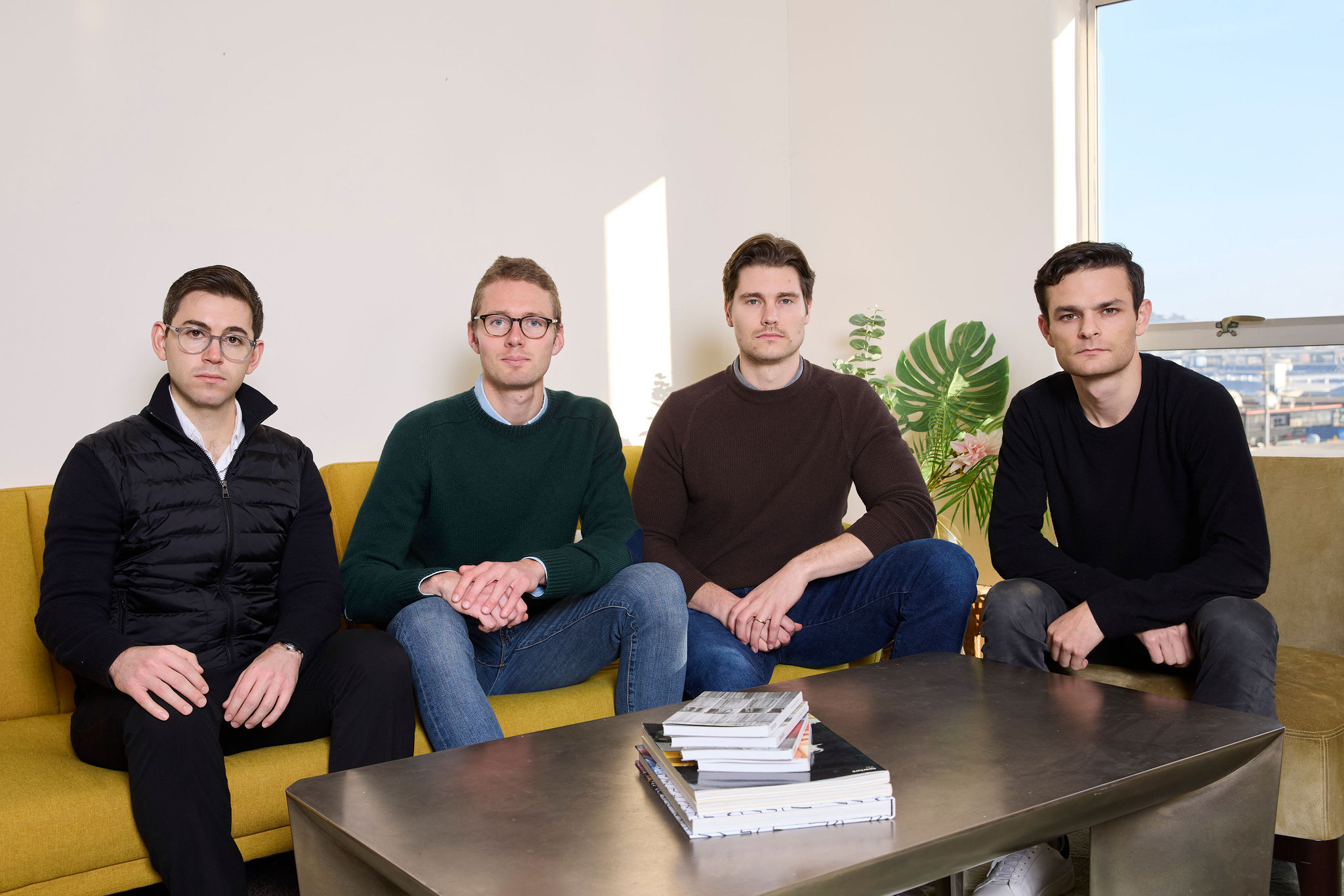
OpenAI-backed Chai Discovery lands $130m, claiming “100-fold improvement” over previous computational design methods.
AI-native drug discovery platform Chai Discovery has raised $130 million in a Series B financing that values the San Francisco–based company at $1.3 billion. Co-led by Oak HC/FT and General Catalyst, with participation from existing backers including OpenAI, Thrive Capital, Menlo Ventures and Dimension, the round brings the total raised by the company to more than $225 million, less than two years after it emerged from stealth.
Just a few months ago, Chai announced a $70 million Series A and unveiled Chai-2, a generative platform designed to replace the slow, iterative experimentation that dominates drug discovery with a computational design process that can move directly from a biological target to a viable drug candidate. The platform operates a “zero-shot” model, generating novel antibody sequences from scratch based solely on a target, without relying on known examples or extensive screening. According to the company, this approach has produced double-digit experimental success rates in antibody design – claimed to be a “100-fold improvement” over previous computational methods.
“We’re standing on the precipice of a new era for the biopharmaceutical industry,” said Chai CEO Josh Meier.
At the core of the Chai’s approach is the idea that biology can be treated as an information problem. The company builds large-scale AI models to predict and reprogram interactions between biochemical molecules, including proteins, antibodies, nucleic acids and small molecules. These interactions underpin nearly all biological processes and the ability to target them with precision opens the door to therapeutics aimed at complex pathways that have historically resisted conventional drug development.
Many of the most pressing unmet needs in medicine today lie in aging and chronic, age-related diseases, where targets are often complex, poorly understood or embedded in intricate biological networks. Neurodegeneration, metabolic disease, fibrosis and immune dysfunction all involve molecular interactions that have proven difficult to modulate safely and precisely. By enabling the rational design of novel antibodies and other biologics against such targets, Chai’s platform could potentially support the development of new-class therapies aimed at modifying the underlying biology of aging rather than simply managing symptoms.
Chai reports that its newest models can design molecules with properties expected of real drugs, including stability and manufacturability. Those claims were recently explored in a preprint describing the application of Chai-2 to full-length monoclonal antibodies. In that work, the majority of designed antibodies demonstrated developability profiles comparable to approved therapeutics, and experimentally determined structures closely matched the models’ atomic-level predictions.
“We’re in awe of the rate of progress on the models – what looked like five-year problems just months ago are now getting solved in weeks,” said Meier. “Our latest models can design molecules that have properties we’d want from actual drugs, and tackle challenging targets that have been out of reach. These models will unleash a new wave of first-in-class and best-in-class therapeutics, and the early adopters in pharma will be the big winners.”

The new funding will be used to accelerate research and product development and to expand commercialization efforts. Chai said its vision is to develop a “computer-aided design suite” for molecules, analogous to the role CAD software plays in engineering and manufacturing.
Ultimately, Chai claims its approach can “can materially compress the time to first-in-human studies, tackle hard to drug and ‘undruggable’ targets, and accelerate the overall time to commercialization.” If its models continue to deliver on their promise, the ability to design drug-like molecules quickly and reliably could reshape how therapies for aging and chronic disease are conceived.
